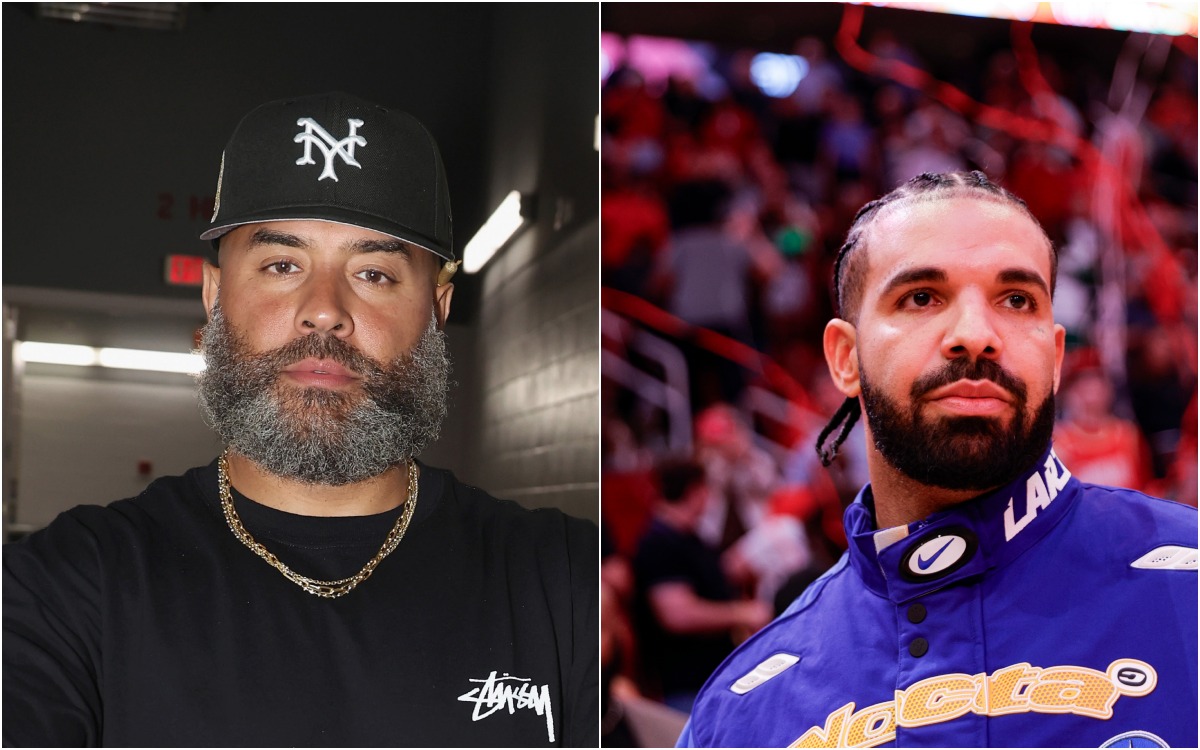
The feud between Drake and former Hot 97 personalities Ebro Darden and Peter Rosenberg is more than a personal clash. It offers a revealing look into power, influence, and evolving relationships within Hip-Hop media. What began as tension between an artist and radio hosts quickly escalated into a public spectacle shaped by social media, ideological accusations, and questions about who truly holds power in Hip-Hop culture… the gatekeepers or the artists.
The Origin of the Ebro vs. Drake Feud
The saga revolves around a long-standing strained relationship between global rap superstar Drake, and Ebro Darden and Peter Rosenberg formerly of Hot 97’s Ebro in the Morning Show. The tension escalated publicly when Drake commented with an axe emoji under a post announcing the cancellation of the radio show, an action many interpreted as celebratory or dismissive.
Ebro responded forcefully, calling Drake “right-wing” and criticizing him for what he perceived as a lack of genuine engagement with social and political issues, topics Drake had previously referenced in his music and interviews. This accusation struck a nerve, as Drake’s public image often balances mainstream appeal with cultural commentary. Ebro’s critique suggested that Drake selectively engages in activism when it benefits his brand rather than committing to meaningful involvement.
The conflict intensified when Ebro publicly shared alleged direct messages from Drake, including the phrase “die slower, p*ssy,” a move that pushed the feud into a more aggressive and personal territory. The decision to air private messages raised ethical questions about media professionalism and whether radio hosts should publicly expose artists in moments of conflict.
The Influence of Social Media on the Feud
Social media played a central role in amplifying and sustaining the feud. Platforms like Instagram and Twitter allowed the conflict to spread rapidly, drawing in fans, critics, and other industry figures who were not directly involved. What might once have remained an industry-only disagreement became a viral moment, dissected in real time by millions.
Social media also became the primary medium of communication and evidence. By posting Drake’s DMs publicly, Ebro used the internet as both a weapon and a stage, ensuring maximum visibility. This reflects a broader trend in modern Hip-Hop disputes, where digital platforms often replace private mediation and escalate conflicts into public controversies.
At the same time, fans used social media to scrutinize both sides, questioning Ebro’s authority as a media gatekeeper and Drake’s behavior as one of the most powerful artists in the world.
Impact on Hip-Hop Media and Artist–Media Relations
The Ebro-Drake feud highlights the complex power dynamics between artists and media institutions. Traditionally, radio hosts and executives held significant influence over an artist’s exposure and success. Ebro’s implication that crossing powerful media figures could put an artist’s career at risk reflects lingering fears of industry “blackballing.”
However, Drake’s continued dominance despite the conflict demonstrates how much that power has shifted. In the streaming era, artists with massive fanbases can bypass traditional media entirely, relying on platforms like Spotify, Apple Music, and social media to reach audiences directly.
The controversy also underscores how contentious relationships between artists and media personalities have become. Ebro’s critique of Drake’s music, persona, and politics sparked backlash, with many accusing him of overstepping his role as a radio host and blurring the line between commentary and personal vendetta.
Finally, the feud points to the changing landscape of Hip-Hop media. After the cancellation of Ebro in the Morning, Ebro launched independent content on YouTube, signalling a broader shift toward creator-owned platforms. This move reflects a new era in which media figures, like artists, seek creative control and direct relationships with their audiences free from corporate constraints.
Conclusion
The Ebro vs. Drake saga is ultimately less about insults and more about transformation. It exposes how power in Hip-Hop media is no longer centralized, how social media reshapes conflict, and how both artists and media personalities are adapting to an industry where influence is increasingly decentralized and publicly negotiated.