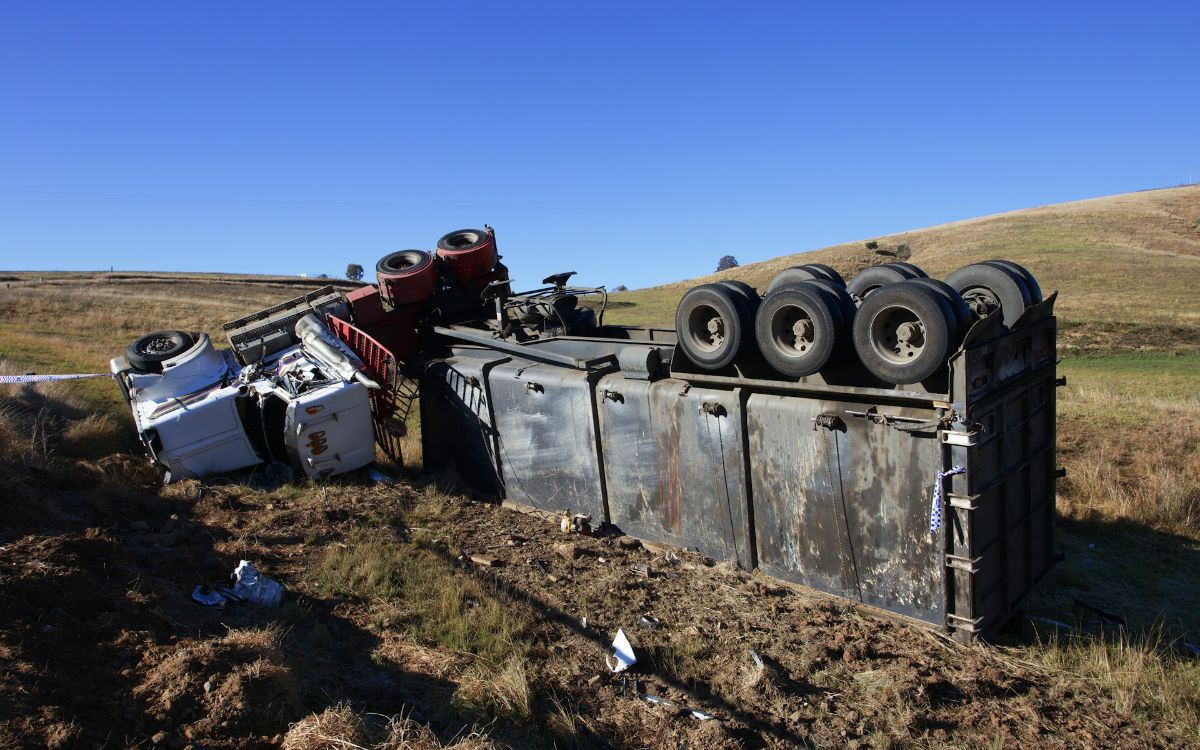
Are you aware that the United States recorded more than 131,000 fatal and nonfatal incidents involving big trucks and buses? Truck rollover accidents are among the most dangerous types of crashes you’ll find on American roads, and they frequently end with horrific injuries, tragic deaths, and serious property damage.
According to https://trammlaw.com/, truck driving comes with an elevated level of responsibility on the road. Due to the sheer size of semi-trucks and the contents they may be carrying, it is incredibly important that truck drivers avoid anything that can elevate the risk of an accident. However, the rollovers still remain a significant safety concern, typically representing roughly 13% of all fatal large truck crashes.
These accidents can involve quite a few vehicles, and then it gets a little complicated with legal stuff about liability because the facts matter.
Learn the common causes of truck rollover accidents and identify who may be liable so victims can seek compensation and accountability.
Why Truck Rollovers Are Different From Other Crashes
A loaded commercial semi-truck can weigh as much as 80,000 pounds. Its center of gravity is sitting way higher than in a passenger car. So even a small change in cargo placement, a corner taken too fast, or a tire failure can push the truck past its stability limit in ways that would not affect a smaller vehicle.
The physics is pretty unforgiving. If the truck is moving at high speeds on the highway and then tips, there isn’t any time left for it to get back to its position. It might rollover completely, which would be fatal for the occupants inside the truck.
Then the trailer can separate, and it can sweep through nearby lanes. Rollovers also trigger secondary collisions. Those incidents can block the highway for hours. And the harm of traumatic brain injury, spinal cord damage, crush injuries, and wrongful death really shows the full force of 80,000 pounds moving down the road.
The Most Common Causes of Truck Rollover Crashes
Why do truck rollover accidents happen in Wisconsin and other states? Here’s why:
Driver Error and Hours-of-Service Violations
Driver fault shows up in most truck rollovers. Things like going too fast into curves, overcorrecting to avoid a hazard, and failing to account for wind push on high-sided trailers are common causes. Fatigue then adds to the risk and makes the situation worse.
The Federal Motor Carrier Safety Administration (FMCSA) sets hours of service rules that limit how long a commercial driver can operate before a required stop. When drivers or companies ignore these limits, fatigue reduces reaction time and weakens judgment.
An FMCSA inspection review recorded more than 180,000 driver log violations in about 2.77 million inspections in one year, a violation rate of about 6.5%. Electronic logging device data can also be important because it records speed, braking, and time behind the wheel, and it can serve as direct evidence in a rollover case.
Improper Cargo Loading
Cargo that is overloaded, unevenly distributed, or not secured well ends up lifting the truck’s center of gravity, and then it brings on that unstable feel when you enter turns or when you do sudden braking. A load that shifts in transit, even just partially, can start a rollover. And it can happen without any real change in the road conditions or without anything obvious the driver did wrong.
Poor Vehicle Maintenance
Blowouts and loss of control occur with worn or underinflated tires. Issues with brakes and suspensions also make a rollover more likely, especially on curved roads.
According to Federal Motor Carrier Safety Administration regulations, all carriers must keep inspection and maintenance logs for each truck.
Failure to do so may result in liability should any of their trucks have rollover accidents.
Road and Weather Conditions
Who Bears Legal Liability for a Truck Rollover
This part is where truck rollover claims split away from regular car crash cases. More than one party can be liable at the same time. This matters because the trucking company, cargo handlers, and parts manufacturers usually carry separate insurance and face different legal risks.
The Trucking Company
The trucking firm may also be considered negligent for hiring previous HOS violators or pressuring drivers to exceed legal hour
The Cargo Loader or Shipper
If improper loading causes the truck to roll over, the shipper or third party responsible for loading may be liable. It is against federal law to improperly load cargo since it can roll over.
Maintenance Providers and Manufacturers
If a third-party maintenance business handled recent brake work, tire services, or suspension fixes and those systems failed during the crash, that provider may be responsible.
Government Entities
A roadway defect like a weak shoulder that may fail, a curve not properly marked with warning signs, or road surface deterioration sufficient to cause a vehicle to lose control may place liability on the road agency responsible for that segment.
Claims against public entities follow different procedural rules, and there are usually shorter notice deadlines than standard personal injury cases. It is important to involve legal help early, especially when road conditions are part of the contributing factors.
What the Evidence Shows and Why It Matters
Truck rollovers create a lot of documentary evidence. ELD data are an example that shows speed and braking in the minutes before the impact. Driver logs reflect HOS compliance or violations. Maintenance records, cargo weight receipts, and inspection reports can also support a claim.
Most of that stuff is right there immediately after a crash, but then it can also vanish. Trucking companies routinely delete electronic records, and they repair or dispose of damaged equipment on supercompressed timelines.
For truck rollover victims, the cause of the crash is often more complex than it first appears. There may be more than one party liable for the incident. This may include carriers, loaders, maintenance providers, and manufacturers. Identifying all responsible parties, proper investigation is important to ensure victims pursue the full compensation available.