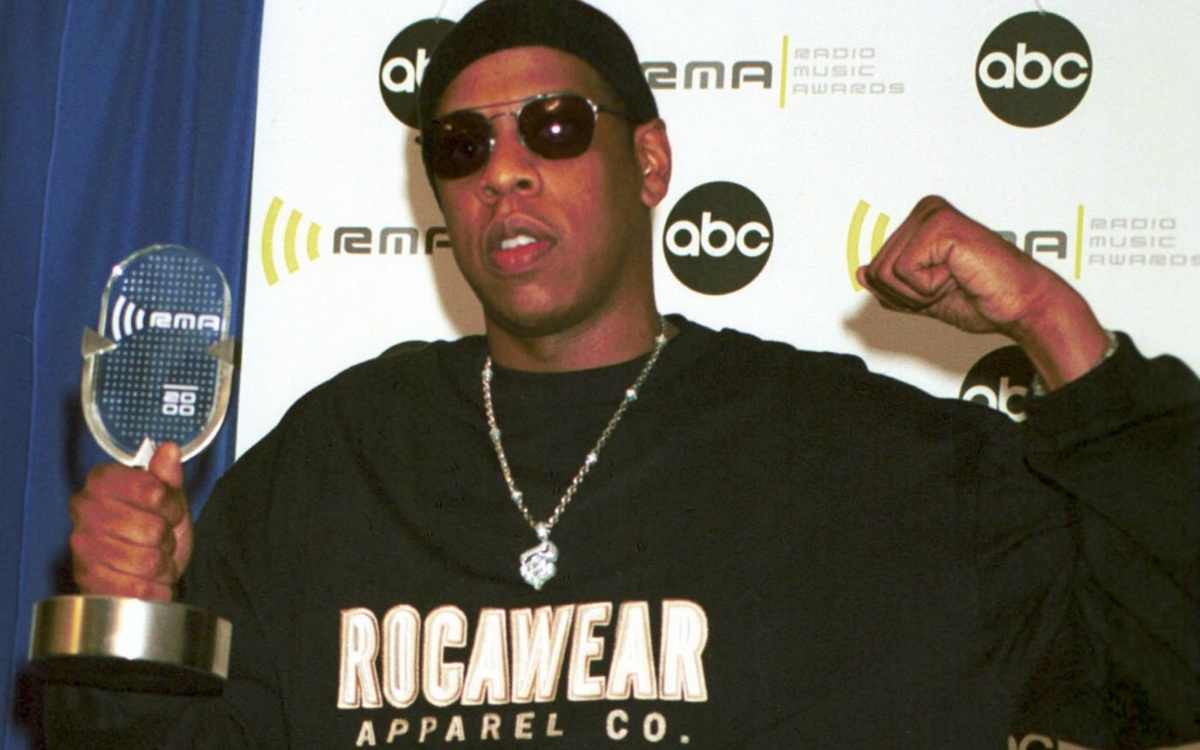
Rocawear was more than a clothing brand. It was a cultural stamp. Created in 1999 by Jay Z and Damon Dash, Rocawear quickly became one of the most influential fashion labels in Hip-Hop, a year after Sean John by Puff Daddy. The brand captured the energy of the Roc-A-Fella Records era and turned it into clothing that fans could wear every day.
Baggy denim, bold jackets, logo-heavy tees, velour sets, and street luxury were the core of Rocawear’s style. By the early 2000s, the brand had spread far beyond the music industry and had become a staple in malls across the country.
Rocawear was not just selling clothes. It was selling a lifestyle connected to success, swagger, and New York energy.
The Brand Became a Billion-Dollar Powerhouse
Rocawear grew at a pace many celebrity brands today still struggle to achieve. By 2007, annual sales were estimated at more than 700 million dollars. Jay Z’s star power and Roc-A-Fella’s influence created a perfect marketing storm.
A few major factors fueled the rise:
• Jay Z wore the brand consistently
• Roc-A-Fella artists promoted it naturally
• Commercials and print campaigns featured top models and entertainers
• The brand expanded into children’s wear, fragrances, and accessories
• Department stores like Macy’s and JCPenney carried full Rocawear lines
By the time Jay Z sold the rights to the brand’s licensing in 2007 for 204 million dollars, Rocawear was at its peak.
Internal Conflict Played a Role in the Decline
The very public split between Jay Z and Damon Dash in the mid-2000s had ripple effects across all Roc-A-Fella ventures. Rocawear was not immune. Although Jay Z continued to promote the brand, the breakup disrupted leadership, marketing consistency, and long-term vision.
Jay Z began shifting toward higher luxury ventures. Damon Dash, once a driving force behind the fashion arm of the label, was no longer involved. The shift in power and direction caused the brand to lose some of its identity.
Streetwear Evolved and Rocawear Did Not Keep Up
Another reason for the fade was the shift in streetwear trends. By the late 2000s and early 2010s:
• Baggy fits disappeared
• High-end streetwear brands took over
• Fast fashion grew
• Sportswear and luxury hybrids became more popular
Rocawear struggled to modernize its designs. The brand became associated with an older era of fashion rather than adapting to the new wave of consumers.
The Retail Decline Hit Rocawear Hard
Many brands that relied heavily on mall stores took major hits in the 2010s. As JCPenney, Sears, and other anchors faltered, brands like Rocawear lost visibility and shelf space. Without strong digital marketing or celebrity endorsement from Jay Z, the brand became harder to spot.
By the mid-2010s, Rocawear had almost completely disappeared from mainstream conversation.
Where Rocawear Stands Today in 2026
As of early 2026, Rocawear still exists, but not in its legacy form. The brand operates quietly through licensing deals and can be found primarily in discount retailers and online marketplaces. It does not have an active cultural presence or a major digital footprint.
Jay Z no longer has any ties to the company. His success in luxury ventures like Roc Nation and Ace of Spades Champagne shifted his fashion identity toward higher-end markets.
Rocawear is now considered a nostalgia brand. It still has recognition, but not relevance… similar to Coogi and other brands of a certain era.
The Legacy Remains Strong
Even though Rocawear faded from the mainstream, its cultural impact is permanent. It shaped early 2000s Hip-Hop fashion, set the pace for celebrity-owned brands, and helped establish the blueprint for artists who want to build business empires beyond music.
Rocawear was a moment in time. A very big one.