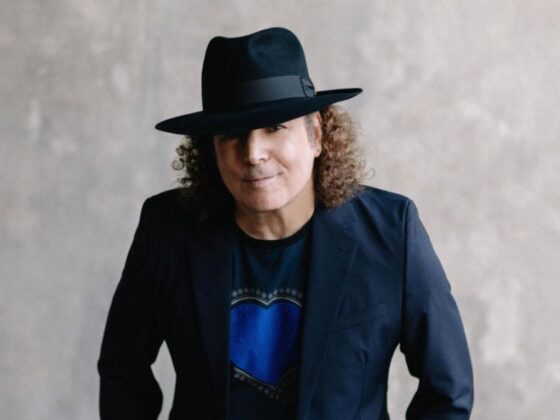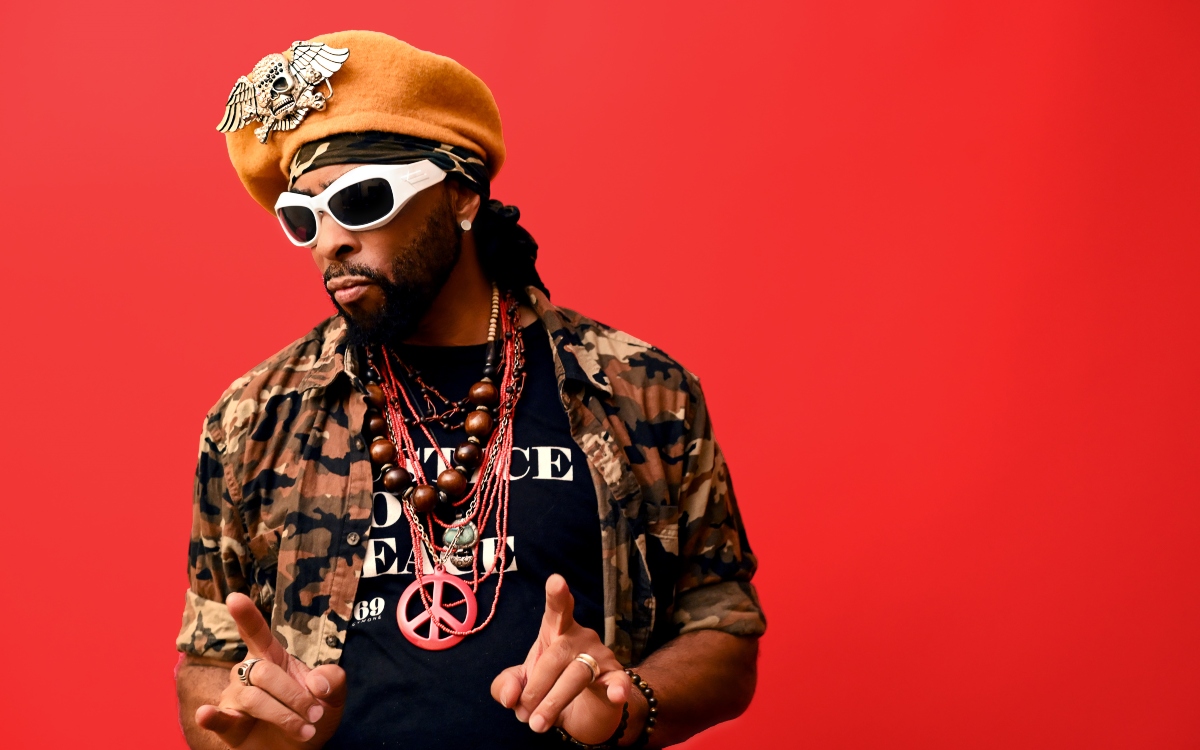
Long before the world gave it a name, André Cymone was already helping shape the sound.
The Minneapolis Sound wasn’t born in a boardroom. It grew out of basements, community centers, neighborhood bands, shared record collections, and young musicians fearless enough to blend funk, rock, soul, pop, and new wave. At the center of that creative spark stood Cymone—bassist, songwriter, producer, multi-instrumentalist, and one of the architects whose fingerprints remain embedded in everything that followed.
His story has too often been reduced to proximity: Prince’s childhood friend, early bandmate, and original bassist. The truth runs much deeper. Cymone helped build the musical language that carried Minneapolis around the world, then stepped beyond it to pursue his own restless vision. His solo records embraced new wave and futurism when Black artists were rarely encouraged to defy categorization. Later, he brought that same originality to work with Jody Watley, Tina Turner, James Ingram, Adam Ant, Evelyn “Champagne” King, and others.
Through every chapter, the constant has been creative freedom.
Now comes The Resurrection of Funk.
This isn’t Cymone chasing nostalgia. It’s reclamation—an artist returning to a musical language he helped create and reminding listeners that funk was never simply an era, costume, or bass line. It was craft, community, protest, joy, and truth you could dance to.
Written, performed, and played entirely by Cymone—with no guest musicians and no artificial intelligence—the album is proof of life in an increasingly synthetic age. Every groove carries memory. Every instrument carries intention. Every note comes from the same fearless imagination that once turned a Minneapolis basement into a laboratory for the future.
Cymone isn’t merely revisiting his roots.
He’s restoring them to their proper place.
From Grand Central and his formative years with Prince to his adventurous solo work, landmark productions, and decades of reinvention, André Cymone’s career has always been about ownership—of identity, history, creativity, and the right to tell his own story.
With The Resurrection of Funk, the architect returns to the blueprint without standing still.
And this time, he’s making sure everyone knows whose hands helped draw it.
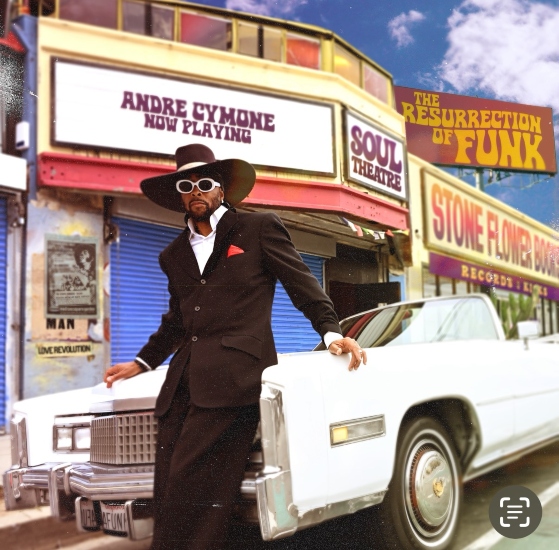 Parlé Mag: Long before anyone coined the phrase “The Minneapolis Sound,” you were living it. Looking back, what do you remember hearing in your head that the rest of the world hadn’t caught up to yet?
André Cymone: In my head, I heard musical genres blending. One of the benefits of having a large family was having six or seven individual record collections all together on one shelf. Learning those records and recreating parts with whatever instruments I could get my hands on was all part of inventing new sounds.
I had—and still have—very eclectic musical tastes that seeped into our band, Grand Central. I think that was one of the many things that set us apart from the other local rival bands in Minneapolis. While they focused mainly on Top 10 R&B hits, we played album tracks buried between the hits on records ranging from Grand Funk Railroad and Santana to The Ohio Players.
Nothing was off-limits.
Parlé Mag: You and Prince weren’t just bandmates—you were two young musicians pushing each other in real time. What did that creative chemistry bring out in you that might never have happened otherwise?
André Cymone: That’s a great question.
When I met Prince, I had just landed in a new neighborhood that felt like a different world, where everyone already knew one another. I was an outsider, but I was a confident outsider. I knew who I was. As a kid, I was a dreamer with a fearless sense of adventure in everything, especially music. You couldn’t tell me I wasn’t going to be a star.
Prince was super shy—studious, even. He seemed to chronicle everyone’s weaknesses, and he gave me the lay of the land in my new environment. He was the first person I met who took music seriously in the same way I did. What he needed was confidence. I had enough of that for both of us, and what he provided was a sense of discipline I didn’t know I needed.
In many ways, Prince and I were kindred spirits. We both grew up in environments where what we needed most was to be seen and heard, but no one was seeing or listening. Fortunately, we saw and heard each other.
Musically, Prince showed me things on piano and guitar, while I showed him things on bass and drums. Prince was always a huge music fan. He drew inspiration from other artists and musicians and saw music from the perspective of the consumer, which became an important part of connecting musically with audiences.
I looked at other musicians and artists as competition. I saw music only from the perspective of a creator. Conceptually, I believed originality was the key, and that the purer the artist, the more individual the art. Learning other artists’ music was simply confirmation that I could do what those “professionals” could do. I didn’t want to emulate—I wanted to originate.
I know that sometimes, when I tell things the way they were, it sounds crazy to people entering the story from the standpoint of the pinnacle of success rather than the process. But there’s an early article featuring a Prince quote: “If I walked up to André and played a lick that was already on someone’s record, he’d say so—and that would hurt.”
I believe the combination of what we both brought to the table created the yin and yang of our chemistry. As we took things to the next level, we began experimenting with songwriting, passing cassette tapes back and forth and trying to top one another by writing the best song.
Inevitably, we were developing a musical language that came to define our band, the songs we wrote, and the style in which we played them.
Parlé Mag: Your bass playing has always done more than hold down the groove—it tells a story. Who were the musicians, records, or moments that shaped your approach before the rest of the world knew your name?
André Cymone: Thank you. I appreciate your understanding of the layers of my bass playing.
It all started for me with the bass. My father was a jazz musician and a bass player, and he had an upright bass at the house. Although I wasn’t supposed to play it, that’s exactly what I did every chance I got.
Again, with five older siblings, I had access to countless records. I learned everything in my family’s record collection—from James Brown to Motown, from The Association to Duke Ellington, and from Lou Rawls to The Monkees.
What I believe gave me a more distinctive edge was that I also loved horns and could play them. So, when I became bored with bass lines, I would learn saxophone solos, trumpet riffs, and other parts.
The other unique aspect I developed early on was that I always heard bass and drums running together—the rhythmic and melodic connection. In most cases, inside my head, the beat and the bass are one and the same.
I would walk around beatboxing the bass and drum patterns until I could find a tape recorder—or, these days, my cellphone’s voice memo—to get the idea down.
Parlé Mag: From your own solo catalog to writing and producing for artists like Jody Watley, Tina Turner, James Ingram, Adam Ant, and Evelyn “Champagne” King, you’ve worn almost every hat in this business. Which chapter challenged you the most, and which fulfilled you the most?
André Cymone: I truly love them all.
I really love helping artists discover and realize their own authentic voices. That is absolutely fulfilling. I also love performing. I guess you wouldn’t know it, but I’m a natural entertainer—juggling, telling jokes, and writing songs.
Being an artist, however, is by far the most challenging, especially when you’re signed to a record label. I liken it to being a painter or sculptor. You can create your own interpretation of musical art and take that art in any direction your heart, ears, imagination, and musical palette might lead you.
You can form it in any way you like, and no one can—as I often say—“put a mustache on my Mona Lisa.”
Parlé Mag: Your early solo records embraced new wave and experimentation when very few Black artists were encouraged to take those kinds of chances. Did you ever feel misunderstood, or were you simply making the music you knew you had to make?
André Cymone: Oh, yes. I felt very misunderstood.
I thought the idea of being an artist at the time was to be as creative and original as possible. I didn’t think about being on an island as a Black new wave artist. I simply thought about being an artist making music that was different from anything I had done before.
I’ve always believed art should constantly evolve and change. I also felt a need to distinguish myself from the artists, friends, and peers who were still driving in a lane I had helped create.
Although it was a natural form of expression for me, I embraced the challenge of charting new territory and choosing an entirely different musical lane for my solo debut. I easily could have made an album consistent with the musical universe I came from, and I definitely think that was what my label expected.
I didn’t realize at the time that, unbeknownst to me, I was being viewed and judged in a particular light because of my association with Prince. Some people thought I was simply the bass player in his band. They had no idea about our history—that he came to live with me and my family, or that we were in a band long before he was signed.
They also didn’t know that I was a major influence in the formation of that band and was responsible for many of the opportunities that came about and ultimately led to his discovery, as well as the success and discovery of many who walked through that door.
I would have loved more support from my label and from executives who understood how revolutionary it could have been at that moment to have a Black artist defy categorization. Because I was one of the very few Black artists to appear on MTV, I was grateful to have had the opportunity to make those records.
The real satisfaction continues today, when people tell me how important it was to them that I was breaking new ground.
The Resurrection of Funk is me returning to my origin story, continuing in that spirit of creative freedom, and reclaiming my roots and the music I helped start. It’s in my blood. Although I’ve shared it through other artists over the years, this is the first time I’m coming home and doing it for myself as an artist.
Parlé Mag: After exploring so many musical directions, why does The Resurrection of Funk feel like the right record—and the right statement—for this chapter of your life?
André Cymone: From a personal perspective, I have such a love for music, and there is no limit to what might come through me when I create. This could have been a classical album, a reggae album, or an acoustic album, but there was something deeply important to me about returning to the sound I was instrumental in creating.
I took great pride in developing my bass style, beginning with the early days of Grand Central. By the time we made and toured Dirty Mind, that unique and distinctive bass style really showed up in the music and onstage.
It carried over into Controversy through songs I was involved with before leaving Prince’s band, including “Let’s Work”—originally “Let’s Rock”—“Do Me, Baby,” and “Controversy.”
The natural evolution for me was to make a solo record, and the original plan was funk, so this has been a long time coming.
When I read Morris’ book, there was a mention of not being sure how many of my bass lines served as the foundation for songs by The Time. It made me reflect on the record I had been making and ultimately walked away from.
The interesting thing is that once a sound you’ve worked so hard to develop becomes associated with other artists, you can find yourself in the awkward position of being told you’re copying or trying to sound like someone else—when it’s actually just you being yourself.
I decided to take a sharp turn away from all of that and embrace everything I loved about new wave. I’m truly grateful to the fans who have stayed with me throughout my entire journey—new wave, producing, rock, and everything in between.
I know they’ve always wanted to hear this kind of record, one that pulls up my roots, and they are a major part of why making it is so important to me.
In terms of the world we exist in, music is at another one of those crossroads. That happens every couple of decades. The world is also at one of those crossroads socially and politically.
Back in the ’60s, we had courageous artists who stood at that crossroads with funk music—music that was not only the soundtrack of our lives but also provided a much-needed conversation. Artists like Marvin, Stevie, Curtis, James, and Sly heard the call and answered with their words and music.
So, while you were getting your boogie on, you were also hearing messages telling you, “Say it loud—I’m Black and I’m proud,” reminding you that we are all “Everyday People,” or asking, “What’s Going On?”
Today, music has become so dumbed down and marginalized. Two turntables and a microphone. Old loops providing stock opportunities for intellectual-property owners.
The idea of a musical artist or creator being replaced by artificial intelligence is absurd. We’re supposed to give in to some kind of “synthetic revolution”? No. That just makes me want to start a revolution of my own.
That’s why this record—and Volume 2, which is coming right behind it—and the street campaign to engage young people and reconnect them with funk music are so important.
In my opinion, funk has never received the respect it deserves. I believe it is long overdue, and I think I can do something about that.
Parlé Mag: You played every instrument yourself, with no guest musicians and no AI involvement. Beyond making a great record, was it important to make a statement about musicianship, originality, and the value of the human touch?
André Cymone: Well, that is really how the Minneapolis Sound was created.
It’s about the ability to create a pure musical representation, concept, or composition. Again, it’s like being a painter. Can you imagine four or five people working on the same portrait, painting arms and eyes onto a picture you started from a concept you created?
AI is a crutch for those who lack the creative ability to make a musical statement on their own. It is also a new business platform for these “tech bros” who believe they can dress up the criminal act of plagiarism by giving it a fancy, catchy name—“AI”—and making everyone think it’s some super-smart new gadget no one can live without.
Because it exists within a new medium—the internet—it is suddenly supposed to be acceptable to legally steal intellectual property? Really?
It is extremely important for artists to make as much noise as possible about what is happening now. I know SZA and Tyler, The Creator have both been very outspoken. I would love for us to create a conference or festival to bring attention to what is taking place.
There may be AI artists capable of fooling you when streaming platforms slide them into your playlist. That happened to me on a recent road trip. But there is no replacement for the human spirit, and they certainly cannot show up and play live.
Computer music built with ready-made loops and samples was the precursor to what AI is becoming. Replacing actual musicians with synthetic instrumental replication is, in my opinion, the beginning of the end of what once made music—and the experience it inspires—so special.
When it is a human artist, you can imagine what the lyrics mean and how closely they may connect to that person’s real-life experiences. There is intrigue, personal fascination, and human connection.
With AI, all of that is gone. There is nothing to relate to.
Sadly, I imagine AI is stopping some kid somewhere—someone who otherwise might have picked up an instrument to realize an idea or composition they heard in their mind—from learning instruments and experiencing the tactile art of making music.
The art of songwriting, music, and storytelling is a spiritual, human, God-given gift that artists pass from one soul to another. That should be considered sacred.
I’m working on projects that I hope will reintroduce the blueprint and inspire young people—and artists of all ages—to go back, pick up an instrument, and learn to play.
Parlé Mag: Minneapolis has always been more than a music city—it’s a city built on community, activism, resilience, and reinvention. How much of your music was shaped by the people and neighborhoods that surrounded you growing up?
André Cymone: I would say 80 to 90 percent of my music—and who I am—was shaped by the neighborhoods and people I grew up around.
The environment was so colorful, vibrant, and eclectic. In the beginning, growing up in the projects felt like an idyllic world. There were people from all walks of life and what felt like every ethnicity living together in a tight-knit community.
The idea we had at the time was, “You’re only as safe, secure, and content as your neighbor or your neighborhood.” That was before insecurity entered the picture with the idea that one culture’s success could only come at the expense of another’s.
Looking back now, it feels as though the projects were a large, government-sponsored social experiment where the common denominator was economic struggle.
As a kid, it was a blast, but there was probably a great deal I didn’t understand that made it a place mothers and fathers wanted to move their families away from. My mother accomplished that and moved us into a new neighborhood.
There were many opportunities for Black people in our neighborhoods back then. Schools had engaging music programs with great teachers. They sponsored events for all students and encouraged healthy competition.
I don’t think the Minneapolis Sound happens without the people who surrounded us. Our neighbors were the first supporters, the first fans, and the people who gave us gigs at backyard barbecues and community centers. They stopped, listened, and took notice.
Parlé Mag: Today’s music still borrows heavily from the foundation you and your peers helped build. Do you see The Resurrection of Funk as reclaiming that history, correcting the narrative, or simply continuing the conversation where you left off?
André Cymone: I do see The Resurrection of Funk as reclaiming a narrative.
I know we built a unique sound, with necessity being the mother of invention. The way we used synthesizers, combined with my style of bass playing, Prince’s guitar style, drum machines, and our unique combinations of drum patterns truly gave the world a blueprint for a new sound.
You can hear that influence in pop, R&B, and hip-hop today, from both new and established artists. Many artists pay respect to the influence we had on them, and I always try to pay respect to the music and artists who came before us.
I truly believe funk has never received its just due, despite serving as the foundation for so much popular music today.
I see so many honors bestowed upon hip-hop, along with hip-hop museums. Don’t get me wrong—I love hip-hop and what it has represented in communities like the one I grew up in. But I also believe the genre and culture have been weaponized by some people.
As a musician, I feel it is my duty to shine as bright a light as possible on a powerful yet nearly forgotten form of music that served as a foundation for the hip-hop revolution.
At its soul was the beat—and the pulse—of funk.
I want it to be known that funk will rise again.
Parlé Mag: Every legendary scene has artists whose contributions don’t always receive the recognition they deserve. Who from that Minneapolis era deserves more flowers, and why?
André Cymone: Well, funny you should ask.
Credit is an interesting concept for me. In the beginning, I didn’t think much about it. We were a band, and I thought of us as a team. There is no “I” in “we.”
So, to a certain degree, I guess I would say me.
I am sometimes taken aback when I come across omissions of credit. I often have to remind myself that people don’t know what they don’t know. The Resurrection of Funk is like a DNA test, and it will make many things clear. People are already beginning to connect the dots.
I also believe my mother’s house deserves a tremendous amount of credit. It was a central hub for the Minneapolis music scene for a reason. Just about everyone in my house deserves credit for what eventually came to be.
That includes my sister, who designed our clothes; my other sister, who brought in fashion; and the photographer responsible for so many of the images people associate with our early careers.
My cousin Teddy Carnet, also known as Tewedros Suluki, had a unique drumming style that inspired me, and his drums sat in our basement for years.
Randy Barber, from the Original Family Band, had a rhythm-guitar style that stood out and was about as funky as it gets.
Pierre Lewis’ prodigious keyboard riffs were always inspiring. Joe Lewis was the poster child for what a funky drummer with a solid pocket should be, and his brother, Michael Lewis, was my bass idol.
Then there is the incredible Sonny Thompson, who inspired all of us on so many levels and continues to inspire to this day.
Parlé Mag: Having experienced the music business as an artist, songwriter, producer, innovator, and pioneer across five decades, what lessons can only time teach that success never could?
André Cymone: Success means different things to different people.
One person’s version of success might be adoration, roaring crowds, shining placards with their name emblazoned across them, fortune, and ultimately fame.
Another person’s version might be the simple realization of a unique, original, finished musical statement born from the heart and soul—something they are proud of. If it touches even one person and that person understands the message or statement in the art, that can be more than enough.
Time is life, and yes, time teaches you by making you aware of what is truly important—what was or wasn’t worth your sacrifices.
It shows you the challenges you had to endure and eventually overcome, making you realize that before you can satisfy anyone else, you must first satisfy yourself.
Time allows you to see the path your choices have created. It makes you aware of how much of it is required to live a full, well-rounded life.
As time passes and you see people whose time has run out, it teaches you to respect and appreciate whatever time you may have left—and to use it wisely.
The lessons are these: If you have values, stick to them. Always trust your gut. Keep your ear to the ground. Don’t follow trends—create them.
Never be afraid to reinvent yourself.
And above all, remember that it is art. It is entertainment. In that spirit, you are never too old to have fun.
Parlé Mag: When someone drops the needle on The Resurrection of Funk, what do you hope they’re really walking away with—beyond the grooves, bass lines, and music itself? And when your story is still being told decades from now, what do you hope André Cymone’s true legacy will be?
André Cymone: I hope that when people drop the needle on The Resurrection of Funk, they walk away understanding that music is art.
Music is life.
Music is therapy.
Music is our collective voice.
Music is an escape, and music is a window into our world of imagination.
I want them to walk away with information and hear the history within the music—the knowledge that outside inspiration can provide, how it can touch all of us, and how beautiful that can be.
I want them to feel that what they are hearing represents the voices of a village—and that it truly takes a village. No one succeeds without the love, gifts, and sacrifices of others.
When my story is told, God willing, I hope it includes an abundance of music from many genres, thousands of words, and hundreds of stories told through lyrics.
I hope my collection of music inspires connoisseurs to broaden the world’s understanding and appreciation of the magic and sheer power of music—its vibration, human connection, and mental and physical benefits and stimulation.
Decades from now, I hope my true legacy lies in the diversity of those musical and melodic vibrations and artistic creations.
I was blessed to be born with the gift of music inside my head, hearing full compositions before I even knew how to play an instrument.
Being a musician or artist and then being confronted with art as a business—from the standpoint of a true artist—is a challenge. It makes staying true to your gift difficult.
But you must.
If you are truly blessed with the gift, you must respect it and create music without boundaries.
Last but not least, I hope my legacy is not simply that I was randomly recognized as “one of the architects of the Minneapolis Sound.”
I hope my personal body of work—and its fearless sense of adventure—serves as inspiration for a new generation to pick up one instrument, or two, or three…
And rock the freakin’ world.