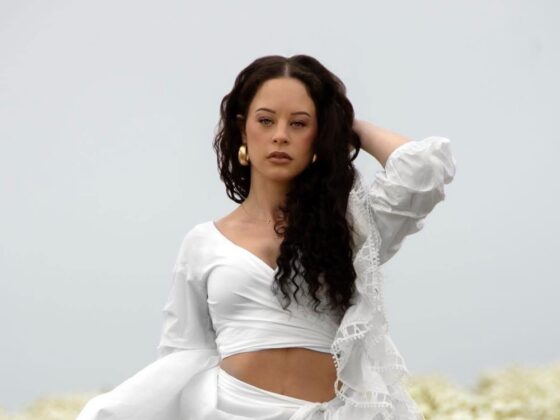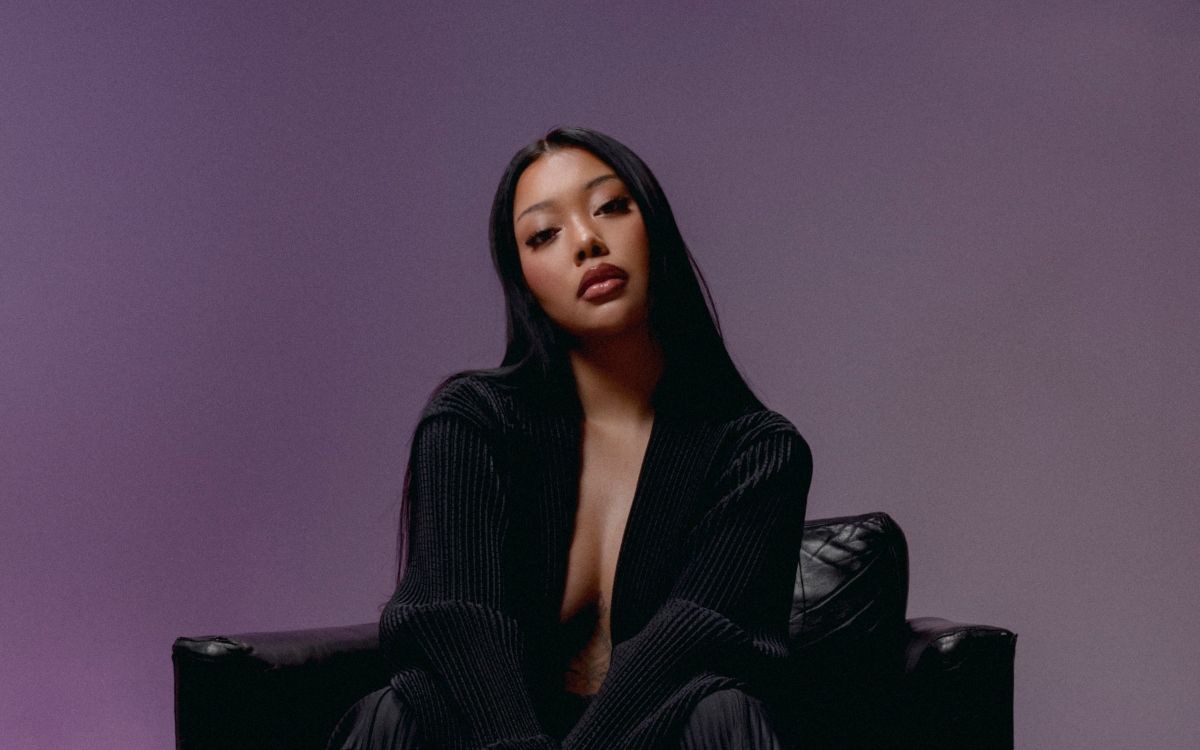
Before the streams started stacking up, before festival stages, EMPIRE, UTA, and an audience stretching far beyond the Philippines, Denise Julia was a teenager figuring out how to put the feelings people rarely say out loud into song.
Then came “NVMD.”
That record didn’t simply travel—it opened the door. Suddenly, a young Filipina singer-songwriter with an unmistakable R&B sensibility was reaching listeners around the world without sanding down the edges of who she was. Sweet Nothings (Chapter 1) followed, “B.A.D.” with Bay Area’s own P-Lo turned up the temperature, and Sweet Nothings (Chapter 2)made one thing clear: Denise Julia wasn’t having a moment. She was building something.
But numbers only tell the loud part of her story.
Her real pull lives somewhere quieter—in wanting somebody you don’t completely trust, knowing your worth but still wanting to be wanted, and navigating love in an era where intimacy can begin with a text, deepen over FaceTime, survive across thousands of miles… or disappear without explanation. There’s a familiar warmth in her music for anybody raised on the vulnerability and attitude of 2000s R&B, but Denise doesn’t cosplay the era. She takes the feeling and makes it belong to right now.
Which brings us to LOVE AGAIN.
Across six tracks, Denise isn’t simply asking who deserves her heart next. She’s wrestling with something harder: after disappointment teaches you how to protect yourself, how do you learn to lower the armor without losing yourself in the process?
That’s where this chapter gets interesting.
The stages are getting bigger. The passport is collecting more stamps. More ears are listening. But the intimacy that made people connect with Denise Julia in the first place hasn’t disappeared.
She’s still turning those things we think, feel, text, delete, and sometimes never send into R&B.
Only now, the whole world gets to listen.
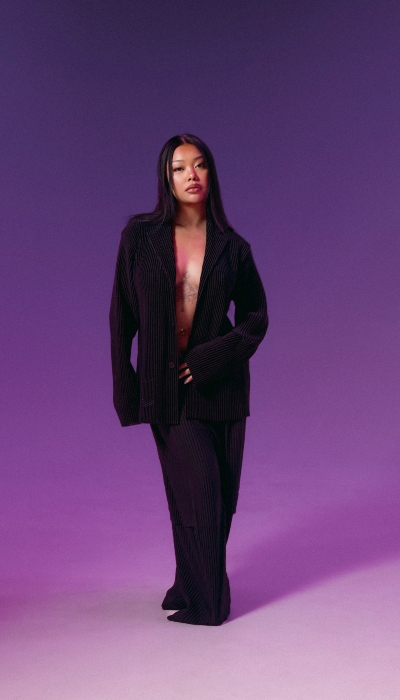
Parlé Mag: LOVE AGAIN sounds like a title, but it also feels like a decision. What had to change in you before those two words actually meant something instead of just sounding beautiful?
Denise Julia: I think I had to admit that I stopped loving a lot more than just a person. I stopped loving music the way I used to. I stopped feeling excited about my own life. Even moving to the United States had been my biggest dream for so long, but once I was finally there, I kept asking myself, Why is this so hard? Everything felt unfamiliar.
I had to stop confusing surviving with actually living. I had gotten so used to protecting myself that numbness started to feel like peace. LOVE AGAIN only began to mean something when I let myself believe that pain did not have to be the last important thing that happened to me. It became less about meeting somebody new and more about finding my way back to feeling.
Parlé Mag: You grew up on 2000s R&B, but you don’t recreate that era—you reinterpret it. What’s one lesson from those records that today’s music still hasn’t replaced?
Denise Julia: They knew how to let a feeling sit. The singers were not afraid to sound desperate, jealous, or completely in love. The songs could be dramatic without feeling fake because they fully committed to the emotion.
The R&B I grew up on did not care about looking cool. If they missed somebody, you heard it. If they wanted somebody back, they begged. Those records also understood that a song did not have to rush to prove itself. Everything moves so quickly now, but that kind of patience still cannot be replaced.
Parlé Mag: “NVMD” changed your life almost overnight. When the world suddenly starts listening, how do you keep your own voice from getting drowned out by expectations?
Denise Julia: I remind myself that I made “NVMD” before I knew anybody would care. There was no pressure and no room full of people telling me what Denise Julia was supposed to sound like. All I remember was the hunger. It came from instinct.
Whenever expectations get too loud, I try to return to that version of myself who was simply making something she wanted the world to hear.
Parlé Mag: There’s a quiet confidence in your music that doesn’t ask for attention—it earns it. Was that always your personality, or did songwriting teach you how to trust your own voice?
Denise Julia: I have always had a strong personality, but that does not mean I always trusted myself. I grew up having to defend a lot of my choices, so confidence became something I learned out of necessity.
Songwriting helped me realize that the things I felt were not too much or too specific. They were actually why people connected to me. I think my music sounds confident because I say the things people usually try to hide. Even when I am embarrassed by how much I care, I will still write it exactly that way.
Parlé Mag: The Philippines has always had incredible singers, but you’re helping redefine what global Filipino R&B looks and sounds like. Do you ever feel the responsibility that comes with opening that door wider?
Denise Julia: I feel it because there are still very limited ideas of what a Filipina artist is supposed to look or sound like internationally. But opening the door does not mean making myself the representative for every Filipino artist. It means showing that there can be more than one way for us to exist globally.
I am a woman of color. I am feminine and queer, and I make R&B without separating any of those parts of myself. I can respect where the music comes from while still bringing my own background into it. Those things do not cancel each other out.
I came from Tondo and built my career independently, without an industry family or a shortcut, so every room I enter means something to me. I want other Filipino artists to feel like they can show up fully as themselves too.
Parlé Mag: Your music lives somewhere between intimacy and restraint. How do you know when a song is emotionally honest—and when it’s revealing more than you’re ready to give away?
Denise Julia: I usually know I am being honest when a lyric makes me a little uncomfortable. I have also learned that being an artist does not mean people are entitled to every detail of my life.
I can tell you exactly how somebody made me feel without telling you everything that happened between us. The emotion belongs in the song. Some parts of the story can still belong to me.
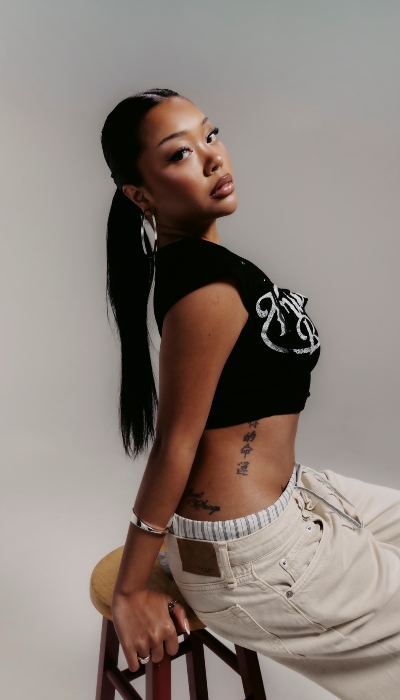
Parlé Mag: As both a songwriter and producer, when do you stop wearing one hat and put on the other? Or have they become the same conversation in your head?
Denise Julia: They have become the same conversation. The lyric tells me what the production needs, and the production sometimes tells me that the lyric is not honest enough yet.
If the words feel intimate, maybe the drums need to pull back. If the melody feels desperate, maybe everything around it needs to sound controlled. Sometimes I will change a lyric because it does not land against the drums the way I hear it in my head. Other times, the production is technically good, but it is not making me feel what the words are saying, so I will strip it back or rebuild it.
I am always just asking what the feeling needs and how to make it translate.
Parlé Mag: Signing with EMPIRE and partnering with UTA opens bigger stages, but success usually makes the room louder. What are you doing to protect the quiet part of yourself that actually creates the music?
Denise Julia: Success can make people feel entitled to every part of you, so I protect the parts of my life that are not for work. I keep people around me who knew me before any of this, and I give myself time where I am not Denise Julia the artist.
The music needs a real person to come from, so I have to make sure I still get to be one.
Parlé Mag: If someone who had never heard Denise Julia pressed play for the first time, what do you hope they understand about you before the first song even ends?
Denise Julia: I hope they understand that I live what I sing. The confidence and desire are not characters I put on when I enter the studio. They come from the way I actually move through life and experience love.
It is not a persona. It is me.
Parlé Mag: Your generation experiences love through text messages, FaceTimes, algorithms, and long distances. Has technology made romance easier—or just made vulnerability easier to avoid?
Denise Julia: I think technology gives people the feeling of closeness without always requiring the responsibility that comes with real intimacy. It is easier to keep somebody around, but it is also easier to disappear, keep your options open, or pull away when things become uncomfortable.
Romance is more accessible now, but I do not know if people have become braver.
Parlé Mag: The best R&B records don’t just soundtrack relationships—they soundtrack seasons of life. Years from now, what season do you hope people remember LOVE AGAIN carrying them through?
Denise Julia: I hope people remember it as the season when their life was changing faster than they could fully understand. That period where you know you have outgrown certain people or places, but you are still grieving who you were there.
LOVE AGAIN is the sound of realizing that you still want something from life after convincing yourself that you did not.
Parlé Mag: When your career is viewed as a whole—not just the streams, charts, or milestones—what do you hope people say Denise Julia gave back to R&B that it was missing?
Denise Julia: I do not think it is my place to decide what R&B was missing. It is a genre with a history much bigger than me. What I hope I can offer is a perspective that feels honest to the life I have lived.
I bring the experience of being a morena Filipina woman from Tondo who found herself in rooms she once could not imagine entering. I also bring the way queer women love and desire each other without feeling the need to translate that experience for anybody else.
I never want to treat R&B like an aesthetic. It’s music I grew up with and music that gave language to feelings I already had. I hope my contribution feels respectful to where the genre comes from while still being unmistakably my own.