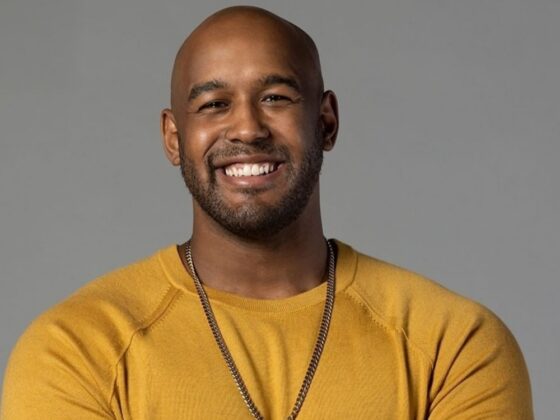
Daley never sounded like he was chasing the moment. Even during the rise of alternative R&B, his music felt deeper than trends — intimate, vulnerable, and rooted in real soul. Records like “Alone Together,” “Look Up,” and “Until The Pain Is Gone” connected because they sounded human. Honest without forcing it. Emotional without trying to perform emotion.
Now, after nearly eight years away, the Manchester-born singer returns with “Lavender” — a lush, cinematic record exploring intimacy, escape, grief, desire, and emotional surrender. Produced alongside UK visionary Swindle, the single blends orchestral textures, layered harmonies, jazz-inflected guitars, and dreamlike percussion into something immersive and weightless.
More than a comeback, “Lavender” feels like an artist reconnecting with himself after silence, loss, and rebuilding. In this conversation, Daley reflects on soul music, isolation, grief, vulnerability, creative survival, and returning with even more clarity and purpose than before.

Parlé Mag: Before the acclaim, collaborations, and sold-out tours, what did young Daley hear in soul music that made you feel understood before you even fully understood yourself?
Daley: Voices were always the most captivating thing for me. Before I understood lyrics or was drawn to any specific genre, I was pulled toward the tone, frequency, emotion, and expression of great voices. In my parents’ house it was Mariah, Luther, Whitney, George Michael, Chaka Khan, Tina Turner, Simply Red, among others. I felt an instant connection to the way they used their voices to emote, and that’s what started me off, I guess. I really believe the vibration of human vocal cords is a direct line to the source.
Parlé Mag: Growing up in Manchester, how much did the city’s mix of isolation, nightlife, and emotional grit shape the vulnerability people hear in your music today?
Daley: Honestly, I have a love-hate relationship with Manchester, so I’m glad you mixed isolation in there… that was one of the key elements to me finding my voice. Growing up there, it didn’t feel very musically diverse. Certainly anything soulful was kind of laughed at, so it was hard to find a group or an outlet.
A lot of time was spent alone in my bedroom, in front of a mic that I’d won in a singing competition, recording, recording, recording… all the songs of my favorite singers, getting to know my instrument and pushing my abilities. Gradually that led to me honing my skills as a songwriter too.
I think being from Manchester pushed me inward — into more vulnerable, sometimes melancholic subject matter. Just glad I made it out!
Parlé Mag: During the Those Who Wait and Days & Nights era, did you realize you were helping reintroduce emotional honesty into male R&B at a time when vulnerability wasn’t always embraced?
Daley: I did not! I don’t think I was aware of any of the “bigger picture” at that time. I knew I wanted to express and connect with people on that human frequency — that there was something beautiful about it.
And I suppose I did feel like I had a different take, that I might be able to uphold the teachings and standards of the singers I admire through my voice at a time when everyone was (and is!) cranking the auto-tune.
As time went on and I started to see how my music made its way into people’s lives, then the realization of what an honor and responsibility it is to have that job kind of dawned on me.
Parlé Mag: Your records often feel deeply personal, almost like private thoughts set to melody. Was creating that emotional closeness always intentional?
Daley: I think it’s the area that feels most authentic for sure. As a songwriter, it’s a trip to write a catchy hook or go in on wild ad-libs. But I really like finding those subtle, often unspoken, sometimes contradictory moments we’ve all felt and experienced. Then I build them into songs in a way that feels relatable.
The rule is: if I’ve felt it… so have you.
Parlé Mag: Working with artists like Stevie Wonder, Pharrell, Jill Scott, Gorillaz, Marsha Ambrosius, and others, what moments behind the scenes impacted your artistry the most?
Daley: Ahh goodness. There’s so much wisdom and encouragement gained from those I’ve collaborated with.
Pharrell really taught me the beauty of simplifying — not overworking an emotion that’s already there in the lyric or melody.
Jill told me to be wary of record label BS… “Never let them take you out for expensive dinners. Tell them you want McDonald’s and see if they still wanna go,” because inevitably the dinners go on the artist’s tab long-term. She’s the best.
Marsha was the first person to really take a chance on me as an unknown. She embraced me and made me feel seen and understood in the studio.
Stevie gave me one of the most beautiful moments I’ve ever experienced… he sat me down at a piano in front of his whole band and crew and played a song he wrote specifically for me. Hopefully it comes out someday. 🙂
Parlé Mag: After stepping away for nearly eight years, did you ever question whether music — or even the desire to create — would fully return?
Daley: Absolutely. I had many moments where I really thought it was time to move on. The music industry is a desolate place — quick to discredit and discard.
I was often feeling uninspired, though I never really stopped making music. I guess it was just a necessary hibernation or recharge period to prepare me for the next chapter.
The loss of my dad also made me feel like certain things weren’t that important or worth feeling sad about. I had to process that in time.
But I’m happy to say the thread of music always carried through. The enduring encouragement and love from my fans was an absolute lifeline. They held the love and the faith where the music industry failed.
Parlé Mag: How did grief, silence, and rebuilding yourself personally reshape the way you approach songwriting now compared to a decade ago?
Daley: Grief just put all emotions in perspective for me. Many things I had been sad or emotional about before losing my dad became irrelevant or trivial.
For a while it made me quite numb and indifferent — not great for songwriting! So I had to pull through that.
Now I just feel like my vision is wider, more experienced, more tuned into what matters and what doesn’t. I also try not to take anything too seriously now.
Parlé Mag: “Lavender” feels immersive, cinematic, and emotionally weightless all at once. Did you want the song to feel more like drifting through memory than simply hearing music?
Daley: Hmm, when you put it like that, I’m not sure. For me it was drawn from some memories, and some things I’ve never experienced in love that I want to manifest.
So hopefully for the listener it exists somewhere between the two. I definitely wanted it to feel like something you float away into… either by yourself or with your person.
Parlé Mag: There’s a sharper emotional honesty in your newer music that feels different. What can Daley express now in 2026 that earlier versions of yourself maybe couldn’t yet?
Daley: I’m enjoying tapping into some slightly more brutal sentiments.
For instance, I have a few new breakup songs that kind of carry this undertone of “IDGAF… GTFO…” haha. Like I’m not here to dance around certain emotions or issues anymore — let’s just get to the truth.
Is it over? Cool. God bless.
That’s definitely new for 2026. But it’s not all like that. I’ve also been doing a lot of projecting the kind of love I want to feel too — idealized, romantic, connected love. Hopefully the project lands somewhere in that balance.
Parlé Mag: In an era driven by algorithms and instant consumption, how important was it for your return to prioritize timeless feeling and genuine human connection over trends?
Daley: It’s the most important thing.
We are losing so much of the beautiful craft that those who came before us established. It’s because of the way music is consumed now. People can swipe away after two seconds, and the companies encourage it.
I really don’t know where things will land, but I will always prioritize feeling and connection between artist and listener.
Parlé Mag: Looking back now, what do you hear differently when revisiting songs like “Alone Together,” “Look Up,” or “Until The Pain Is Gone”?
Daley: Everything! Haha.
I’m so used to singing them live now that I’m more familiar with the arrangements I do with my band than the studio versions. I don’t really listen to them much.
Singing them live, I stay faithful to the records, but I add new accents and layers. Sometimes when I hear the original recording I think, “Oh wow — remember when I sang it like that?” Other times I like it, and other times I don’t.
But I’m proud of all those songs. I think they’ve held up really well.
Parlé Mag: Entering this new chapter, what do you hope longtime fans and first-time listeners alike truly understand about Daley — not just as an artist, but as a man who disappeared, evolved, and returned with even more soul to give?
Daley: I love it when people tell me my music gives them a feeling they’ve been missing or yearning for in the musical landscape.
I’ve been getting that a lot with the release of “Lavender.” It feels almost like relief that I haven’t sold out. People can come back to my music and feel at ease enough to lose themselves in it again.
I think some of it is nostalgia, which I love. But what excites me is that the music I’m making now isn’t really playing into nostalgia. I’m pushing things sonically and vocally in ways that will hopefully give people new insight and a completely new experience of me.
Hopefully one that sits perfectly beside the music they already know and love.
Thank you for the in-depth and thoughtful questions — much appreciated. 🙏🏻
Stay Connected with Daley
Instagram: @daley
Facebook: Daley
Official website: Daley | Official Site