Some artists make records.
Others document turning points.
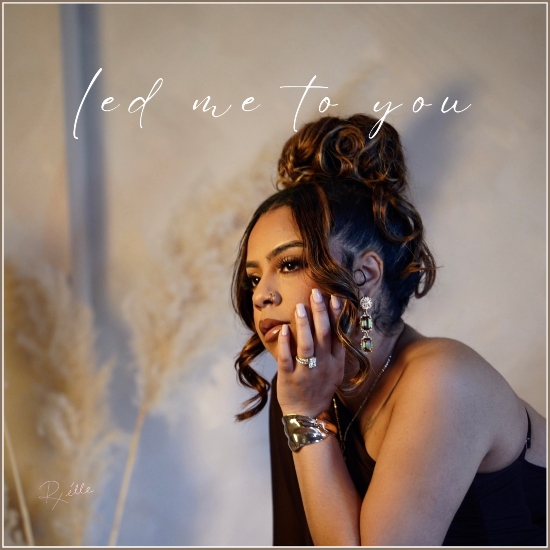
For Ryélle, Led Me To You is both.
Long before the acclaimed producers, industry recognition, and growing momentum, Adrianna Ryles was a young woman from Buffalo searching for something success alone couldn’t provide. Music was never simply entertainment—it was refuge. It quieted anxiety, steadied uncertainty, and became the one place where she could hear herself above the noise.
Then life happened.
Degrees. A corporate career. Financial stability. By every outward measure, she had made it. Yet somewhere between climbing the ladder and chasing security, she realized success and fulfillment aren’t always traveling in the same direction.
So she made the hardest decision of all.
She walked away.
Not just toward music—but toward purpose.
That transformation lives inside every song on Led Me To You. Rooted in the emotional honesty of ’90s R&B while embracing a deeply personal spiritual journey, the EP finds Ryélle trading perfection for transparency. Produced by HeroThaProducer and OGTha3, with Grammy Award-winning engineer Darth “Denver” Moon, the project isn’t built on trends—it’s built on truth.
What makes Ryélle compelling isn’t that she has all the answers.
It’s that she’s willing to share the questions.
In an era where image often outweighs authenticity, Led Me To You is a reminder that the most powerful music doesn’t always come from people who’ve arrived.
Sometimes it comes from those brave enough to admit they’re still becoming.
And perhaps that’s Ryélle’s greatest strength.
She isn’t asking listeners to follow her.
She’s reminding them that it’s never too late to find their own way home.
Parlé Mag: Before the streams, the studio sessions, and Led Me To You, who was Adrianna Ryles growing up in Buffalo? What did music become for the little girl who was trying to make sense of the world around her?
Ryélle: I was just a child with huge dreams. I loved to express myself, and even though I wasn’t always encouraged, I made my room my safe place for my talents. I was mimicking songs off the radio for as long as I can remember. I didn’t have language for what I was doing—I just knew it kept me calm and made me happy.
Growing up on the West Side of Buffalo was humbling. I dealt with a lot of dysfunction and instability. Music became how I self-soothed. It eased my anxiety, lifted feelings of depression, and brought me peace. I loved music. I loved how it made me feel. It was the one thing that remained consistent in my life.
Parlé Mag: You earned an NYU graduate degree and built what many people would call a successful corporate career. Was there a specific moment when you realized success and fulfillment weren’t necessarily the same thing?
Ryélle: It’s funny how we consider one thing to be success, then when we finally get there, we realize, This ain’t it.
I did everything “right.” I was a straight-A student. I stayed focused. I earned both my bachelor’s and master’s degrees because I bought into the promise of stability.
When I landed my first real job, I thought, Wow, now I’ll finally be able to afford studio time and fund my music career. I’ll finally be able to live in a big city with more music opportunities.
The truth is, once you’re locked into a salary, the clock never stops. You don’t have time to make music. Not only is time no longer on your side, but your energy is depleted from the mental demands of the workday.
I had financial stability, but the cost was my mental stability and the constant dimming of my spirit.
Parlé Mag: Walking away from security to pursue music full-time takes more than talent—it takes faith. Looking back, what was harder: leaving the career you knew or trusting the life you couldn’t yet see?
Ryélle: Leaving the career I knew was hard because, over time, I became good at playing the corporate game—landing high-paying jobs, selling my skills, and climbing the ladder.
But it was all fake, and I got tired of pretending to play a role I was never meant for.
I kept asking myself, Why am I working here? The answer was always money.
That’s when I realized I was off course and couldn’t serve two masters.
Even months after I quit, I still had to fight the urge to go back—almost like leaving a toxic relationship.
Logically, you could argue that music is a hard business and it would be easier to return to what already works. I don’t know exactly what my future holds. I just know my best path is to remain obedient.
I believe that, in time, God will reveal what He has for me—not only as an artist, but also as an entrepreneur and someone whose gifts can be used in healthy, fulfilling spaces.
Parlé Mag: When did your songwriting stop becoming about self-expression and start becoming a reflection of your spiritual journey?
Ryélle: To me, self-expression is about revealing the emotions and thoughts that help define who you are. Documenting my spiritual journey reflects the very foundation of who I am.
I got tired of chasing a hit. It wasn’t fulfilling to write songs based on what people might want to hear in today’s R&B landscape. It simply wasn’t the season of life I was living.
I owed it to myself—and to my Creator—to steward my gifts in a direction that felt authentic.
For the first time, I felt like I had something deeper to say.
Parlé Mag: Contemporary R&B has always been rooted in vulnerability. Artists like Aaliyah, Tamia, TLC, Mariah Carey, and Destiny’s Child balanced honesty with accessibility. How have those influences helped you find your own voice instead of simply echoing theirs?
Ryélle: I grew up on ’90s R&B—when people sang their hearts out. It’s still my favorite genre because it makes you feel something. The instrumentation was rich, and the lyrics meant something.
At my core, I’m R&B.
I wanted to stay true to that sound while pouring my heart into the lyrics.
As far as the direction of the songs, that honestly came through prayer. I asked God to lead me in telling my story in a way that was authentic to me.
Once I realized I already had everything I needed, I stopped second-guessing myself.
Parlé Mag: Your earlier records explored relationships and life’s challenges, while Led Me To You begins from a completely different emotional place. As a songwriter, what changed first—your faith, your perspective, or your pen?
Ryélle: My faith became stronger.
About four years ago, God stripped everything away—my job, my friends, even my music.
That season forced me to seek Him.
Over time, He restored everything. He gave me a better job, relocated me, introduced me to my husband, and completely redirected my life.
Eventually I was baptized, and my faith continued to deepen.
For the first time, I truly understood who I was, and I leaned into that unapologetically.
Parlé Mag: You’ve assembled an impressive creative team, from HeroThaProducer and OGTha3 to Grammy-winning engineer Darth “Denver” Moon. How do you make sure your own vision remains the heartbeat of the music while collaborating with people who’ve worked on major records?
Ryélle: Those collaborations elevated my sound. They helped capture and shape exactly what I imagined this project could become.
As an emerging artist, I think it’s important to listen and learn from people who already have experience in areas where you want to grow.
I learned so much throughout this process.
There were difficult days in the studio because I’m a perfectionist and rarely felt satisfied with my performances.
Eventually, I learned to trust myself, give my best, and let go.
This is my first EP, so simply finishing it is a huge milestone.
Parlé Mag: There’s often pressure for artists to separate faith from mainstream music. You seem determined to prove they can coexist. Was that balance intentional from the beginning, or did it reveal itself during the recording process?
Ryélle: I had a feeling I was heading in that direction, but I still had reservations.
Going into the project, I wasn’t exactly sure what I wanted to create. It revealed itself through the writing.
The more I wrote, the more I realized I couldn’t write about anything except my love for God and what He had done in my life.
The songs I used to write felt toxic. They belonged to a version of myself I was leaving behind.
The music became something different.
Something that reflected who I was becoming.
Once that became clear, I committed fully.
The goal was to create music that could live on a mainstream playlist while still carrying real spiritual weight for the people it’s meant to reach.
Parlé Mag: Looking back over your journey—from viral moments and industry opportunities to career pivots and personal transformation—is there a chapter that once felt like a setback but now makes perfect sense in hindsight?
Ryélle: I came into music simply to honor my gifts.
I created because I loved the craft.
I didn’t care whether anyone else liked it.
I never expected anything in return.
Sharing your gift with the world changes things.
You expect people to be as excited as you are.
You aren’t prepared for rejection, closed doors, comparisons, or the long fight to be seen and heard.
That journey can create wounds, and eventually it pollutes the purity of why you started.
One day you realize you’ve drifted far away from your original purpose.
What once began as honoring God’s gift had slowly become about popularity and attention.
This record brought me back to my “why.”
I want to encourage people, help them feel seen, and plant seeds of faith and curiosity.
Parlé Mag: Your music feels like it’s speaking to people who are still figuring life out instead of pretending to have all the answers. Why was it important to invite listeners into a journey that’s still unfolding rather than presenting yourself as someone who’s already arrived?
Ryélle: Because no one is perfect.
We’re all imperfect people.
Life is messy.
We do our best, and sometimes that’s enough.
So many people compare their lives to what they see on social media.
Someone could look at my life and assume I have it all together, but that’s simply not true.
Living inside an image of perfection isn’t healthy because the moment you fall short, you begin rejecting who you really are.
You end up creating an alternate version of yourself while slowly hating the real one.
God never calls us to reject ourselves.
He created each of us with purpose.
Self-rejection happens every day, often without us even realizing it.
This project embraces the beauty of imperfection and the parts of the journey that most people try to hide.
Parlé Mag: What do you hope someone quietly struggling with purpose, identity, or faith discovers after spending twenty minutes with Led Me To You?
Ryélle: I hope they see themselves in the story.
I hope they become curious about the peace I’m describing.
There’s so much confusion in the world today.
I hope they’re encouraged to explore their own faith, ask honest questions, and discover the truth about their identity and the gifts they’ve been given.
Parlé Mag: Five, ten, even twenty years from now, when people look back at this season of your life, what do you hope they’ll say Led Me To You represented—not just for Ryélle the artist, but for Adrianna the woman?
Ryélle: I hope they’ll see it as the beginning of a journey marked by fulfillment, healing, and freedom.
A reflection of a life with God’s hand all over it.
Twenty years from now, I want to press play on Led Me To You and have it resonate just as deeply as it did the very first time.