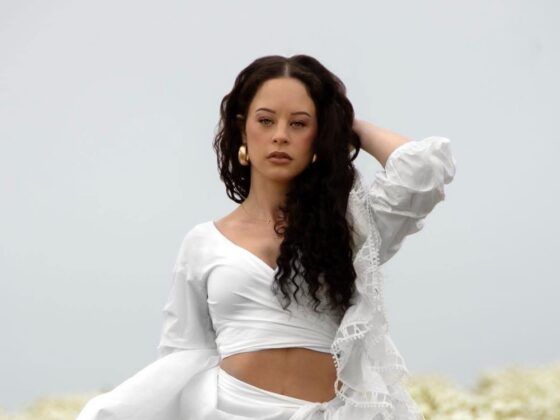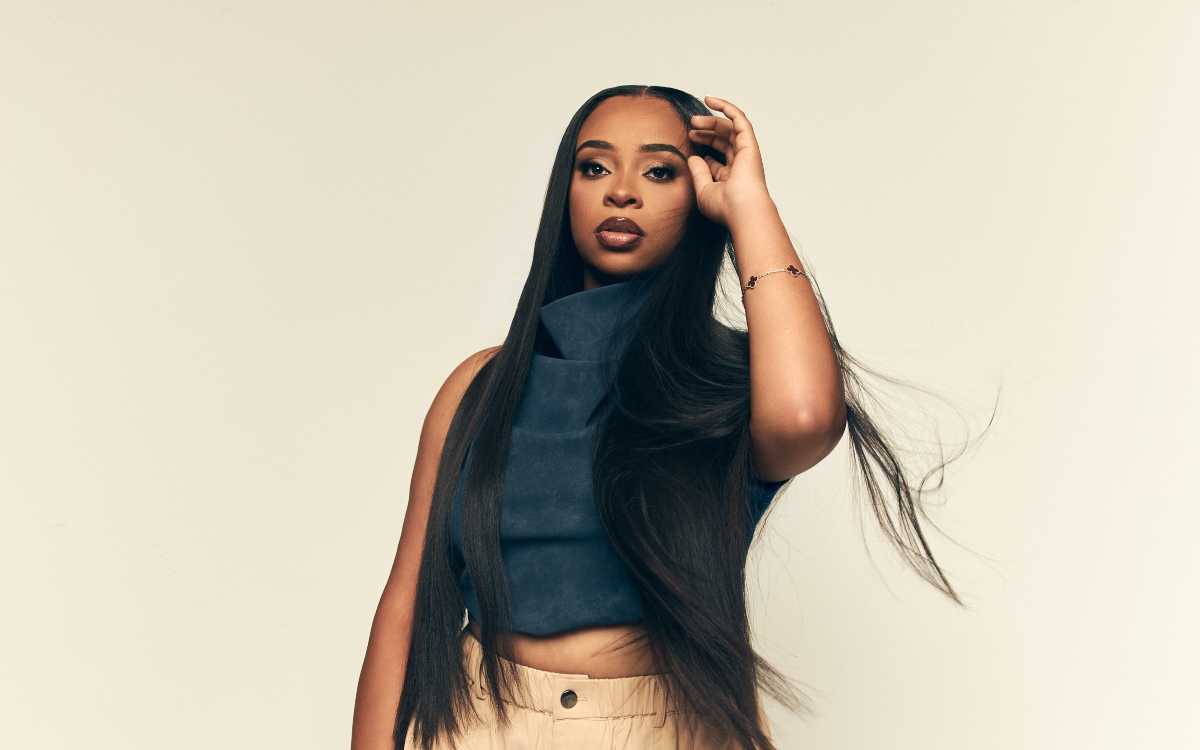
From The Voice to finding her own—and everything in between.
At 17, a young Koryn Hawthorne stepped onto The Voice stage with Pharrell Williams in her corner and a lifetime of singing behind her. The Louisiana girl who had been competing since she was seven had finally arrived at the moment she’d dreamed about.
She just didn’t know it wasn’t the destination.
It was the beginning.
The Voice introduced America to that unmistakable voice, but the years since have revealed the woman behind it. From a fourth-place finish on the show to a GRAMMY-nominated debut, Platinum-certified “Won’t He Do It,” Billboard No. 1s, an NAACP Image Award, multiple Dove Awards, and more than a billion streams, Koryn didn’t simply build a career—she grew into one.
And she never left home behind.
Louisiana, church, Gospel, family, Southern culture and faith remain woven into everything she does. Yet Koryn has never treated Gospel like a box. Her music has embraced R&B, soul, pop, contemporary production and modern Hip-Hop influences while keeping the message—and God—at the center.
That’s the beauty of her evolution.
The girl who once dreamed of getting on television became a woman learning the business, finding her identity, weathering its highs and lows, and discovering that success means a whole lot more than trophies and chart positions.
Now, she’s entering another chapter with Motown Gospel and new music that sounds less like a reinvention and more like a woman finally giving herself permission to be completely free. “His Favorite” speaks to knowing your worth beyond numbers, validation and applause.
And there is Koryn beyond the microphone—the homebody, cook, builder, horse and chicken keeper, Louisiana girl creating a life and documenting the journey through Koryn’s Construction. Because somewhere along the way, success stopped being only about what she could accomplish and became about what she could build.
That’s the through line.
From a seven-year-old girl chasing singing competitions, to a 17-year-old standing before America, to the award-winning artist and woman she is today, Koryn Hawthorne has spent more than a decade growing up in public without growing away from herself.
The voice got her noticed.
Faith kept her grounded.
Experience gave her perspective.
And now, she’s finding out just how powerful it can be when you finally know who you’re singing as.
This is Koryn Hawthorne—then, now, and the next chapter.
Parlé Mag: Long before the GRAMMY nominations, Platinum records, and Billboard No. 1s, you were a 17-year-old Louisiana girl standing on The Voice stage with Pharrell Williams in your corner. When you look back at her now, what did that young Koryn already know about herself—and what did she still have to learn?
Koryn Hawthorne: I think 17-year-old Koryn knew exactly what she wanted in that moment. I had been doing singing competitions since I was seven years old, and being on a reality singing competition was literally my dream. I watched shows like The Voice and American Idol, and in my mind, that was how I was going to get my start. So when I got to The Voice, I felt like I had been preparing for that opportunity my whole life.
What I didn’t understand was how much bigger my life could become after that.
At 17, I was naive in a lot of ways. The music business was still completely unfamiliar to me, and record deals or building a career that would last beyond the show weren’t things I was thinking about. Looking back, I don’t even think I fully understood how drastically my life was about to change. At that point, just being on The Voice was the dream come true.
Looking back now, I think that’s what makes it so beautiful. The thing I thought was the destination was really just the beginning. I knew I wanted to sing. I knew I had worked for that moment. What I still had to learn was everything that came after it—who I was as an artist, who I was as a woman, how this business works, and ultimately how much bigger God’s plan for me was than the one I had for myself.
Parlé Mag: Coming from small-town Louisiana, church, family, Southern culture, and Gospel were part of your foundation before the industry ever entered the picture. What pieces of home are still embedded in your voice, no matter how far the music takes you?
Koryn Hawthorne: All of it. I don’t think you can separate me from Louisiana if you tried.
The church is in me. Gospel is in me. The way we talk, the way we love people, the way we cook, the way family comes together, even the way we celebrate—it’s all a part of who I am. And I think you can hear that in my music because there’s a certain soulfulness and honesty that comes from where I’m from.
No matter where I go, I still want to come home. I still want my family around me. I still want my land, my animals, my kitchen, my people. The industry is something I do, but Louisiana is a huge part of who I am.
Parlé Mag: “Won’t He Do It” became the record that changed everything—a Platinum-certified Gospel anthem that crossed beyond traditional Gospel audiences. Did its success feel like confirmation that you could remain rooted in faith without putting boundaries around how your music sounded or who it could reach?
Koryn Hawthorne: Absolutely. “Won’t He Do It” really showed me that the message doesn’t have to change just because the sound evolves.
People who maybe didn’t consider themselves traditional Gospel listeners connected with that record. And that was important for me because I’ve never wanted to make music that only one type of person could understand or enjoy. My foundation is always going to be my faith. That’s not changing. But I think God gives us creativity too.
So that song gave me permission, in a sense, to keep exploring. I can make something that feels current, something that feels like me culturally and musically, and still be completely clear about who I’m talking about and where my faith is.
Parlé Mag: Your musical DNA stretches from Fred Hammond, Mary Mary, and Kirk Franklin to Mary J. Blige, Lauryn Hill, Etta James, Tina Turner, and Michael Jackson. Gospel has always borrowed from—and given back to—R&B, soul, funk, and pop. How do you honor that lineage while making sure what comes out still sounds unmistakably like Koryn Hawthorne?
Koryn Hawthorne: I think that’s exactly why my music sounds the way it does. I genuinely listen to all of it. Growing up, I loved Gospel, but I also gravitated toward R&B, soul, pop, and all these different sounds and artists who made you feel something.
I don’t go into the studio saying, “I need to make this sound Gospel enough,” or “I need to make this sound R&B enough.” I’m more interested in whether it feels authentic to me.
My voice is going to naturally carry Gospel because that’s where I come from. My faith is naturally going to show up because that’s who I am. So that gives me freedom with everything else. I can play with production, melodies, and different genres without feeling like I’m losing myself.
Parlé Mag: You’ve earned two GRAMMY nominations, Billboard, NAACP Image, Dove, and Stellar recognition, but accolades can sometimes become another kind of expectation. Once you’ve been labeled “award-nominated” and “award-winning,” how do you keep achievement from becoming the thing that defines your purpose?
Koryn Hawthorne: I had to learn not to make an idol out of achievement.
Of course I’m grateful for every nomination, every award, every No. 1, and every person who has supported my music. Those things mean something to me. But if I make those things the reason I do this, then I’m always going to be chasing the next thing to validate me.
And I think that’s where “His Favorite” connects so much to where I am in life right now. My worth can’t be attached to whether I win an award, whether a song charts, or whether everybody understands what I’m doing. I have to know I’m already loved, already chosen, and already valuable before any of that happens.
The accolades are blessings. They’re just not my identity.
Parlé Mag: Now comes another major chapter: Motown Gospel. There’s serious history attached to both of those words—Motown and Gospel. What did signing there represent for you at this stage of your career, and what made it feel like the right home for this next evolution?
Koryn Hawthorne: For me, it really came down to the people and the feeling of partnership.
I signed my first record deal at 18 years old. I was young, I was naive, and I didn’t know anything about the music business. I’ve learned a lot since then—some of it the easy way and some of it the hard way. So naturally, over the years, I had built this list in my head of things I would know better the next time, things I would ask for, and the kind of relationship I wanted to have with a label.
When I started talking to Walter Thomas at the label, so many of those things just clicked. He made me feel like a partner. It wasn’t just about, “What music can Koryn give us?” I felt like he genuinely cared about me as a person, where I wanted to go, and what I wanted this next chapter of my career to look like. At this stage in my life, that matters to me.
And then there’s Justin Tomlinson, who I’ve known since the beginning of my career. He had just started at my previous label around the time I was signed, so in a lot of ways, we’ve grown through this industry together, even as he’s gone on to work in different places. For us to come full circle and be working together again now feels really special.
I genuinely have some of the best relationships I’ve ever had with the people at my label right now. So yes, Motown and Capitol come with incredible history, but what made me sign was knowing I was stepping into a partnership with people I trust—people who see where I’ve been, understand who I am now, and want to help me build where I’m going next.
Parlé Mag: “His Favorite” carries a deceptively simple message: your worth isn’t something you have to earn—you are already loved and chosen. In a world where likes, numbers, charts, and validation can make people feel as though their value is constantly being scored, why was that the message you wanted leading this new era?
Parlé Mag: J. White Did It—who has worked with Doechii, Cardi B, and Megan Thee Stallion—is executive producing your new music. Those aren’t necessarily names people would automatically associate with traditional Gospel. What happens creatively when you bring those musical worlds into the room but keep faith at the center?
Koryn Hawthorne: That’s actually what makes it exciting to me.
J. White comes from a world where production is bold, current, and culturally relevant. And I come in with who I am, my voice, my faith, and my perspective. Nobody has to pretend to be anything else.
I don’t think you have to water down Gospel to make it current. Sometimes you just need to put Gospel in rooms where people didn’t expect to hear it.
And J understands music. He understands records. So we’re able to push the production and experiment, but the center never changes. The music may surprise you, but when you listen to what I’m saying, you know exactly who Koryn is.
Parlé Mag: Your new music feels like another step in pushing the boundaries of what contemporary Gospel can sound like. What were you most excited to explore creatively this time around, and how did you approach making music that still feels authentically you?
Koryn Hawthorne: Freedom.
I think that’s probably the biggest word for this chapter. I’ve been doing this professionally since I was a teenager, so I’ve gone through seasons where I was figuring out who I was, what people expected from me, and where I fit. This time, I wasn’t really interested in fitting.
I wanted to make music I would actually play. Music that feels good in the car, music that you can perform, music that lives outside of Sunday morning—but the message still points back to God.
And I think that’s actually more authentic for me because that’s how I live. I’m a Christian every day, not just when I’m singing a traditional Gospel song. So why shouldn’t the soundtrack of my faith have range too?
Parlé Mag: As you enter this next chapter of your music, what do you hope listeners hear or feel differently when they hear Koryn now compared with where you were a few years ago?
Koryn Hawthorne: I hope they hear freedom. I hope they hear confidence. And I hope they hear a woman who knows herself now.
I’m not the teenage girl who entered this industry anymore. I’ve lived. I’ve won some things, I’ve lost some things, I’ve been disappointed, I’ve grown, I’ve had to start over in certain areas, and my relationship with God has matured through all of it.
I think the music reflects that.
I’m not singing from a place of trying to become Koryn anymore. I’m Koryn. And now I get to explore what that sounds like.
Parlé Mag: There’s also a Koryn away from the microphone that fans have gotten to know—cooking, renovating your home, and building a farm back in Louisiana. After entering this business so young, has creating a physical home and life for yourself become part of redefining what success actually looks like?
Koryn Hawthorne: One hundred percent.
I entered the industry so young that success looked like career milestones for a long time. Another opportunity, another song, another show, another award.
As I’ve gotten older, success has become much more personal.
I’ve built my home and have land, chickens, and horses. Cooking is something I enjoy, too. I get to wake up and enjoy a life that exists beyond the microphone.
That’s important because Koryn the person has to exist outside of Koryn the artist.
There was a time when I thought slowing down meant I wasn’t doing enough. Now I understand that enjoying what you’ve built is part of the blessing, too.
Parlé Mag: You’ve performed at Essence Festival and spoken at Sarah Jakes Roberts’ Woman Evolve, spaces where music, faith, culture, and Black womanhood intersect in different ways. As you’ve matured, have you become more aware that your assignment extends beyond simply being the woman who walks onstage and sings?
Koryn Hawthorne: Definitely.
I think when you’re younger, you think the gift is the assignment. So because I could sing, I thought, “Okay, this is what I’m supposed to do.”
Now I understand the singing might just be one of the vehicles.
Sometimes somebody needs the song. Other times, the conversation is what they need. There are also moments when somebody simply needs to see me living my life and understand that you can love God, be successful, have fun, build things, make mistakes, grow, and still be completely yourself.
I think my responsibility is bigger than standing onstage and hitting the right notes. If God gives you influence, there should be some purpose connected to it.
Parlé Mag: Gospel has evolved from choirs, quartets, and Sunday-morning radio through contemporary Gospel, Gospel-R&B, Hip-Hop collaborations, and now streaming-era genre fluidity. Where do you see Koryn Hawthorne and your upcoming releases contributing to that continuum, and what boundaries do you want to push next?
Koryn Hawthorne: I don’t know if I’m interested in deciding exactly where I fit. I’d rather make the music and let history decide where it belongs.
Gospel has always evolved. Every generation has had artists who made people ask, “Is this still Gospel?” Years later, that sound often becomes part of the fabric of Gospel music.
For me, the message matters more than the musical boundaries. I want to see how far we can take the sound without losing the truth.
I want Gospel music to exist everywhere. Not because we’ve hidden God to get it there, but because the music is so undeniable that people make room for it.
Parlé Mag: Bring it all the way home: at 17, America met a young woman with a remarkable voice and enormous potential. Since then came “Won’t He Do It,” Unstoppable, a billion-plus streams, awards, GRAMMY nominations, growing pains, and now Motown Gospel. If that 17-year-old Koryn could hear your new music today, what would make her proudest—not about how big the career became, but about the woman behind the voice?
Koryn Hawthorne: I think she’d be proud that the dream got so much bigger without me losing who I am.
At 17, The Voice was the dream. That was it. I had been singing competitively since I was seven. Making it onto a show like that was something I’d imagined for years.
At the time, I wasn’t thinking about record deals, GRAMMY nominations, Platinum records, or the kind of artist I’d become. All that mattered was seeing a childhood dream finally become a reality.
If she could see me now, I think she’d be amazed to see how much bigger the dream became after The Voice. It opened the door to a life she didn’t even know to imagine.
But more than the career, I think she’d be proud of the woman I’ve become.
I’ve learned, made mistakes, and grown through seasons of being naive. I entered the industry before I really knew myself. That meant learning how to grow up along the way. I’ve experienced incredible highs and difficult seasons. Through all of it, I’ve become much more secure in who I am.
I think she’d be proud that I’m still Koryn. My love for God, home, and family remains at the heart of who I am. I still dream big. But now I’m not just a girl hoping somebody gives her an opportunity. I’m confident in who I’ve become. I’m proud of what I’ve built. Most importantly, I’m intentional about where I’m headed.
And I think 17-year-old me would be proud to know that the dream came true. It just happened in a way she could never have imagined.
Stay Connected with Koryn Hawthorne
Instagram: @korynhawthorne
YouTube: @KorynHawthorneMusic
FaceBook: @korynhawthornemusic
Koryn Hawthorne Official Site