With Questlove already reframing the legacy of Earth, Wind & Fire for a new generation through his still untitled documentary, Ralph Johnson steps in from inside the machinery itself with Rhythm & Fire. This time, it’s not commentary. It’s the room, the sweat, and the timing. It reveals the truth behind the glow. This is the sound of memory still vibrating. It is not a polished retrospective. It’s a lived transmission from one of the architects who helped turn rhythm into a global language. The “science of soul” isn’t theory here. It’s instinct, repetition, discipline, and divine timing. These were learned in real time while the world caught up.
From a young, jazz-rooted kid in Los Angeles, Maurice and Verdine White pulled Johnson into orbit in 1971. He traces the moment a local calling became a worldwide frequency. What follows isn’t just the rise. It’s the ignition. These were early studio rooms where creativity felt electric. Songs like “Shining Star” were not just written. They were built, layered, and brought to life. The band refused to sound like anything already on the map. Earth, Wind & Fire didn’t just enter the culture. They expanded it.
Then there’s the part most stories gloss over. These are the in-between years, where greatness doesn’t stop. It sustains. There’s the road, the reinvention, and the discipline required to stay locked into a sound that still feels futuristic decades later. Johnson’s footprint goes beyond percussion and vocals. It extends into songwriting and production. “Sounds Like a Love Song” continues its afterlife through generations of sampling, including Jay-Z’s “Song Cry.” It’s proof the catalog didn’t age. It multiplied. Now, still holding the foundation alongside Philip Bailey and Verdine White, and preparing for the “Sing a Song All Night Long” tour, Johnson isn’t closing a chapter. He’s tightening the groove. Earth, Wind & Fire was never just history. It’s motion. It’s memory in real time. And it still hits like the downbeat of something that never stopped moving.
Parlé Mag: After more than fifty years helping shape the sound of Earth, Wind & Fire, what inspired you to finally tell your story in Rhythm & Fire now?
Ralph Johnson: I was inspired by my grandchildren. I wanted to leave behind a tangible literary account of my time growing up in Los Angeles and the journey in both my personal life and my life with EWF.
Parlé Mag: Take us back to 1971—when you were discovered by Maurice White and Verdine White at an L.A. club. What do you remember about that night, and did you sense you were stepping into something historic?
Ralph Johnson: The fact of the matter is, I don’t really remember that night or meeting them. What I do remember is the phone call to come and audition shortly thereafter.
Parlé Mag: During the band’s early rise in the 1970s, when songs like “Shining Star” and other classics were created, what was the creative atmosphere like inside the studio and rehearsal rooms?
Ralph Johnson:Anytime we were in the studio, the atmosphere was highly charged with creativity and intensity.
Parlé Mag: Earth, Wind & Fire blended funk, soul, jazz, and spirituality into something totally unique. How did that musical philosophy—the “science of soul”—develop during the band’s golden era?
Ralph Johnson: Maurice’s musical philosophy was brought about by his vision and foresight. We all just fell in place, and it kept growing.
Parlé Mag: Having performed for over 100 million people worldwide, what moments on stage made you realize the band had become a global cultural force?
Ralph Johnson: I started to see the beginnings of our cultural force when we did the California Jam in 1974, and then when we went overseas to Japan and Europe, and at home playing venues like the Royal Albert Hall, the Forum, and the Hollywood Bowl.
Parlé Mag: The book includes 30 rare photos from your personal archive. What stories or historical moments do those images capture that fans have never seen before?
Ralph Johnson: Most of those photos, apart from those of my parents, are likely unseen by the public. Many come from award shows and events that fans never had access to.
Parlé Mag: Beyond your work as a percussionist and vocalist, you have also made your mark as a songwriter and producer. How did creating “Sounds Like a Love Song,” later sampled by Jay-Z for “Song Cry,” reflect the lasting influence of your music across generations?
Ralph Johnson: When Douglas and I created “Sounds Like a Love Song,” we had no idea it would be sampled in the future. Over 20 artists have now sampled the song. I am thrilled our creation continues to bring joy to people of all ages.
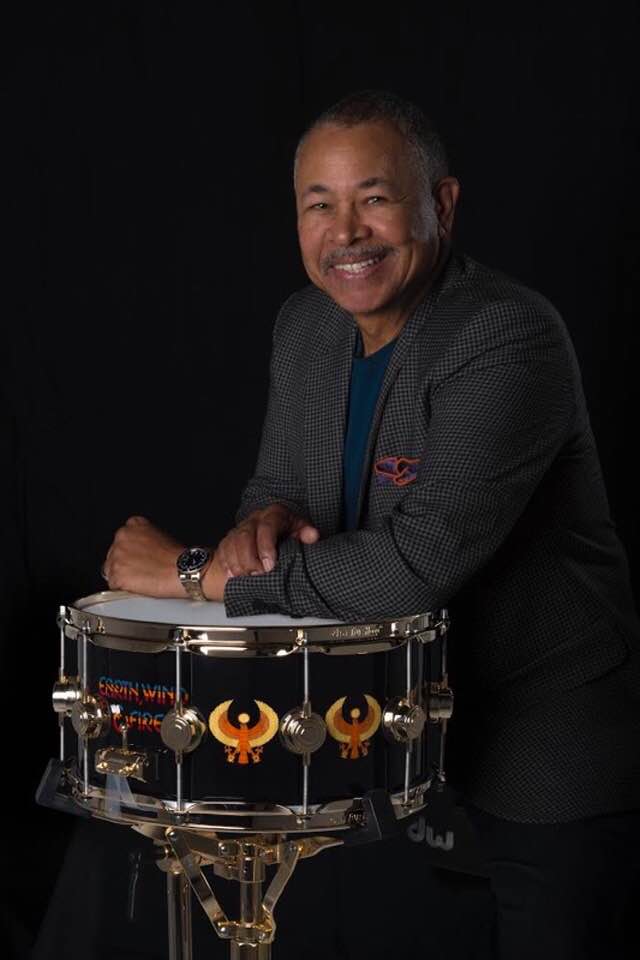
Parlé Mag: Over the decades, Earth, Wind & Fire has continued to evolve while maintaining its signature sound. What do you believe has been the key to the band’s remarkable longevity?
Ralph Johnson: The key to the band’s longevity is taking pride in what we do. We also stay true to the music at the end of the day.
Parlé Mag: Today you’re still anchoring the stage alongside Philip Bailey and Verdine White. What does it mean to continue carrying that legacy forward after so many years?
Ralph Johnson: It’s humbling to still be in the game after so many years. So many acts have faded. I am filled with humility and gratitude.
Parlé Mag: As you prepare for the upcoming “Sing a Song All Night Long” tour, how does it feel to bring these songs—and their history—to new generations of fans?
Ralph Johnson: It’s always exciting to tour with Lionel Richie. Exposing new audiences to our music is a wonderful experience.
Parlé Mag: When readers close the final chapter of Rhythm & Fire, what part of the Earth, Wind & Fire story do you hope stays with them the most?
Ralph Johnson: I hope all of it stays with the readers. Most of all, I want them to know I have told my truth.
Stay Connected with Ralph Johnson
Official website: earthwindandfire.com
Instagram: @ralph_johnson.ewf