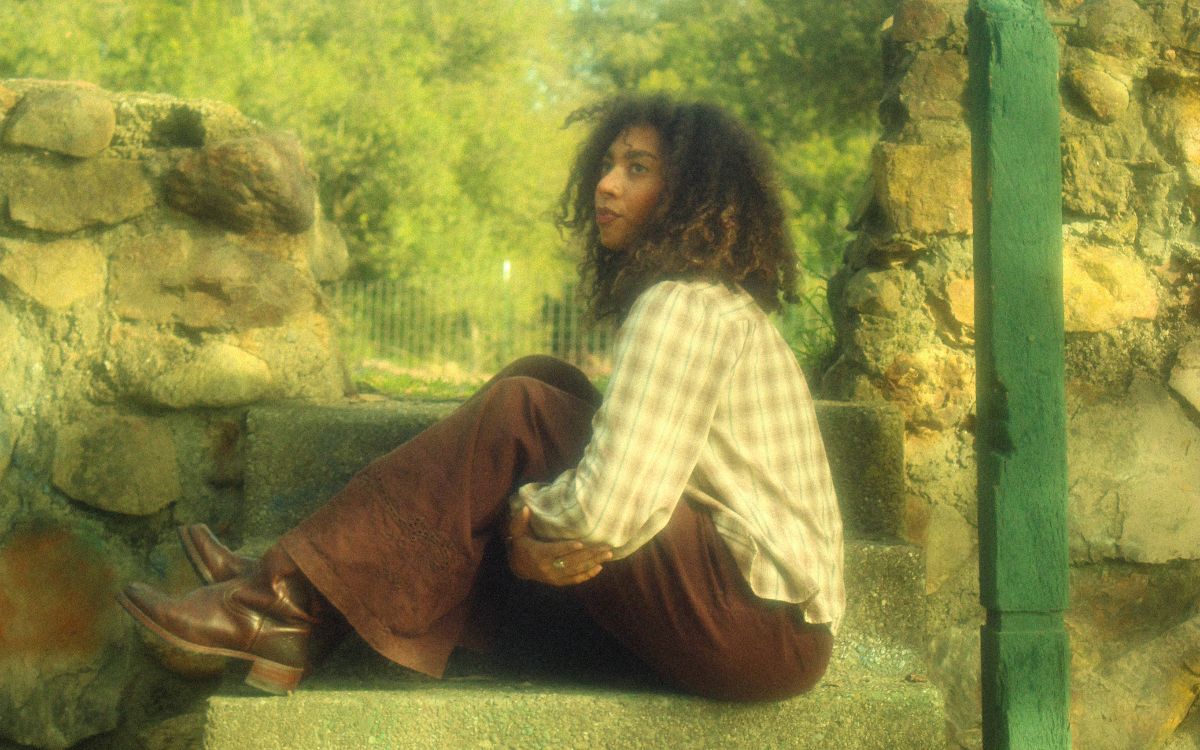
Satya doesn’t enter a room—she takes it over. Raised in Oakland, she comes from a place where sound isn’t background, it lingers like something that stays on you.
Her work won’t sit still long enough to label. Soul, alt-R&B, folk, ambient fragments—they blur and collide. Steel guitar like a memory just out of reach. Bass lines that sit heavy in the chest. Vocals stacked like thoughts you didn’t mean to reopen.
Before a debut album ever defines her, Satya is already moving through NPR sessions, regional stages that recognize her before she’s introduced, and live sets that feel less like performance and more like something unfolding in real time. No arrival—just momentum you can hear building.
Yellow House is where that momentum turns inward. It doesn’t explain—it pulls you in. Childhood isn’t in the past; it’s still in the walls. Pain doesn’t resolve; it mutates and stays. One track feels like heat you can’t step out of. Another feels like a memory looking at you first.
The record doesn’t sit in the room—it changes it.
And when it fades, it still hasn’t left.
Parlé Mag: Yellow House already feels like more than an album title—it feels like a place, a memory, maybe even a spirit. Before anyone hears a single note, what does “Yellow House” represent in your world?
Satya: “Yellow House” tells a story about a time and space I once existed in. To me, it represents memories that, at times, feel almost like a haunting.
The song—and the project as a whole—is rooted in my childhood. The house I grew up in was yellow. I carry a lot of memories from that house and hold a ton of feelings that still sometimes draw me back into it. To me, it represents everything that happened inside, both good and bad. I’ve always felt like energy lingers in places, and that house holds it all and then some. This album represents the contradictions of beautiful nostalgia with some of my deepest pain.
Parlé Mag: Your music carries this rare kind of emotional weather—warmth, ache, stillness, longing, comfort—all living in the same room. When you were building this record, what kind of feeling were you trying to stay inside of?
Satya: My biggest intention with this project was to keep it raw. I wanted the record to feel like you were stepping inside my mind or flipping through my journal entries—in a lot of ways, you are. Most of the lyrics were pulled directly from them. I’ve always been drawn to nostalgia, so it was important for me to also carry that feeling throughout the album.
Parlé Mag: There’s something beautifully unhurried about your sound, like it isn’t trying to chase anything—just tell the truth in its own time. How did you learn to trust slowness, softness, and space as part of your storytelling?
Satya: I think I’ve always been drawn to music that moves in a slower time. It gives everything space to breathe or pull you in. I still love fast-paced music, but in my own work I’ve always naturally leaned toward a slower tempo. It feels hypnotic.
My mom loved Alicia Keys, Maxwell, India.Arie, Norah Jones, and Sade. “In Another Time” used to play constantly in our house. I was obsessed with the long intro and how every instrument felt really intentional. I also loved “Turiya & Ramakrishna” by Alice Coltrane. Growing up around jazz gave me permission to take my time in my own music—to let each instrument breathe and figure out what I want to say and how.
Mazzy Star also felt like something slow-paced that I could just let play forever. I was always hypnotized by her voice and that slide guitar. Once I started creating my own stuff, I began noticing moments where people would connect, cry, and show emotion—it showed me people were really feeling and stepping into my space.
Parlé Mag: Raised in Oakland but sonically reaching toward so many landscapes—Southern air, folk intimacy, ambient soul, steel guitar, choir textures—how do place, memory, and geography shape the way you write and hear music?
Satya: I grew up in Oakland. My family loved music, and so did all my friends, so we always had something playing and always had a new song to show each other. In my early childhood, our house was mostly playing soul, blues, and R&B.
When I was little, I sang in the Oakland Youth Chorus, where I developed my love for choirs and vocal harmonies. I remember being super little and connecting the feeling of singing in church to when my mom would play Aretha Franklin—it felt like the same energy. That’s where I learned, later in life, why I always want some form of live instrumentation in my recordings.
Later, I went to high school at Oakland School for the Arts. That’s where I developed my deep love for a cappella and learned how to harmonize and blend my voice with others. Then, in my senior year, I began journaling. I fell in love with storytelling and started adding my own words to progressions I’d write on guitar or piano.
In high school, my friends and I were always up to something—we’d go to pretty view spots or sneak out late at night – because we thought we were cool – hang by the lake, and I’d listen to a ton of shoegaze and alternative music. I think the energy of the Bay—beautiful, gloomy, funky—seeped into how I want my music to feel.
I moved to New Orleans after high school, and it deepened my love for jazz and folk. I’ve always been drawn to soul and blues because of the storytelling at their core. That time in New Orleans shaped who I am, not just as an artist but as a person. Live music and art were everywhere, day and night, and most of my friends were involved in some form of creative work. It felt like a melting pot where artists constantly uplifted one another.
I was influenced by the pace of life in the South and its unfiltered way of being. That energy shaped how I connect to my creativity and the instrumental elements I like to add in my tracks. I guess all of those worlds and influences just naturally bleed into what I make.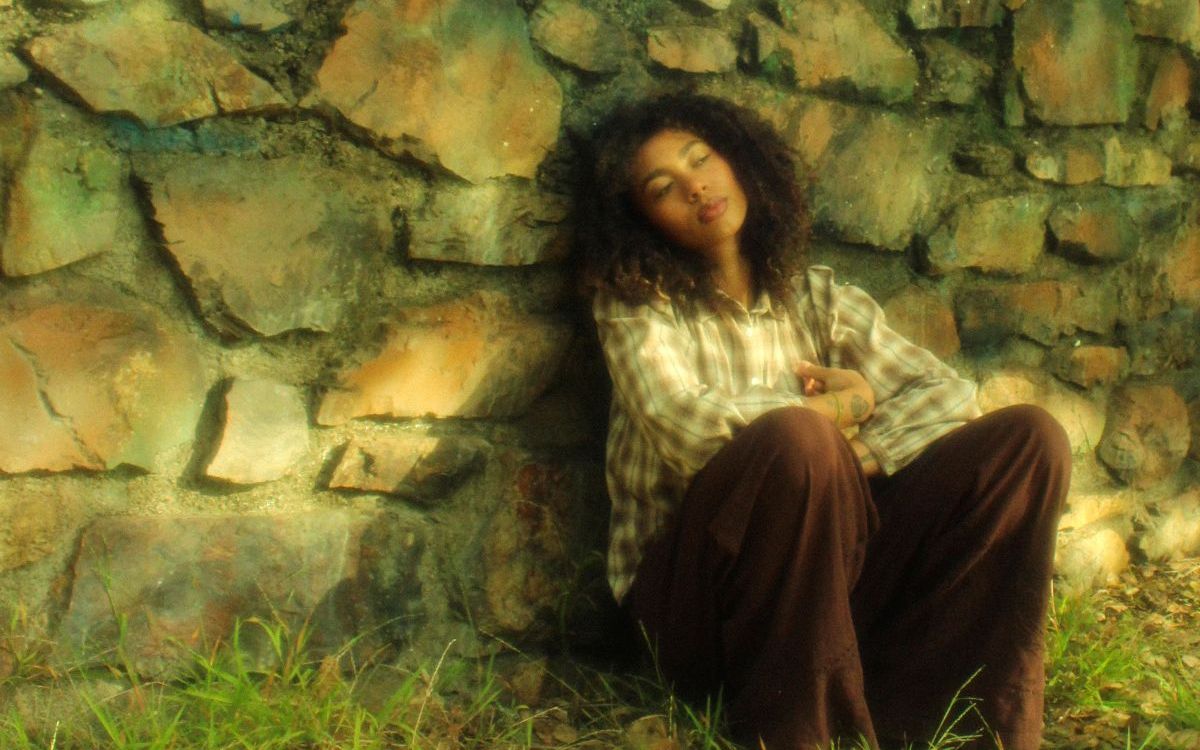
Parlé Mag: The songs on Yellow House feel deeply reflective without ever sounding stuck in the past. How did you approach revisiting old emotions, old wounds, or old versions of yourself without getting lost in them?
Satya: I wrote the track “Yellow House” almost imagining it in third person—“lit your candles and said a prayer before bed,” “hold your own hand, walk out the door.” I wrote these lines as if I was taking myself out of it and seeing myself from a bird’s-eye view that night.
At the time, I kept repeating to myself and to the people around me: I’m not going home again, I won’t. I wanted to pay homage to the fact that the song became something to help guide me, but also give space to acknowledge how much pain I was in.
I can’t lie, it was a painful process to write the song—and really, the whole project. At times, I would get lost in old wounds and even want to ditch the album. Over time, part of the remedy was sharing it with friends, being in the studio, and listening repeatedly. I was kind of forced to sit in it. Seeing other people’s reactions to my story, and hearing their own, also shifted something in me. I realized I had written the project as a way to process and view pain from a safer, more removed place.
Parlé Mag: Your music feels lived in—like every note, every pause, every texture has a reason for being there. When you’re creating, how important is atmosphere compared to lyrics or melody?
Satya: I think atmosphere and lyrics are equally important. My main priority is that it sounds like you’re there with me. I don’t like when my music feels overly polished.
Parlé Mag: There’s a quiet bravery in making music that doesn’t over-explain itself, especially in a time when everything feels fast, loud, and overexposed. What has it taken for you to protect your own artistic language and move at your own pace?
Satya: t’s taken trial and error, and I’m still learning how to honor and protect it. What has worked so far is reminding myself not to compare myself, while still allowing inspiration in. I can easily get lost in what everyone else is doing, especially in a fast-paced industry shaped by social media.
What grounds me is remembering who and what inspires me. Good art, to me, feels timeless. The Miseducation of Lauryn Hill and Mama’s Gun by Erykah Badu came out in the late ’90s and early 2000s, and they still touch me in a new way every time.
I think taking your time with what you want to say—and how you want to say it—is what gives music substance. It also grounds me in why I even want to be a musician in the first place. It’s to keep expanding my musical knowledge and learn how to truly express what’s happening on the inside. I’ve found that writing takes time, and sometimes it’s best not to force it.
Parlé Mag: You’ve been building community, performing on meaningful stages, and earning deep love before even dropping a full debut album. What has this road taught you about patience, timing, and letting your work bloom naturally?
Satya: Ohh lord—it’s been a silly ride for sure. I’ve learned a lot about discipline, and I’m still learning time management. This road has helped me remember what actually matters.
It’s important to play alongside people who share similar love and values. It’s also important to respect the process. There’s so much that goes into touring and show planning. It takes a lot of time and energy. I’ve learned to stay grateful for everyone who shows up to support and believe in your vision.
I’m still learning the importance of trusting your own dreams and vision, especially after experiencing what happens when you don’t show up for yourself.
I’ve had to let go of a lot, particularly around releasing music, as part of that growth. Usually, by the time my music is fully mixed and mastered, I’ve already written the next song or project. It often feels like I’m releasing something I wrote two years ago. Letting go has been a process because, by the time the music comes out, I’ve often already moved on while others are just hearing it for the first time.
I’ve also learned how to reconnect with old feelings and reframe them through my current experiences. Overall, my goal is to keep trusting the process and be forgiving with myself along the way.
Parlé Mag: For listeners who may first come to Yellow House through comparisons—Lauryn, Lucinda, Orion Sun, folk-soul lineage—what do you hope they hear immediately that tells them, “No, this is Satya”?
Satya: I have no clue. I just hope they hear my voice and sad-ass lyrics and say, “Oh shit, that’s our girl Satya.” 😉
 Parlé Mag: There’s a spiritual undercurrent in your music—not necessarily in a traditional sense, but in the way it holds memory, grief, healing, and presence. Did making this album feel emotional, creative, or even sacred in a new way?
Satya: Making this project felt really sacred for me. I believe a big step in healing starts with your inner child. It also comes from acknowledging the needs that weren’t met when you were younger.
In 2020, when I first began writing the album, it felt like my world had ripped open and I had to start from level one. It was the first time I openly spoke about some of the things happening in my house. I also realized things would never be the same again.
I moved from Oakland to New Orleans to live with friends. Around that time, I began therapy and started diving into shadow work. I forced myself to look at my “ugly” parts so I could release them or understand why I was showing up in ways I didn’t like.
At the core of it all, I wanted to understand myself better. I also wanted to see how growing up in an abusive household shaped the way I viewed the world. This project holds a lot of grief, anger, sadness, and truths I wasn’t allowed to express as a child. In a way, it creates space for those parts to finally come forward.
Parlé Mag: So much of Yellow House feels made to sit with, not just consume. In a streaming era where people often skim past songs in seconds, what does it mean to you to make a record that asks people to really stay a while?
Satya: I feel proud to have made a full body of work. I put so much care into this project. I was really intentional about the track order, and I hope listeners sit with it like they’re listening to a story.
Parlé Mag: If Yellow House ends up becoming a place people return to when they need comfort, clarity, release, or just somewhere to feel held for a while—what would that mean to you as an artist and as the person who created it?
Satya: That would mean the world to me. I want this to be something honest that gives others permission to do the same for themselves, in whatever way that might look like.
It’s always been magical to me to write about my own pain and have it turn into healing. Not only for myself, but for other people too. Especially when it connects with their experiences. That feeling is indescribable—just magic, really. It makes me grateful for my past and for the strength I built out of what once felt like nothing.
Stay Connected with Satya
Official Website: satsatmusic.com
Instagram: @satsatmusic
Image Credits: Lola Lankford