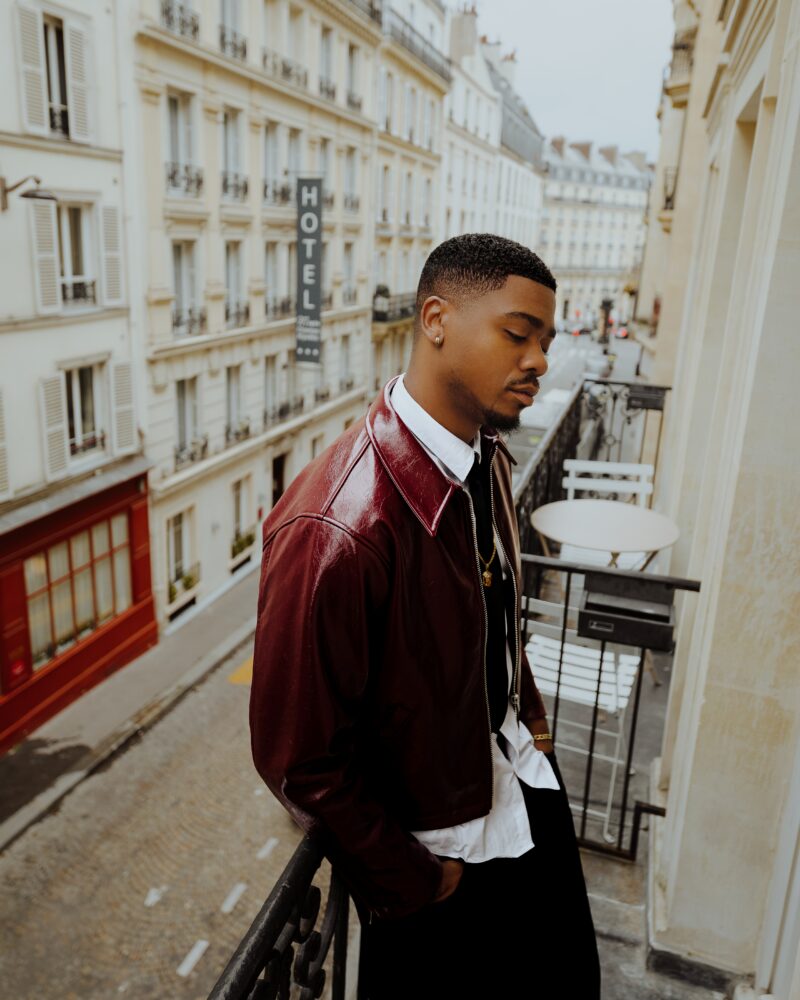
There’s something refreshing about an artist who isn’t trying to reinvent R&B—just remind people why they fell in love with it in the first place. Cedric Brazle belongs to a generation that’s rediscovering the power of restraint, where conviction lands harder than volume and vulnerability carries more weight than bravado.
Raised on the emotional precision of Donny Hathaway, the vocal excellence of Michael Jackson and Brandy, the musicality of John Mayer, and the honesty of Usher, Cedric isn’t chasing nostalgia—he’s building on its foundation. His songs don’t reach for yesterday; they borrow its soul while speaking to where relationships, masculinity, and emotional honesty stand today.
Following the independent success of …What I Know Now and the release of “mine.” back in May, Cedric continues to carve out his own lane with intention rather than imitation. He’s part of a growing class of R&B artists proving that sincerity never goes out of style—and that sometimes the strongest statement a singer can make is simply telling the truth.
Our conversation explores the influences that shaped him, the experiences that continue to refine him, and why authentic storytelling remains the heartbeat of timeless R&B.
Parlé Mag: When you say “mine.” out loud, what part of you flinches first—the romantic, the realist, or the one still learning how to say things straight with no safety net?
Cedric Brazle: Honestly, I’m at the point where, if I’m claiming something, there’s no hesitation. That’s the entire reason for the record “mine.”—intentionality and clarity. In the past, it might’ve been one of those three, depending on where I was in life. But moving forward, I’ve promised myself to make way for what’s real for me today without hesitation.
Parlé Mag: You grew up on MJ, Donny Hathaway, Brandy, and Usher. At what point did you realize you weren’t just studying them—you were translating them into your own emotional language?
Cedric Brazle: Growing up with these powerhouse vocalists gave me a great foundation, but it wasn’t until I began creating my own music and bodies of work that everything translated into my own emotional language. The beauty of creating is discovering who you are as an artist—with all your influences—and hearing what those songs sound like through your own perspective. My artistry evolves even further when I bring it to the stage because performing unlocks another layer of my creative language that I’m constantly discovering and exploring.
Parlé Mag: Jacksonville has its own pulse. What’s one thing your city taught you about love or survival that never leaves your writing, even when you don’t mean for it to?
Cedric Brazle: Growing up in Jacksonville keeps me close to the ground. I come from humble beginnings, and being able to make it out of a place where many people never get the chance to leave is something I’ll never take for granted. I learned everything about love from my city, and everything about survival, too. I wasn’t raised by my biological parents and didn’t have much growing up, so my understanding of love, survival, and self comes from those early years with my grandparents. That season of my life made me hungry to become an artist because expressing myself was the only thing that helped lift me above poverty and abandonment.

Parlé Mag: “Contemporary nostalgia” sounds more like a feeling than a genre. If we stripped the words away, what does it actually feel like in your chest when you’re creating?
Cedric Brazle: Contemporary nostalgia is familiarity with newness. It’s feeling right at home when you hear a song while also feeling understood in a fresh, captivating way. I love all of my influences. I’d never want to replicate what they created—I just want to be a vessel that elevates it and carries it forward for the generations that come after me.
Parlé Mag: On “mine.” you’re not playing it cool—you’re naming it. Was there a real-life moment that forced that kind of honesty out of you, or did it sneak up on you over time?
Cedric Brazle: This was a real moment for me. I always tell people I can’t write or sing stories that aren’t true for me. After a few failed situationships, you start learning what you did wrong and what would’ve worked better. Writing “mine.”was my way of letting guys know it’s okay to stake your claim. Women actually appreciate it when you let them know how you truly feel.
Parlé Mag: A lot of R&B today leans into projecting confidence. You lean into clarity. When did vulnerability stop feeling like a risk and start becoming your advantage?
Cedric Brazle: Vulnerability has always been who I am. As I mentioned earlier, I was raised by my grandparents, who were clear with everything they did. I didn’t grow up around messiness or bravado. The people who raised me had already lived full lives—they’d made mistakes, failed, succeeded, and learned from it all. Through everything, they constantly emphasized honesty, truth, and living fully in that space.
Parlé Mag: Walk me through your studio headspace with Justin Wiggins. What’s the energy like when you know you’ve landed on something that feels like truth—not just sound?
Cedric Brazle: Working with Justin is easy. Sometimes he’ll call and say, “I have a record for you that’s going to be a smash.” Other times we’re just in the studio, ideas start flowing, and melodies naturally reveal themselves. Usually, we know we have something special as soon as that first verse and chorus come together. We’ve experienced that at least a hundred times together by now. This time, Justin, myself, and songwriter Kayland Sejour were tossing around ideas when I asked her one question that started it all: “What’s one thing you’d want your man to say to you?”
Parlé Mag: You’ve surpassed a million streams on your EP … What I Know Now. What did that level of success teach you that the numbers themselves never could?
Cedric Brazle: It taught me that you may never get to meet the people who support you the most. Early on, you think it’ll be the people closest to you—and sometimes it is—but having listeners all over the world is humbling in the best way. Every now and then I’ll get a DM or a video from someone halfway across the world telling me what a song means to them. Moments like that reinforce my purpose. They remind me why I make music and why I believe I’m meant to be an artist—to make people feel seen.
Parlé Mag: What’s something you had to unlearn about masculinity to sing the way you sing today—open, unguarded, with no armor in the way?
Cedric Brazle: I had to unlearn being afraid to tell my truth, even if it isn’t the norm. Every guy isn’t all bravado, and every guy isn’t toxic. Those stereotypes have boxed us into a narrow idea of what men are supposed to be. Love is universal, and sometimes it’s ugly, ruthless, joyful, heartbreaking, or beautiful. Anyone who opens themselves up to it experiences those emotions. I never want to be the artist who can’t talk about every high and low life throws at me, whether it fits society’s expectations of masculinity or not.
Parlé Mag: If “mine.” walked into a room as a person, what kind of energy would it give off—soft-spoken, intense, locked in, or dangerously honest?
Cedric Brazle: Calm. Cool. Collected. Confident. Locked in. “mine.” moves with intention and always has the best intentions. There’s nothing toxic or half-stepping about it.
Parlé Mag: When people finish listening to this new era you’re building, what do you want them to realize about love that they might currently be overthinking—or avoiding?
Cedric Brazle: I want them to realize there are men out here who are multi-faceted and fully human. The emotional box men get placed in is dangerous. It can make people feel unheard, unseen, or even less than human. I want to do for people what Usher’s “Confessions” did. It gave voice to the male perspective, offered guidance to men navigating relationships, and showed women the kind of honesty and love they should expect and deserve from a partner.
Parlé Mag: Long-term, what does “elevated chapter” actually mean to you—sound, life, discipline, or all of it finally lining up at once?
Cedric Brazle: It means all of it—sound, life, and discipline. It’s about breaking through your old ceiling and stepping into new spaces where you continue to learn and grow. Growth never stops. It keeps pushing you higher until one day you look back and realize how much you’ve evolved in every area of your life. Elevation means nothing if it isn’t used as a testimony to help someone else. That’s all I’ve ever wanted—to be a vessel.
Stay Connected with Cedric Brazle
Advertisement