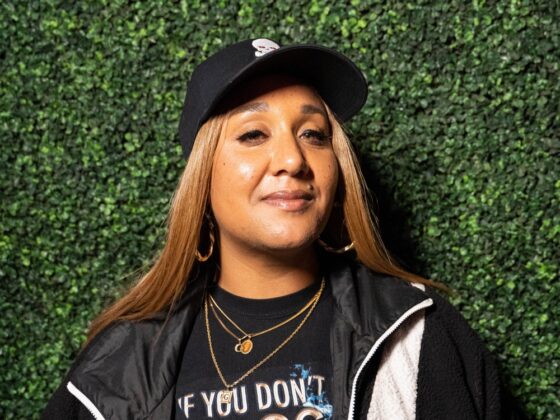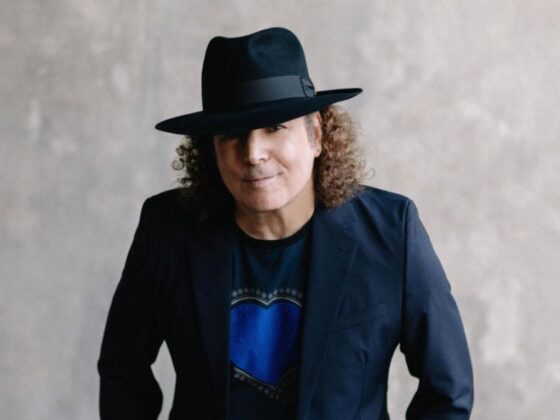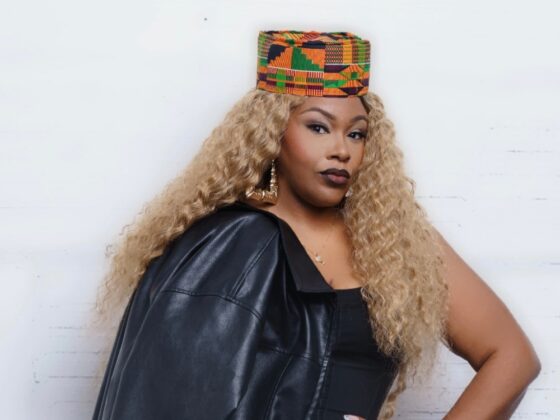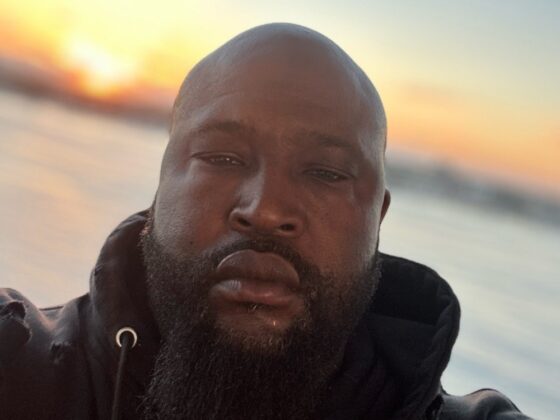
Mykki Blanco has never really stayed in one lane—or even believed lanes were real.
From Mutant Angels-era basement chaos to festival stages, fashion worlds, and boundary-bending collaborations with Arca, Charli XCX, ANOHNI, Blood Orange, and more, their work has always felt like transmission from somewhere slightly ahead of the present. Each chapter adds another layer, but never repeats the last.
With CAFE PARADISO, that restless energy sharpens into something more observational and strangely intimate. It’s a record built from café corners, late-night wanderings, half-heard conversations, and the quiet comedy of being alone in public spaces while your inner world is doing the most. Less spectacle, more atmosphere—but still unmistakably Blanco.
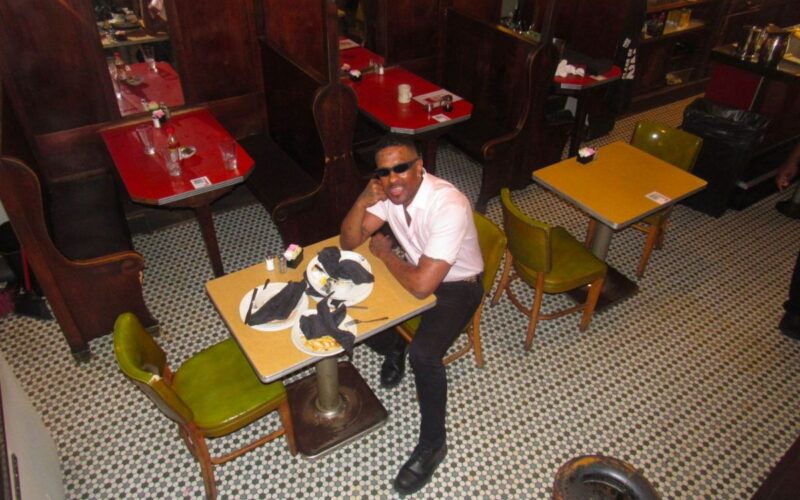
Guided by FaltyDL and a tight circle of collaborators including Ian Isiah, Evanora Unlimited, and Simone Alysia, the album feels like a fragmented dream you can actually walk through—quirky, fluid, a little off-center, but deeply intentional in its calm.
This Q&A sits inside that shift: from disruption to detail, from noise to nuance, and from constant motion into a version of stillness that still refuses to sit still.
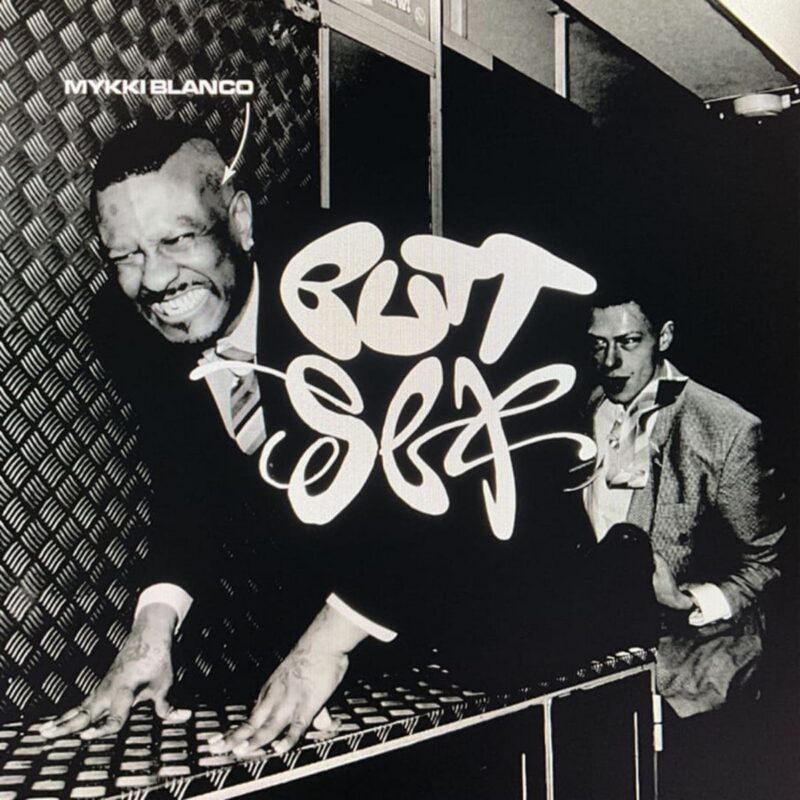
Parlé Mag: Before the world knew Mykki Blanco as a boundary-breaking artist, poet, performer, and cultural disruptor, who were you creatively trying to become?
Mykki Blanco: I was a theatre kid through and through. I loved acting in all the school plays and musicals. While I couldn’t really sing as well as some of the other kids, I was always a good actor. Back then, I used to dream of being on Broadway. Then, when I was 15 in high school, I got really into performance art. I was exposed to the famous book by artist and curator RoseLee Goldberg about the history of performance art, which kind of broke my brain open. That’s when I really started getting into underground art history. That also aligned with me discovering the Riot Grrrl movement via Le Tigre in the early 2000s and being part of a teen anarchist punk collective.
Parlé Mag: Looking back at the early days of Mykki Blanco & The Mutant Angels, did you realize you were helping create space for an entirely new generation of artists?
Mykki Blanco: In college in Chicago, I was exposed to noise music and the Chicago noise scene. Looking back, it was an awesome, awesome, awesome time. I don’t even know where in America people still do house shows, basement shows, backyard shows like that anymore. It was wildly experimental and completely changed my life—this fusion of noise, acid, punk. It was the most magical combination of living extremely free in punk houses and squats, traveling between Chicago, Oakland, New Orleans, and Detroit. But no—I was 25. I was not thinking about a new generation of artists, haha.
Parlé Mag: You’ve spent more than a decade refusing easy labels and expectations. Has reinvention been intentional, or simply a byproduct of following your instincts?
Mykki Blanco: The same reasons I’m relatively, arguably famous are pretty much the same reasons I’m not more famous. People forget the world was wildly different—and difficult—for queer musicians in 2012. I mean, both Frank Ocean and Lil Nas X were perceived as straight before they came out. No one ever thought I was straight—I never got that first level of assumed acceptance from the masses before anything else. I never had that to flip.
Parlé Mag: From underground rap shows to international festival stages, what still feels surreal to you?
Mykki Blanco: I’ve opened for Diplo and Björk. I’ve written raps and helped build an art book library for Kanye West. I’ve collaborated with Madonna. It’s been an interesting life.
Parlé Mag: You’ve collaborated with Arca, Charli XCX, Teyana Taylor, Blood Orange, ANOHNI, Michael Stipe, and Big Freedia. What attracts you to artists who exist outside traditional boxes?
Mykki Blanco: I’m a good songwriter. I’m interesting. I continually have good ideas. That’s why people work with me.
 Parlé Mag: CAFE PARADISO feels less like a destination and more like a state of mind. What inspired this chapter of your creative evolution?
Mykki Blanco: It really came out like a wildcard. I knew I wanted to make a record with a lot of live energy—something I could enjoy playing at festivals. But while I was writing it, I found myself in diners, dive bars at 4 p.m., cafés around the world, tea houses in Morocco, sometimes on trains in London. I kept realizing I feel most like my whole self in these “third places,” where ideas just come through. I’m dreaming, visualizing, planning the next stage of life—songs, travel, dinners, love, everything. These places bring out the best in my interior world, and I think they do that for a lot of people.
Parlé Mag: You described the album as music for “artsy kids” and dreamers figuring life out one café at a time. Who did you make this record for?
Mykki Blanco: Anyone who has ever sat with a journal in a diner, café, or dive bar figuring out the next steps and dreaming about what’s to come.
Parlé Mag: The lead single “Little Feet” feels nostalgic, romantic, and slightly untethered from reality. Why was that the right introduction?
Mykki Blanco: I’ve been wanting to make music like “Little Feet” my entire life. When the magic finally happened in the studio and everything sounded exactly how I heard it in my head—and all the lyrics came to life—I realized it had to be first.
Parlé Mag: Throughout the record, cities like New York, Paris, and Tangier almost feel like characters themselves. How have the places you’ve lived and traveled shaped your songwriting?
Mykki Blanco: Every city brings something different out of you. New York is my past—it’s home, it’s family—but it’s also somewhere I never want to live again. It’s nice to visit for a month or two, but that chapter is over. Paris always has so much energy; people think it’s static, but it’s always fresh to me. And Tangier—I’m renting a house there. I live there now. My goal is to eventually live between Tangier and Paris.
Parlé Mag: You’ve called this your “true sound.” What does that mean after years of experimentation?
Mykki Blanco: My relationship with FaltyDL has had a lot to do with my growth, but I also have solid techniques now in songwriting and composition. Between technique, experimentation, and spontaneity, I know how to make good music. It’s a loose formula that’s worked for my last four releases.
Parlé Mag: What makes your partnership with FaltyDL so special?
Mykki Blanco: Falty is a master at what he does. He’s like an insider—he produces for many of your favorite producers. I think he’s a bit psychic; he reads energy really well. We just click. I respond instantly to his ideas, and he helps me flesh mine out immediately.
Parlé Mag: Why did you want CAFE PARADISO to embrace stillness in a culture of constant noise?
Mykki Blanco: We’re at peak saturation—content, influencer culture, noise, nonsense. Everyone knows it. I’m not responsible for how we got here, but I am committed to making quality work. In a slop attention economy, quality stands out.
Parlé Mag: Was the theme of being alone without being lonely intentional?
Mykki Blanco: No. But songs like “FOXES” and “God Is Alive” are me at my best. I got there by being still—with a gin and tonic or a bowl of soup—dreaming alone about becoming the best version of myself.
Parlé Mag: How much of Napster and LimeWire lives in your work?
Mykki Blanco: A lot. I am a direct product of Napster and LimeWire. I wouldn’t be as musically cultured without growing up in that era.
Parlé Mag: What connects all versions of Mykki Blanco?
Mykki Blanco: This question feels boring.
Parlé Mag: You’ve been open about your HIV diagnosis and personal journey. How do you view that impact now?
Mykki Blanco: I’m not carrying that narrative into this album cycle. I’ve spoken about it for nearly a decade. It feels tokenizing at this point.
Parlé Mag: What keeps you taking creative risks?
Mykki Blanco: I used to be more caught up in glamour and the chaos of it all. Now I really value my life and everything I’ve experienced. It’s been a wild career. I still feel like I have a lot to say. I don’t worry about connecting with youth—young people naturally connect to what I do. One day that may change, but not anytime soon, haha.
Parlé Mag: What would your younger self say about you now?
Mykki Blanco: You’re not going to believe some of the things that are about to happen.
Parlé Mag: Do you feel closer to yourself on this album than ever before?
Mykki Blanco: Stay Close to Music is my masterpiece. But with records like Broken Hearts and Beauty Sleep, and especially Postcards from Italia, I can see how far my songwriting has come. Postcards felt like a spiritual initiation. That’s where everything aligned—technique, inspiration, collaboration, and spontaneity.
Parlé Mag: When people look back on your legacy, what do you hope they understand?
Mykki Blanco: They’ll give me credit for things they should’ve already given me credit for—but I know that, and they know that too. So it’s okay. Haha.
Stay Connected with Mykki Blanco
Instagram: @mykkiblanco
Official Website: Mykki Blanco Official Website