When an official report differs from a civilian account, a video recording, or a witness statement, the most useful next step is to build a careful record rather than rely on any single version of events. The process of challenging police testimony often begins with identifying what each person could have seen, heard, and documented at the time.
Conflicting accounts do not automatically establish that someone was dishonest. Stress, location, visibility, noise, and incomplete information can affect what people notice and later remember. A well-organized collection of evidence can help separate confirmed facts from assumptions and identify questions that still need answers.
Why Accounts of the Same Encounter Can Conflict
A police encounter may unfold quickly, and the people involved may observe it from very different positions. A driver may focus on an officer’s commands, while a bystander may notice physical contact, traffic conditions, or another officer’s location. An officer’s report may also be written after a fast-moving event and reflect information available at that point.
Factors That Can Shape an Account
- Stress, fear, pain, or shock
- Poor lighting, weather, traffic, or crowd noise
- Distance, obstructed views, or a limited camera angle
- Language barriers or difficulty hearing commands
- Information learned after the encounter ended
The Evidence That Can Clarify What Happened
A reliable record usually draws from more than one category of evidence. Video can show movement and timing, but it may not clearly capture sound or events outside the frame. Medical records can document symptoms and treatment, but they may not explain every disputed action. Each item should be considered for what it does, and does not, establish.
The Civil Rights Division of the U.S. Department of Justice provides information about federal civil rights enforcement, which may help readers understand the broader role of civil rights protections without deciding the facts of any individual encounter.
Useful Evidence Categories
- Body-worn camera, dash camera, security camera, and phone video
- Photographs of injuries, clothing, property, and the location
- Police reports, dispatch logs, 911 recordings, and radio traffic
- Medical records, prescriptions, and treatment instructions
- Witness names, contact information, and independent statements
- Messages, emails, receipts, and location data that establish timing
- Relevant agency policies, training materials, and complaint responses
How to Build a Detailed Event Timeline
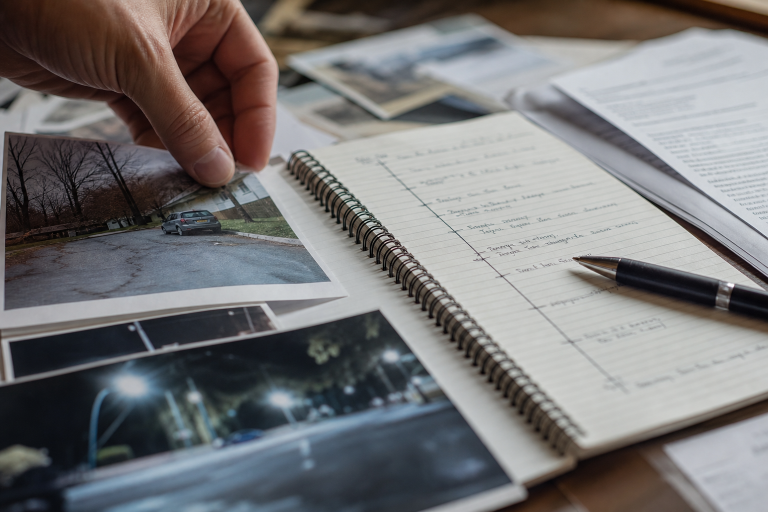
Write a timeline while memories are still fresh. Use exact times when a phone, receipt, video file, call record, or document supports them. If a time is uncertain, identify it as an estimate. This approach is more credible than filling gaps with guesses.
- Record the date, location, and reason the encounter began.
- Describe what happened before law enforcement arrived.
- List everyone present and where each person was located.
- Note commands, movements, searches, restraints, and physical contact.
- Mark transportation, booking, release, and medical care.
- Compare the timeline against recordings and documents.
- Label unresolved points clearly instead of assuming an answer.
How to Review Body Camera and Phone Video
The video should be reviewed more than once and in context. Watch the full available recording before focusing on a short segment. Then consider whether the footage has audio, whether the clock is accurate, what the camera may not have captured, and whether an earlier or later recording may exist. Coverage of body camera video from an immigration raid illustrates how footage can offer a close view of an encounter while still leaving important context outside the frame.
Video Review Checklist
- Determine whether the file is original, edited, clipped, or reposted.
- Note the date, time stamp, source, camera position, and lighting.
- Watch once without sound and once while focusing on the audio.
- Create a written log of key timestamps and visible actions.
- Save original files without trimming, filtering, or changing formats.
Questions to Ask About Witness Statements
Witnesses can provide valuable information, particularly when they have a clear and independent view. Their statements should be evaluated fairly. The key issue is not simply whether a witness supports one account, but what the witness had a realistic opportunity to observe.
- Where was the witness standing, and how far away were they?
- What could they see or hear clearly?
- Were vehicles, people, darkness, or noise blocking their perception?
- How soon did they describe the event?
- Did they discuss the incident with others before giving a statement?
- Does their account align with physical evidence or video where comparison is possible?
Why Medical and Other Official Records Matter
Records created close in time to an encounter can help establish treatment, reported symptoms, observed injuries, and the sequence of later events. Medical records are not a complete answer to questions about force or intent, but they may provide important documentation of a person’s condition. Preserve emergency care records, follow-up notes, photographs, prescriptions, work or school absence records, and booking or release paperwork.
Steps to Preserve Important Evidence
- Store original files in at least two secure locations.
- Keep reports, letters, emails, bills, and medical records together.
- Record each witness’s name and reliable contact information.
- Create an evidence index listing file names, dates, sources, and descriptions.
- Request preservation of relevant recordings from businesses or agencies when appropriate.
- Avoid deleting messages, changing files, or relying only on social media copies.
Common Evidence Mistakes to Avoid
People often make quick decisions after a frightening event, so these mistakes are understandable. Still, waiting to document events, saving only screenshots, repeatedly coaching witnesses, guessing about uncertain facts, or overlooking delayed symptoms can make later review more difficult. An official report may be important, but it should be considered alongside the full available record.
When a Legal Review May Be Helpful
A legal review may be useful when accounts conflict sharply, injuries are serious, key recordings are missing, or a notice or filing deadline could apply. Before seeking advice, gather available documents and prepare a concise timeline. General information cannot replace advice about a specific event, and prompt action may be important when evidence could be lost.
Conclusion
When accounts conflict, the strongest approach is organized, complete, and candid. Preserve what exists, document what you directly know, compare evidence carefully, and identify what remains uncertain. Video, records, photographs, and witness information are most useful when presented in a clear timeline rather than viewed in isolation.