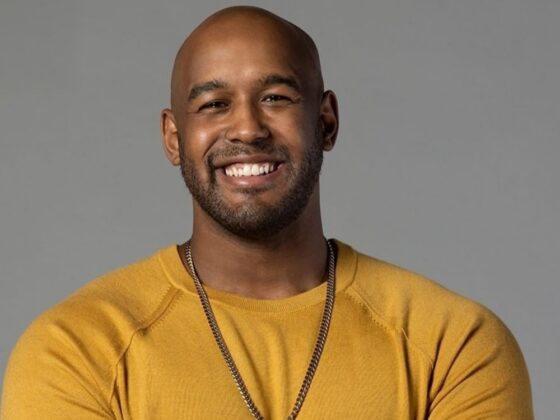
There was a time when music wasn’t fed to you by an algorithm. You found it on the radio, hunted for it in record stores, waited for the DJ to spin it, then turned the volume up and let it become part of your life.
For musicians, the classroom was the road.
Boney James came up in that classroom.
Before the albums, accolades and millions of listeners, he was a working R&B musician—touring with Morris Day and playing behind The Isley Brothers, Teena Marie, Randy Crawford and Bobby Caldwell. Night after night, stage after stage, he learned what separates someone who can play from someone who can move you.
Feel.
That lesson never left.
You hear it in the way Boney treats his saxophone—not as something to conquer, but as another voice. He understands melody, restraint and the power of letting a note breathe.
That instinct has carried him through more than 35 years, 20 albums and more than two billion U.S. streams, connecting him with artists across generations, including Faith Evans, Bilal, Lalah Hathaway, Raheem DeVaughn, October London and Ledisi.
On A Simple Man, Boney reaches across time without losing his footing. His interpretation of Duke Ellington’s “In a Sentimental Mood” places a D’Angelo-inspired groove beneath a composition that has traveled through generations. Ledisi joins him on “I Belong To You,” with Marquis Hill and Larry Carlton adding their own voices to the conversation.
But the numbers only tell you how far he has traveled.
The music tells you why.
Boney belongs to a generation that learned by listening to records, studying musicians, playing rooms, making mistakes and earning another night onstage. He carries that history without being trapped by it. He can honor Ellington, hear D’Angelo, collaborate with Ledisi and still sound unmistakably like himself.
That’s the gift.
The world changed around him. Vinyl became digital. Radio became streaming. The club became the playlist. Yet underneath it all remains the same musician who learned early that technique may get your attention, but feeling makes people stay.
So this is more than a look back at a remarkable career.
It’s a salute to the road, the records, the musicians who opened doors, the songs that became memories—and an artist who never stopped listening.
Because when the noise fades, the numbers disappear and the labels fall away, what remains is what Boney James trusted from the beginning:
the feeling.
One breath. One note. One life in music.
That’s Boney James.

Parlé Mag: Before the albums, the accolades, and the “smooth jazz” label, you were a working R&B musician, touring with Morris Day and playing behind artists like The Isley Brothers, Teena Marie, Randy Crawford, and Bobby Caldwell. What did those years teach you about feeling a song that still lives in your playing today?
Boney James: I think the feeling of a song is something that you either have or you don’t, in a way. Feeling the music was something I think I came in with. That’s probably why I got those gigs—they liked my feel, my groove, and the way I presented myself onstage. What I did learn from all those years was how to be an entertainer. I knew nothing about show business or touring when I started.
My dad had a friend who was managing George Benson at the time, and he told me, “Use these years to study and learn everything you can.” And I did. I learned a lot about the business, how to present yourself, and how to treat employees if I was ever going to become an artist, which was my goal even back then. It was a great school, for sure.
Parlé Mag: You’ve always approached the saxophone almost like another vocalist—thinking about phrasing, melody, space, and emotion. Was that something you consciously developed, or did years of listening to singers simply become part of your musical DNA?
Boney James: When I was younger and first responding to music, the sax players I liked were the more melodic guys. The flurries of notes and really technical, wall-of-sound playing didn’t necessarily float my boat. People like Paul Desmond, Stan Getz, and Grover Washington Jr. had a real melodic approach, and that was music I loved. I also loved R&B singers and melody-oriented music. Songs were what gave me that feeling you want when you listen to music. So when I started making my own music, I think that’s just what naturally came out.
Parlé Mag: Your new interpretation of Duke Ellington’s “In a Sentimental Mood” puts a D’Angelo-inspired groove underneath a jazz classic. That’s a pretty bold conversation between generations. When did you first hear the possibility of putting those two musical worlds in the same room?
Boney James: That’s just how I heard the song in my head. I won’t really do a cover of another person’s song unless I’ve internalized it in some way, and I had just been messing around in my studio with this song. In my head, that was the groove I was feeling. I’m really glad it turned out the way it did because the song is exactly how I imagined it would be. It’s not swing, but it’s still “In a Sentimental Mood,” which is kind of a beautiful thing. I really get excited by that sort of worlds-colliding music.
Parlé Mag: Ellington represents one era of Black musical sophistication, while D’Angelo represents another kind of musical freedom. When you bring those influences together, are you thinking about preserving the past, pushing it forward—or simply following where your ears take you?
Boney James: For me, it’s much more about the music. I don’t think about a lot of those external things. If I get something in my head, it’s about trying to get it out there. Communication is what it’s really all about for me. The melody was speaking to me, and I wanted to share what I was feeling with an audience. In terms of goals and genres and eras and all that stuff, I never really think about it in an intellectual way. It’s much more of an emotional response to the music.
Parlé Mag: Looking back, your résumé tells a bigger R&B story than the “smooth jazz” tag sometimes allows people to see. Do you think genre labels can sometimes make listeners miss the musical history underneath an artist’s sound?
Boney James: What I’ve learned over the years is that I don’t think there’s any artist who likes to be put in a genre. Every artist wants to just be themselves and have their music be their music. I know genres are useful for people writing about music and useful for radio stations and things like that. But I don’t think an artist really thinks of themselves as being in a genre if they’re making music from the heart. At least that’s true for me.
Parlé Mag: You’ve shared music with Faith Evans, Bilal, Lalah Hathaway, and Raheem DeVaughn, and more recently October London and Ledisi. What do you hear in a great R&B vocalist that makes you want to put your saxophone beside that voice rather than simply play over it?
Boney James: All the singers I’ve collaborated with are tremendous artists with a unique voice and a unique sense of their own music. That’s what attracted me to them in the first place. I hear something and think, “That’s neat. I’m responding to that.” Then I think about whether what they bring could work with what I bring and whether there could be a musical conversation where one plus one equals three. When things are working right, that’s what happens.
Usually, I’ll put a little horn down and then wait and see what the singer does. Quite often, I’ll go back afterward because they’ve done things I hadn’t imagined could be there, and I have to play around that. None of these collaborations have actually been us in the room playing at the same time. But the fact that we can create the illusion of a real conversation is one of the exciting things about doing collaborations.
 Parlé Mag: “I Belong to You” with Ledisi opens another door on A Simple Man. When you brought her into the record, what did you hear in her voice? What made her the right person to tell that story?
Boney James: Ledisi is a tremendous and unique artist. That’s what I’m always responding to when I collaborate with a singer. I’m looking for somebody whose voice can work with what I bring and create a real musical conversation. It’s really a “feel” thing.
Parlé Mag: A Simple Man also brings Marquis Hill onto “Morocco” and Larry Carlton onto “Storybook.” Two very different musical personalities. What do collaborations like those reveal about the vocabulary you’ve accumulated over more than three decades?
Boney James: I do have a lot of music in my head, and I spend a lot of time in my studio practicing my saxophone. When I set out to make a record, I’m really just following the muse wherever it goes. My capabilities to morph into one kind of thing or another are there, and it’s fun sometimes to flex those muscles.

Parlé Mag: Twenty albums and more than two billion U.S. streams is a remarkable amount of music reaching people. When you look back at the early records compared with what you’re making now, what part of Boney James has remained completely unchanged—and what part of you had to grow?
Boney James: My inner self has not changed, and I think that’s what people sometimes hear in my music. If I’m doing it right, what they’re hearing is me—my soul, my whatever-you-want-to-call-it. Music is how I express myself.
If I’m connected to the music and doing it right, that’s going to be what comes out. That hasn’t changed. What has grown a lot is my ability to communicate my music and my soul through the horn. That’s a craft and a skill that you can learn over time.
Parlé Mag: You came from a time when musicians learned by being on the road, sitting in the pocket, watching other players, and absorbing the room. What do you think today’s musicians can still learn from that old-school apprenticeship that can’t be downloaded, streamed, or taught by an algorithm?
Boney James:I don’t think too much about it because my experience is mine and theirs is theirs. It has occurred to me that it’s a little harder for a lot of people now. I know a lot of cats these days spend a lot of time making videos of themselves playing by themselves.
To me, that’s sort of antithetical to music in a way. But it’s also useful that there are all these new avenues for people to create. Some of these people are pretty wild. It’s just a different era. Time marches on, so who can say?
Parlé Mag: After 35-plus years, you could easily stay inside the sound people already associate with you. Instead, you continue reaching backward for Ellington while reaching forward toward contemporary R&B. What keeps you curious enough to risk surprising the audience that already knows what to expect from Boney James?
Boney James: I’m not thinking about the audience at all when I’m making records. I’m thinking about me and my life with music. Music really is my life, and I get excited about it.
All of those things make me really happy. This is what I do for fun. I might think about doing an Ellington song or collaborating with October London. Then I make that happen. The journey of it all is so awesome, and I’m so grateful that I get to have that life.
Parlé Mag: You’ve spent a career proving that a saxophone can carry a melody, a memory, and a whole lot of soul without needing to shout. When the music finally gets quiet and you strip away the labels, the numbers, and the résumé, what do you hope people hear when they hear Boney James?
Boney James: Everyone has their own experience listening to music, so I don’t get into their heads. But I hope people take some feeling away from it.
When I’ve made a piece of music, I can listen back to it here in my studio. I’m taken into a feeling, a space, or an image. That’s the way music can hit you when it’s really working. That’s what I want people to get when they listen to my music, whatever it is.
Stay Connected with Boney James
Instagram: @boneyjames01