Comprehensive Residential Electrical Services for Modern Living
The electrical system of a home is its central nervous system, powering everything from essential appliances to advanced smart home technologies. As our reliance on electricity grows, the demands placed on this system increase significantly. Licensed residential electricians offer a comprehensive suite of services designed to ensure your home’s electrical infrastructure is not only functional but also safe, efficient, and capable of meeting today’s and tomorrow’s power needs. These services extend beyond simple repairs, encompassing everything from enhancing power capacity and installing dedicated circuits to implementing whole-home surge protection and performing critical load calculations for system safety.
A core service revolves around ensuring adequate power capacity. Many modern homes, especially those built decades ago, were not designed to handle the sheer volume of electrical devices we use today. Electricians assess your current setup, performing detailed load calculations to determine if your existing electrical panel can safely support your household’s demands. If not, they recommend and execute upgrades. This often involves installing new 240V wiring for high-demand appliances or creating dedicated circuits to prevent overloads. Dedicated circuits are crucial for high-power devices such as home offices, exercise equipment, extra refrigeration units, or workshop tools, ensuring reliable performance and preventing frequent breaker trips.
One often-overlooked aspect of residential electricity is protection against power surges. Did you know that an estimated 80% of residential surges originate inside the home? These surges, often caused by the cycling on and off of everyday appliances like hair dryers, air conditioning units, and garage door openers, can gradually degrade or instantly damage sensitive electronics and appliances. A whole-home surge protector, installed at your main electrical panel, offers a robust defense, safeguarding all connected devices and potentially extending their lifespan. For a broad spectrum of expert electrical solutions, from residential upgrades to commercial installations, exploring comprehensive providers of residential and commercial electrical services can offer valuable insights into maintaining a robust and safe electrical infrastructure.
Beyond these foundational services, electricians also address issues like flickering lights, non-functional outlets, and outdated wiring, providing troubleshooting, repairs, and replacements. They ensure all work adheres to current National Electrical Code (NEC) standards and local regulations, pulling necessary permits and arranging inspections to guarantee compliance and safety. This meticulous approach is vital, as faulty wiring is a leading cause of residential fires, making professional intervention not just a convenience, but a critical safety measure.
Modern Power Demands: EV Chargers, Panels, and High-Draw Appliances
The landscape of residential electricity is rapidly evolving, driven by technological advancements and a growing emphasis on sustainability. One of the most significant shifts is the widespread adoption of electric vehicles (EVs). Installing a Level 2 EV charger at home has become a common request, offering convenience and faster charging times than standard outlets. However, these chargers demand substantial power, typically requiring a dedicated 240-volt supply and a 40-50 amp circuit.
Before an EV charger can be installed, a licensed electrician must perform a thorough load evaluation of your home’s existing electrical panel. Many older homes, equipped with 60-amp or 100-amp service, simply don’t have the capacity to handle the additional load of an EV charger without risking frequent overloads or even fire hazards. In such cases, a panel upgrade to a 200-amp service is often necessary. This upgrade involves replacing the main breaker panel, increasing the overall electrical capacity, and ensuring your home can safely accommodate all modern appliances and future electrical needs. Sub-panels might also be installed to distribute power more efficiently to specific areas or high-demand zones within the home, such as a garage or a workshop.
The need for increased electrical capacity isn’t limited to EV chargers. Modern kitchens with high-power induction cooktops, advanced home entertainment systems, and sophisticated home office setups with multiple computers and peripherals all contribute to higher electrical loads. Each of these often benefits from or requires dedicated lines to prevent circuit overloads and ensure optimal performance. The U.S. Energy Information Administration projects that EV charger installations will grow by an impressive 30% annually through 2030, highlighting the increasing importance of robust home electrical systems. Ensuring your home’s electrical system can efficiently support these demands is crucial for both convenience and safety. For homeowners looking to integrate sustainable technologies and improve overall home energy performance, exploring resources on energy-efficient HVAC and electrical services can provide valuable guidance.
Electrical panel upgrades are complex procedures that should only be performed by licensed professionals. They involve disconnecting the main power supply, replacing wiring, and ensuring all new components are correctly installed and grounded. This not only enhances safety and reliability but also adds significant value to your home, making it future-ready for upcoming technological advancements.
Aesthetic and Functional Electrical Enhancements
Beyond the essential safety and capacity upgrades, residential electricians also play a pivotal role in enhancing the aesthetics and functionality of your living spaces. Modern electrical solutions can dramatically improve convenience, energy efficiency, and the overall ambiance of your home.
Consider lighting: outdated fixtures can be replaced with energy-efficient recessed LED lighting, which offers a sleek, modern look and significantly reduces energy consumption. Dimmer switches allow for adjustable ambiance, while smart switches can be integrated into home automation systems, offering remote control and scheduling capabilities for lighting and other devices.
For added convenience and safety, electricians can install occupancy sensors in areas like garages, hallways, or bathrooms. These sensors detect motion and automatically turn lights on when someone enters and off after a set period of inactivity, saving energy and providing hands-free illumination.
Safety is paramount, especially in homes with children. Replacing standard receptacles with child-tamper-resistant models significantly reduces the risk of accidental electric shock. Furthermore, the installation of USB receptacles in convenient locations, such as kitchen islands or bedside tables, eliminates the need for bulky adapters, providing direct and efficient charging for mobile devices.
Ground Fault Circuit Interrupter (GFCI) protection is another critical safety enhancement, particularly in wet areas like bathrooms, kitchens, and outdoor spaces. GFCI outlets quickly detect ground faults and shut off power, preventing severe electrical shocks. While code requires GFCIs in these areas, many older homes may lack adequate coverage, making this a vital upgrade.
Finally, exterior timers for landscape lighting or holiday decorations add both convenience and security, allowing homeowners to automate outdoor illumination without constant manual adjustment. These enhancements not only improve daily living but also contribute to a more modern, energy-efficient, and safer home environment.
Critical Signs Your Home Needs Immediate Electrical Attention
Your home’s electrical system often provides subtle warnings before major problems occur. Recognizing these critical signs early can prevent serious hazards, including electrical fires and severe shocks. Ignoring these indicators can escalate minor issues into dangerous situations.

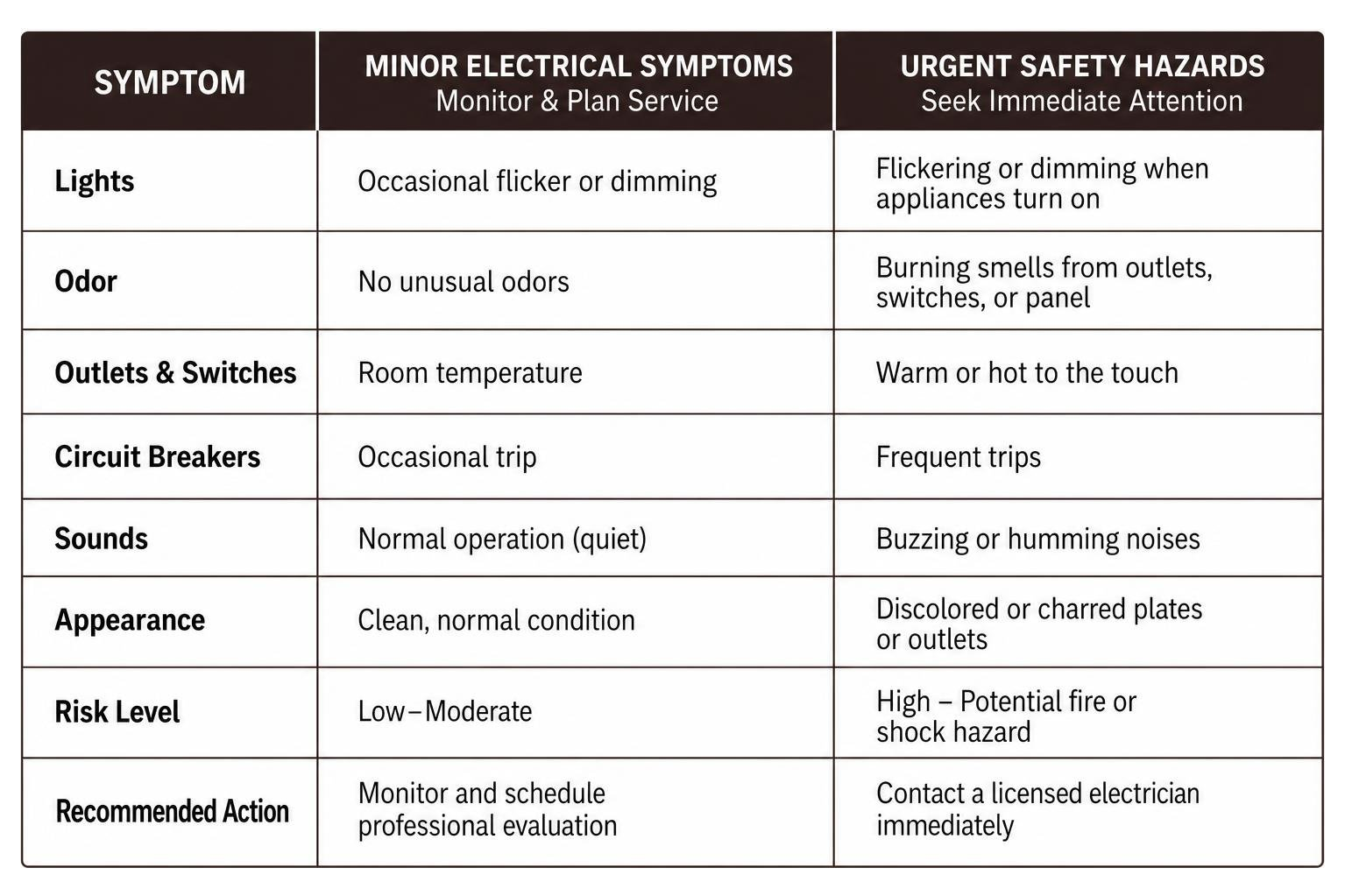
One of the most common red flags is flickering or dimming lights. While an occasional flicker might be due to a loose bulb, consistent flickering or dimming, especially when an appliance turns on, suggests an overloaded circuit, loose wiring, or a problem with the main electrical service.
Burning odors emanating from outlets, switches, or the electrical panel are extremely serious and demand immediate professional attention. This smell often indicates overheating wires or components, which can quickly lead to a fire. Similarly, warm or hot outlets and switch plates are a sign of excessive resistance or overload, indicating that wiring is overheating behind the wall.
Frequent circuit breaker trips are another clear signal that something is amiss. Breakers are designed to trip when a circuit is overloaded or when there’s a short circuit or ground fault, protecting your home from damage. While an occasional trip might be due to too many devices on one circuit, repeated tripping indicates a persistent problem that needs diagnosis.
Buzzing or humming noises coming from outlets, switches, or the electrical panel are unusual and should not be ignored. These sounds can indicate loose wiring, faulty components, or arcing, all of which pose significant risks.
Finally, discolored or charred outlets and switch plates are undeniable evidence of overheating and potential fire hazards. If you observe any of these signs, it’s crucial to contact a licensed electrician immediately. Attempting to diagnose or fix these issues yourself without proper training and equipment can be extremely dangerous.
Here’s a table comparing some common electrical symptoms and their urgency:
Understanding Power Surges and Circuit Overloads
To further elaborate on some of the signs mentioned above, it’s important to understand the underlying causes: power surges and circuit overloads. While often discussed together, they represent distinct issues with different implications for your home’s electrical health.
Power surges are sudden, brief spikes in electrical voltage or current that travel through your home’s electrical system. As previously noted, an estimated 80% of residential surges are internal, caused by the normal operation of high-power appliances cycling on and off. When an appliance like a refrigerator compressor or an air conditioning unit kicks in, it draws a large amount of power, creating a momentary drop in voltage followed by a surge as the system stabilizes. While many of these are “mini-surges,” they can, over time, degrade the sensitive electronic components of modern devices, shortening their lifespan. External surges, though less frequent, are often more powerful, caused by lightning strikes, utility grid switching, or downed power lines. These can instantly fry unprotected electronics. Whole-home surge suppressors are designed to divert these excess voltages away from your home’s sensitive equipment, protecting your investments.
Circuit overloads, on the other hand, occur when too many appliances or devices are drawing power from a single electrical circuit, exceeding its safe current capacity. This leads to the wires heating up, and if not interrupted, can melt wire insulation, damage appliances, and even cause electrical fires. Your circuit breakers are designed precisely to prevent this. When an overload occurs, the breaker “trips,” cutting off power to that circuit to prevent overheating and potential damage. Frequent breaker trips indicate that a circuit is consistently being overloaded, signaling a need for either redistributing electrical loads or, more often, installing new dedicated circuits to handle high-demand appliances. This is particularly common in older homes where fewer circuits were installed, and the electrical system wasn’t designed for today’s power-hungry devices. Addressing these issues professionally ensures both the safety of your home and the longevity of your appliances.
Modernizing Aging Infrastructure and Outdated Wiring
Many homes across the country, especially those built before the 1970s, grapple with outdated electrical infrastructure that simply cannot meet the demands of modern living. This aging wiring poses significant safety risks and often leads to frustrating electrical problems. Licensed electricians specialize in diagnosing and upgrading these systems, ensuring homes are safe, code-compliant, and equipped for contemporary power needs.
One of the most notorious forms of outdated wiring is knob-and-tube wiring, commonly found in homes built from the late 1800s to the 1940s. This system uses ceramic knobs to support insulated copper wires and ceramic tubes to protect them where they pass through wood framing. While safe in its original condition, knob-and-tube wiring lacks a ground wire, making it incompatible with modern three-prong outlets and increasing the risk of shock. It’s also prone to insulation degradation over time, especially when exposed to heat or covered by insulation, which can create a severe fire hazard.
Another problematic material is aluminum conductors, used in some homes from the mid-1960s to the mid-1970s as a cheaper alternative to copper. Aluminum wiring expands and contracts more than copper when heated, leading to loose connections at outlets, switches, and fixtures. These loose connections can cause overheating, arcing, and ultimately, electrical fires. Signs of aluminum wiring problems include flickering lights, warm switch plates, or the smell of burning plastic.
Cloth-wrapped wiring, prevalent in homes built before the 1950s, features rubber or plastic insulation wrapped in cloth. Over decades, this insulation can become brittle, crack, and expose bare wires, creating shock and fire risks. Similarly, many older homes have ungrounded outlets (two-prong outlets) which offer no protection against surges or electrical faults, leaving residents and electronics vulnerable.
Addressing these outdated wiring systems is not just about convenience; it’s a critical safety measure. Professional electricians are trained to identify these hazards and provide solutions that bring the home up to current National Electrical Code (NEC) compliance, significantly reducing the risk of electrical fires and shocks.
Essential Residential Electrical Services for Older Homes
For homeowners residing in older properties, addressing outdated electrical systems is a priority. Licensed electricians offer specialized services tailored to the unique challenges presented by vintage wiring and infrastructure.
The most comprehensive solution for homes with knob-and-tube or extensively degraded cloth wiring is a whole-house rewiring. This involves replacing all existing outdated wiring with new, grounded copper wiring that meets current NEC standards. While a significant undertaking, rewiring eliminates fire hazards, improves safety, and ensures the home can handle modern electrical loads. It also allows for the installation of grounded three-prong outlets throughout the home, providing better protection for appliances and electronics.
Another common need in older homes is a service upgrade. Many older panels, often 60-amp fuse boxes or smaller breaker panels, are simply insufficient for today’s power demands. Upgrading to a 100-amp, 150-amp, or even 200-amp service provides the necessary capacity for new appliances, HVAC systems, and EV chargers, preventing frequent overloads and improving overall system reliability. This often involves replacing the main electrical panel and upgrading the service entrance cable.
System grounding is also crucial. Older homes frequently lack proper grounding, which is essential for diverting dangerous electrical currents safely to the earth in the event of a fault. Electricians can install or upgrade grounding systems to enhance safety and protect against surges and shocks.
Furthermore, the installation of Arc Fault Circuit Interrupters (AFCIs) and Ground Fault Circuit Interrupters (GFCIs) is vital. While GFCIs protect against shock in wet areas, AFCIs detect dangerous electrical arcs in wiring that can lead to fires, providing an additional layer of protection, especially important in older homes where wiring may be compromised.
Finally, electricians perform code corrections to ensure all electrical installations comply with the latest safety regulations. This includes ensuring proper wire sizing, adequate overcurrent protection, and correct installation methods. By investing in these essential residential electrical services, homeowners can transform an aging electrical system into a safe, efficient, and reliable power source for their modern lifestyle.
Why Professional Licensing Matters Over DIY and Handyman Work
When it comes to residential electrical work, the temptation to save money by attempting DIY repairs or hiring an unlicensed handyman can be strong. However, this approach carries significant risks that far outweigh any potential cost savings. Hiring a licensed and insured residential electrician is not just a recommendation; it’s a critical decision for your safety, your home’s integrity, and your financial protection.
Licensed electricians undergo extensive training, which typically includes thousands of hours of supervised on-the-job experience, classroom instruction, and rigorous examinations to demonstrate their mastery of electrical theory and practical application. They are well-versed in the intricate details of the National Electrical Code (NEC) and local building codes, ensuring that all work performed is compliant and safe. This expertise is crucial because electrical work is inherently dangerous; mistakes can lead to electrocution, severe injury, or catastrophic fires.
One of the primary reasons to choose a licensed professional is safety protocols. Electricians are trained to follow strict safety procedures, utilizing insulated tools and appropriate personal protective equipment (PPE) to minimize risks. They understand how to safely de-energize circuits, test for live wires, and identify potential hazards that an untrained individual might overlook.
Furthermore, licensed electricians handle all necessary permitting and inspections. For any significant electrical work, such as panel upgrades, new circuit installations, or rewiring, local authorities require permits to ensure the work meets safety standards. An unlicensed individual cannot pull these permits, which means their work will not be inspected by the city or county. Uninspected work can lead to serious safety issues, potential fines, and difficulties when selling your home.
Code adherence is another non-negotiable aspect. The NEC is updated every three years, and licensed electricians stay current with these changes through continuing education. This ensures that your home’s electrical system is not only safe today but also compliant with the latest industry standards, which can be vital for insurance purposes and future home valuations.
Perhaps most importantly, licensed electricians carry liability insurance and workers’ compensation. If an accident occurs during the work, or if their work causes damage to your property, their insurance will cover the costs. In contrast, if an unlicensed handyman causes damage or injury, you, as the homeowner, could be held financially responsible, potentially voiding your homeowner’s insurance policy. Many insurance policies explicitly state that electrical work must be performed by a licensed professional to maintain insurance validity.
Finally, professional electricians typically offer work warranties, standing behind the quality and safety of their installations and repairs. This provides peace of mind, knowing that if an issue arises related to their work, they will address it. Choosing a licensed and insured electrician is an investment in hazard prevention, long-term safety, and the overall value of your home.
Average Costs of Residential Electrical Services
Understanding the financial aspect of residential electrical services is a common concern for homeowners. While specific pricing can vary significantly based on location, the complexity of the job, and the materials required, it’s helpful to understand the factors that influence the overall cost. Investing in professional electrical services is an investment in your home’s safety, efficiency, and long-term value.
For minor repairs, such as fixing a faulty outlet, replacing a switch, or troubleshooting a non-functional light fixture, costs are generally lower. These jobs often involve a diagnostic fee to identify the problem, followed by the repair cost. The total will depend on the time spent and the specific parts needed.
Standard services, which might include installing new light fixtures, ceiling fans, or adding a dedicated circuit for a new appliance, fall into a mid-range category. These projects require more planning and labor than minor repairs but are less extensive than major system overhauls. Factors like the accessibility of wiring, the need to run new lines through walls, and the type of fixtures chosen will impact the final cost.
Major upgrades, such as electrical panel replacements, whole-house rewiring, or the installation of an EV charger, represent a more significant investment. These projects are complex, often require multiple days of work, and involve substantial material costs. Panel upgrades, for instance, depend on the amperage increase (e.g., from 60-amp to 200-amp service), the condition of existing wiring, and any additional code compliance work required. Whole-house rewiring is the most extensive and costly, as it involves replacing virtually all the electrical wiring in a home.
When seeking estimates, always request a detailed, transparent breakdown of costs. This should include labor, materials, permit fees, and any potential contingencies. Reputable electricians provide free estimates for most residential work, allowing homeowners to understand the scope and financial commitment before any work begins. They should also perform a thorough load calculation for any significant additions or upgrades to ensure the proposed solution is appropriate for your home’s needs. While we cannot provide specific pricing here, understanding these factors will help you budget and make informed decisions when planning your electrical projects.
Frequently Asked Questions About Residential Electrical Systems
Homeowners often have many questions about their electrical systems, especially concerning safety, maintenance, and upgrades. Here, we address some of the most common inquiries to help you better understand your home’s electrical needs.
How often should a home electrical system be inspected?
Regular electrical inspections are crucial for maintaining safety and ensuring your home’s system remains up-to-date with current codes. We recommend a comprehensive electrical inspection at least every 10 years for most homes. However, certain situations warrant more frequent checks:
- Before purchasing an older home: A pre-purchase electrical inspection can uncover hidden hazards or outdated wiring that might not be visible during a general home inspection.
- Before or after major renovations: Any significant remodeling project, especially in kitchens, bathrooms, or additions, should include an electrical inspection to ensure new wiring and circuits are installed correctly and safely.
- If you’ve recently added major appliances: High-draw appliances like hot tubs, central air conditioning units, or EV chargers place additional strain on your system, making an inspection advisable.
- If your home is older than 40 years: Older systems are more likely to have outdated wiring materials (like knob-and-tube or aluminum) or undersized panels that require attention.
- After a significant electrical event: If your home has experienced a lightning strike or a persistent power surge, an inspection can identify any damage to your electrical components.
These inspections ensure ongoing safety compliance, identify potential issues before they become dangerous, and help your system adapt to evolving code updates.
Why does a circuit breaker keep tripping repeatedly?
A circuit breaker is a safety device designed to protect your home’s wiring from damage due to excessive current. When a breaker trips, it’s a signal that there’s a problem on that circuit. Repeated tripping is a clear indicator that professional attention is needed. Common reasons for frequent circuit breaker trips include:
- Circuit Overload: This is the most common cause. It happens when too many appliances or devices are plugged into and drawing power from a single circuit, exceeding its amperage capacity. For example, running a microwave, toaster, and coffee maker simultaneously on the same kitchen circuit might cause it to trip.
- Short Circuits: A short circuit occurs when a hot wire accidentally touches a neutral wire or another hot wire. This creates a sudden, massive surge of current, which the breaker immediately detects and interrupts. Short circuits are dangerous and can be caused by damaged appliance cords, faulty wiring, or loose connections within outlets or switches.
- Ground Faults: Similar to a short circuit, a ground fault occurs when a hot wire touches a ground wire or a grounded part of the electrical system (like a metal outlet box). This also results in an uncontrolled current path and immediate tripping. Ground faults are particularly dangerous in wet areas and are why GFCI outlets are required in kitchens, bathrooms, and outdoors.
- Faulty Breaker: Occasionally, the circuit breaker itself can be faulty and trip prematurely or fail to reset properly. While less common than overloads or faults, a professional electrician can test the breaker to determine if it needs replacement.
- Appliance Failure: A malfunctioning appliance can sometimes draw too much current or create a short circuit, causing the breaker to trip. Unplugging the suspected appliance and resetting the breaker can help identify if the appliance is the culprit.
If a breaker trips repeatedly, have a licensed electrician diagnose the root cause. Ignoring it can lead to overheating wires, potential fires, and damage to your electrical system.
What is required to install a Level 2 EV charger at home?
Installing a Level 2 EV charger at home offers significant convenience, allowing for much faster charging than a standard 120-volt outlet. However, it involves specific electrical requirements and should always be handled by a licensed electrician. Here’s what’s typically involved:
- Dedicated 240-Volt Supply: Level 2 chargers require a dedicated 240-volt circuit, similar to what an electric clothes dryer or oven uses. This is a much higher voltage than standard wall outlets and provides more power for quicker charging.
- Appropriate Amperage Circuit: Most Level 2 chargers require a 40-amp or 50-amp dedicated circuit. The specific amperage needed will depend on the charger’s power output and your EV’s charging capabilities.
- Sufficient Panel Capacity: Before installation, a licensed electrician must perform a load evaluation of your home’s main electrical panel. This assessment determines if your existing panel has enough available capacity to safely handle the additional load of the EV charger without risking overloads. Many older homes with 100-amp service or less may require an electrical panel upgrade to a 200-amp service to accommodate the charger and other household demands.
- Dedicated Wiring: A new, dedicated wiring run will be installed from your electrical panel to the chosen location of the EV charger. This ensures the charger has its own circuit and doesn’t share power with other appliances, preventing overloads.
- Permits and Inspections: Installing an EV charger is a significant electrical modification and typically requires permits from your local municipality. A licensed electrician will handle the permit application and ensure the installation passes all necessary inspections, guaranteeing safety and compliance with local codes.
- Charger Selection and Location: While the electrician focuses on the electrical infrastructure, homeowners should select a compatible charger (e.g., a Leviton EV40P or similar) and decide on a convenient and safe location for the outlet or charging station, often in a garage or driveway.
Professional installation ensures your EV charger operates safely and efficiently, protecting both your vehicle and your home’s electrical system.
Conclusion
In an era where our homes are increasingly reliant on electricity for comfort, convenience, and connectivity, the importance of a robust, safe, and up-to-date electrical system cannot be overstated. From powering essential appliances and smart home devices to accommodating modern demands like EV chargers, your home’s electrical infrastructure is its silent workhorse.
This guide has highlighted the comprehensive range of residential electrical services offered by licensed professionals, emphasizing everything from critical safety upgrades and panel modernizations to aesthetic enhancements. We’ve explored the tell-tale signs of electrical problems that demand immediate attention, the inherent dangers of outdated wiring, and the crucial reasons why professional licensing matters over DIY attempts or unlicensed handyman work.
Regular system maintenance, including periodic inspections, is not just about preventing inconvenient outages; it’s about household safety and protecting your most valuable asset. Investing in professional electrical expertise ensures electrical reliability, extends the lifespan of your appliances, and adds long-term value to your home. By being proactive and partnering with a qualified residential electrician, you can ensure your home’s electrical system is safe, efficient, and ready to meet the evolving demands of modern living for years to come.