Some R&B stories are remembered because the records became classics.
Others linger because the records never got the chance.
Sudden Impact belongs to that second category.
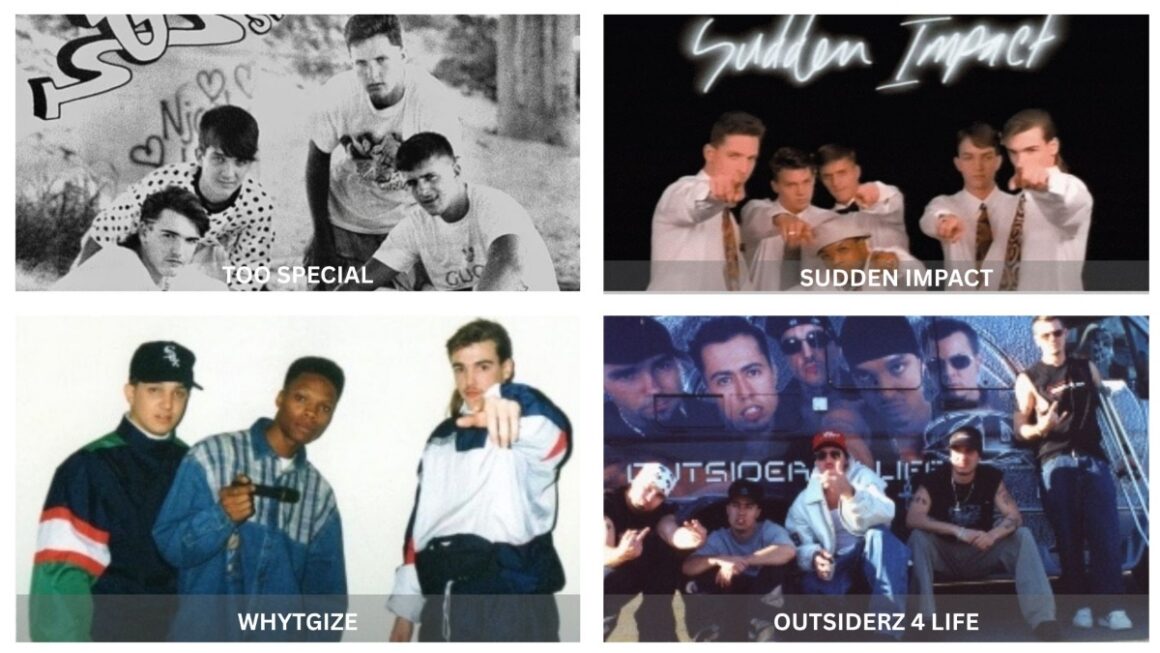
Before the name changes, shelved albums and “whatever happened to them?” mythology, there was Too Special—a group of young friends from Newport News, Virginia, chasing music before any of them could have known how close they would come to the center of ’90s R&B history.
Then Michael Bivins entered the picture.
Rechristened Sudden Impact, the group was positioned inside the same rapidly expanding universe that would produce Boyz II Men, Another Bad Creation and the broader East Coast Family movement. Their cameo in “Motownphilly” was brief, but it became strangely immortal: five guys on screen for a matter of seconds, carrying the promise of something audiences assumed they would hear next.
Instead, the story kept changing.
Sudden Impact became Whytgize, a name born from the question people kept asking after seeing them: Who are those white guys? They surfaced again in the East Coast Family’s “1-4-All-4-1,” signed deals, recorded music, moved between Capitol, Motown/Biv 10 and later Blackground-related chapters—and somehow remained perpetually one step away from the breakthrough that seemed inevitable.
That near-miss became part of the legend.
Decades later, former MTV VJ Dave Holmes turned his own fascination with the group into Waiting for Impact, a 10-part podcast that finally pulled the curtain back on one of R&B’s great disappearing acts and helped reconnect the story with listeners who had never stopped wondering.
But for Todd White and Alan Healy, the more important part is that the story never actually stopped.
Their friendship outlasted labels, names, shelved projects and the machinery that once decided whether music lived or disappeared. Over time, they found their way back to songwriting, back to creating and back to relationships formed during those original industry years.
One of those relationships is Digital Black.
While Todd and Alan were navigating Bivins’ East Coast Family orbit, Black was coming through the fertile Da Bassment/Playa lineage alongside Static Major, Missy Elliott and others who would help reshape R&B and hip-hop. Years later, those histories have converged again—not as kids chasing a deal, but as grown men carrying decades of life into the studio.
That’s what gives their current work, including “Momma Said” and the emerging 3 the Hardway chapter, its weight.
This isn’t nostalgia for nostalgia’s sake.
It’s unfinished chemistry finally meeting lived experience.
Too Special. Sudden Impact. Whytgize. Outsiderz 4 Life. Major-label promises. Lost opportunities. Aaliyah. Blackground. Brotherhood. Recovery. Rediscovery.
The names changed.
The industry changed.
The dream changed shape.
But Todd White and Alan Healy never completely stopped believing there was still music left to make.
And after spending years as one of R&B’s most intriguing “what ifs,” they’re no longer waiting for impact.
They’re making the next one themselves.
Parlé Mag: Before the record deals, industry attention and name changes, who were Alan Healy and Todd White? What inspired each of you to pursue music, and how did your individual paths come together to form Too Special?
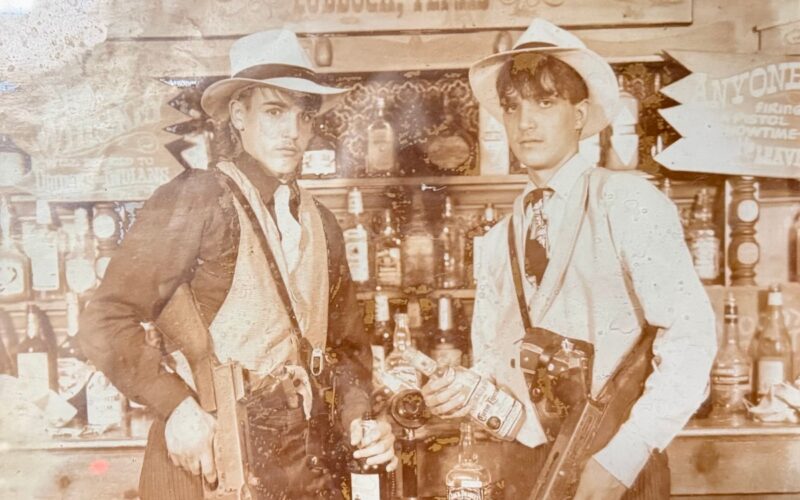
Alan Healy: Todd and I were just a couple of wild kids who naturally vibed off each other. We were both military brats, and both of our fathers were majors in the military, so we shared a similar upbringing and understood each other.
Todd was the one who introduced me to the idea of being in a group and showed me what was possible with music. I always loved the songs he wrote—they were catchy and would stay in my head. That connection kept me committed to what we were building. I stuck with it through every chapter, and after all these years, we’re still here today.
Todd White: Alan and I met through a mutual friend when we were probably 15 or 16. The funny thing is, the first time he came to my house, I was in the middle of arguing with my pops about having to go see my psychiatrist. True story. So I can only imagine what Alan was thinking—probably, “Who the hell is this guy?” [laughs]
We were both military brats. Both of our fathers were majors, so even though our personalities were different, there was something about our backgrounds that we understood in each other.
Music was already a big thing for me. I loved writing songs. I loved the idea that you could take something that was in your head, put words and melody around it, and suddenly other people could feel it too.
When Alan and I started hanging out, music became part of the friendship. I saw something in him, and I think he saw something in what I was trying to build. I introduced him to the idea of being in a group, and from there we just kept going.
We had no idea that meeting each other as two wild 15- or 16-year-old kids would turn into Too Special, Sudden Impact, Whytgize and everything that came afterward.
That friendship became the foundation for everything to come.
Parlé Mag: Too Special eventually evolved into Sudden Impact. What was the chemistry between the members that made the group stand out, and when did you first realize you had something special that could become a professional career?
Alan Healy: Todd and I had a natural chemistry. We fed off each other creatively, but we also shared the same ambition—we knew we didn’t want to remain just a local group.
A major turning point came when we connected with Cecil Jenkins, who had previously worked with Marvin Gaye. Cecil was also connected to Missy Elliott, who was part of the group Sista at the time. We took a chance and went with Cecil to Los Angeles, where we met Michael Bivins.
That was the moment everything began moving very quickly. We looked at each other like, “Wow, this is really taking off.” Meeting Michael and seeing the industry respond to us confirmed that our chemistry was bigger than something local. We realized we truly had something that could become a professional career.
Todd White: Alan and I always fed off each other. We could joke around and be completely wild one minute, and then get serious about a song or an idea the next.
As the group developed, everybody brought a different vocal tone and personality to it. That mattered. A good group isn’t five guys trying to be the same person. It’s five different pieces somehow making one sound.
But Alan and I also shared something really important—we wanted more. We weren’t satisfied with just being known locally. We wanted to know how far we could actually take it.
Connecting with Cecil Jenkins was a major turning point. Cecil had worked with Marvin Gaye, so just being around somebody with that kind of experience made the industry feel closer. Through that relationship, we were also around Missy and Sista in Virginia.
Then we took that chance and went to Los Angeles with Cecil.
That’s where we met Michael Bivins.
Once Michael became interested, everything that had felt like a dream started feeling possible. Things began moving fast.
I think that was when we really looked at one another and realized, Man, this might actually happen.
Parlé Mag: During the early ’90s R&B explosion, what did Michael Bivins see in Sudden Impact that made him believe in the group and become involved in managing your career?
Alan Healy: Honestly, I think Michael initially saw the potential for something along the lines of New Kids on the Block. The first time we approached him, Todd was asking for an autograph while I was trying to hand him our poster. Michael basically told us to get that thing out of his face because he thought we were handing him a New Kids poster! It was a funny beginning to what eventually became an important relationship.
I believe the Maurice Starr connection and the success of that type of group may have helped Michael recognize what we could potentially become. He saw that we had talent, chemistry and the foundation of a group he could build upon. At the same time, we probably weren’t completely ready at that moment. We still needed development, direction and experience—but Michael could see the potential before it was fully developed.
Todd White: The first encounter with Mike is funny when I think about it now.
I’m trying to get Michael Bivins’ autograph, and Alan is trying to shove our poster in front of him. Mike looks at the thing and basically thinks we’re trying to hand him a New Kids on the Block poster and tells us to get it out of his face. [laughs]
So that wasn’t exactly the smoothest introduction to our future manager.
But eventually, he saw something.
You have to remember where music was at that time. Maurice Starr had shown what could be done with New Edition and New Kids on the Block. Groups were huge. Image mattered. Personality mattered. Records mattered. Performance mattered.
Mike understood groups because he had lived it himself.
I think he saw that we had the raw ingredients. We had chemistry, we had a look, we had ambition and we could sing. Were we fully developed? No. We were kids. We still had a lot to learn.
But Mike had an eye for potential.
He could look at something that wasn’t finished yet and imagine what it could become.
And fortunately for us, he saw enough to believe we were worth developing.
Parlé Mag: Under Michael Bivins’ guidance, Sudden Impact entered the major-label world with Capitol Records before the transition into the Motown/Biv 10 era. What was that experience like, and what lessons did you learn from navigating the business at that level?
Alan Healy: When you first sign with a major label, you think you’ve made it and that you’re immediately going to be rich. That’s what we thought when we signed with Capitol Records—we believed that was it and everything was about to happen for us.
Then Michael Bivins secured his deal with Motown and moved us over because he felt more comfortable with the staff and the situation there. Michael was our manager, and at that point in our careers, he made that decision for us. We were young, inexperienced and didn’t really feel like we had much of a choice.
That experience taught us that signing a record deal doesn’t automatically mean success or financial security. It also showed us how important it is to understand the business, know who is making decisions on your behalf and recognize how little control a young artist can have without the right knowledge and experience.
Todd White: When you’re that young and somebody tells you that you’ve signed with Capitol Records, you think you’ve made it.
That’s it.
You’re going to make records, you’re going to be famous and you’re going to be rich.
Then you find out that signing a record contract and actually building a successful career are two completely different things.
When Mike established his situation with Motown, he felt more comfortable there and we moved with him. At that age, Michael wasn’t only somebody involved with our career—he was our manager, and we trusted him to guide us.
We weren’t sitting there studying contracts and questioning every business move. We were young artists thinking about singing, performing and making records.
That experience taught me one of the biggest lessons of my life:
Learn every part of the business you’re in.
Know where the money comes from, where it goes, who owns what and who is making the decisions. Understand what you’ve signed.
Because you can have talent, a major record company, a famous manager and great music and still not control what happens next.
That lesson stayed with me long after the record deals.
Parlé Mag: The transition from Sudden Impact into Whytgize became a major turning point. What led to the name change, and what did that new identity represent for the group?
Alan Healy: The name Whytgize wasn’t really a choice the group made. After we appeared in the video, Michael kept hearing people ask, “Who are those five white guys?” The question came up so often that he approached us and said, “Everybody keeps calling you the white guys, so let’s just make that the name.”
I had mixed feelings about it because I’m mixed, and I didn’t necessarily want to be labeled simply as a white guy. However, Michael was our manager, and at that stage of our careers, management was making those kinds of decisions. He decided that Whytgize was the direction we were taking, so that became our new identity.
From a marketing standpoint, the name gave people an immediate way to recognize and remember us. Creatively, though, it wasn’t necessarily an identity we had developed for ourselves—it was more of a management and branding decision made to capitalize on the attention we were receiving.
Todd White: The truth is, Whytgize wasn’t some name the five of us sat around a table and created as part of this big artistic reinvention.
It came from Mike.
After we started appearing around the East Coast Family, people kept asking him, “Who are those five white guys?”
Eventually, Mike basically said, “Everybody keeps calling you the white guys anyway. That’s the name.”
And Whytgize was born.
That’s how things happened sometimes. [laughs]
From a marketing standpoint, I understood it. People remembered it immediately. You heard the name once and knew exactly which group people were talking about.
But it was also another lesson in how much control management and labels could have over an artist’s identity.
We were young and trying to make it. If Michael Bivins told you, “This is what we’re doing,” chances are that’s what you were doing.
Today, I can look at Whytgize as a chapter in our story. Whether we chose the name or not, people remember it, and it became attached to memories from an incredible era of our lives.
Parlé Mag: Your connection to Michael Bivins and the Biv 10/Motown family placed you alongside some of the biggest names in ’90s R&B, including Boyz II Men, Bell Biv DeVoe, Another Bad Creation, 702 and Subway. What was it like witnessing that era from the inside?
Alan Healy: Being part of that movement and watching people go from being regular young artists to international superstars was unbelievable—it was a wild experience to witness from the inside. We were surrounded by an incredible amount of talent, and seeing those careers develop taught me a great deal about both the music industry and life.
Mike McCary from Boyz II Men told me something years ago that has always stayed with me: “Money doesn’t really change people; it amplifies who they already are ten times.” If someone is already a jerk, money can make them ten times worse. If someone is genuinely a good person, money gives them ten times the ability to help others and show that goodness.
Watching everyone’s success helped me understand what he meant. It taught me the importance of staying grounded, treating people well and remaining humble regardless of how successful you become.
Todd White: When you’re inside something, you don’t always realize you’re watching history happen.
These weren’t legendary names to us yet.
They were people we knew.
Everyone was young, hungry and determined to get their shot.
Then you watch Boyz II Men explode. You see what BBD becomes. You watch these artists go from being kids trying to make records to becoming stars recognized all over the world.
That’s unbelievable to witness up close.
There was so much talent around Biv 10 and that whole East Coast Family environment that success almost started to feel normal. Looking back, there was nothing normal about it.
We were standing in the middle of one of the most important periods R&B has ever had.
It also taught me that success doesn’t happen equally for everybody, even when everybody standing in the room is talented.
Some things come down to talent, others to hard work, and others to timing.
And some things are simply having the right record at exactly the right moment.
We got to see all of it firsthand.
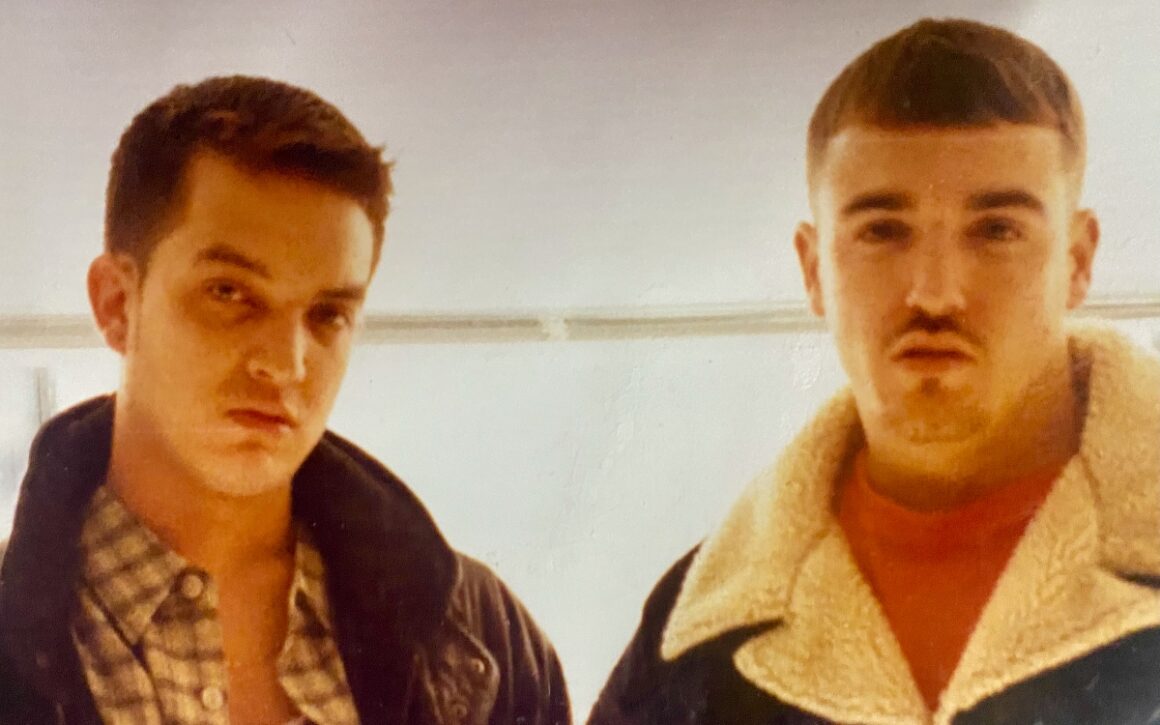
Parlé Mag: Your appearances in Boyz II Men’s “Motownphilly” and the East Coast Family’s “1-4-All-4-1” became unforgettable pieces of R&B history. What do those moments mean to you today?
Alan Healy: Being in those two videos gave us what you might call “street credibility.” It lets people know that I’ve been doing this for a long time and that I was genuinely part of that era. Now my kids can find the videos online and say, “Damn, maybe Dad wasn’t such a dork after all.”
Those experiences also expanded my love for music. I became interested not only in making songs, but also in the visual presentation, promotion and marketing behind the music. Being in that creative environment allowed me to see how all those different pieces came together.
It was a special time in my life, and I wouldn’t trade it for anything. Those videos became part of R&B history, and I can always say something that very few people can: I was there.
Todd White: At the time, you’re not standing on the set thinking, Thirty-five years from now people are still going to be watching this.
You’re thinking, We’re in a music video. This is dope. [laughs]
But now I can pull up “Motownphilly,” see us in it and realize we’re permanently connected to that moment.
Same thing with “1-4-All-4-1.”
Those videos became visual time capsules of an era.
For me, that environment also opened my eyes to the fact that music was bigger than just recording a song. There was imaging, video, marketing, promotion, choreography, fashion—all these pieces had to come together.
That’s probably part of what eventually made me interested in so many different areas of creativity and business.
And now the funny part is our kids can go online, pull up those videos and realize maybe their dads weren’t always as uncool as they thought. [laughs]
But underneath the joke, I’m proud of it.
I can look at those videos and say:
I was there.
Parlé Mag: There is also the incredible story of helping a young Missy Elliott get backstage before she became a household name. What happened that night, and did you already recognize how special she was?
Alan Healy: That night was at a concert featuring Boyz II Men, Jodeci and MC Hammer, who was the headliner. Missy was standing outside, yelling to get our attention, and Todd was actually the one who helped her get backstage.
We already knew Missy through Cecil Jenkins and an anti-drug project we had worked on in Virginia during Governor Douglas Wilder’s administration. At that time, she was still part of the group Sista and hadn’t yet become Missy Elliott, the superstar.
Missy was always funny, down-to-earth and constantly cracking jokes. I remember one guy repeatedly messing up the line, “Lock her up and throw away the key,” and all of us—including Missy—laughing about it. That was the kind of energy she brought wherever she went.
She was also incredibly talented, even back then. We may have helped her get backstage that night, but she made all the moves afterward that turned her into the artist she became. Her talent, personality, humility and drive were always there.
Todd White: That’s one of those stories that sounds more unbelievable now because everybody knows who Missy Elliott became.
But she wasn’t Missy Elliott yet.
She was Missy.
We already knew her through Cecil Jenkins and through an anti-drug project we had all been involved with in Virginia during Governor Douglas Wilder’s administration. She was part of Sista then.
The night everybody talks about was a show with Boyz II Men, Jodeci and MC Hammer.
Missy was outside trying to get our attention. Somehow she couldn’t get backstage, and I helped get her in.
I didn’t walk away from that moment thinking, I just helped one of the greatest artists of all time get backstage.
Nobody knows those things in real time.
But did we know Missy was talented?
Absolutely.
She was funny as hell, creative, humble and different. She had personality before anybody knew what that personality was eventually going to become publicly.
But let’s be clear: helping her get backstage didn’t make Missy Elliott.
Missy made Missy Elliott.
She took the opportunities, the talent, the creativity and the work ethic and turned them into something none of us could have predicted at that scale.
I’m just happy to have one little story from before the rest of the world knew what we already knew—that she was special.
Parlé Mag: Your debut album was completed but never officially released. How difficult was it to invest so much into music the public never got to hear, and how do you view that chapter today?
Alan Healy: It was extremely difficult to work with so many talented people and still never get the music released. It happened to us countless times. Even during that first era with Boyz II Men, our lineup changed because we were trying to make the group stronger vocally, but we continued to get caught in circumstances beyond our control.
At one point, Aaliyah was going to appear on a song written by Digital Black. She was going to sing a verse and help us introduce the project. Then the tragic plane crash happened, the label lost its biggest star and everything changed. Our album was ultimately shelved. With that tragedy, the label’s struggles, 9/11 and so many other events happening around us, it felt like another chapter of unfortunate timing.
It was painful, but I’ve always tried to look at those experiences as something that makes you stronger. I believe everything happens for a reason and that God has a plan, even when we don’t understand it at the time. Eventually, that plan will be laid out in front of us. Until then, I just keep moving forward.
Todd White: That’s probably one of the hardest parts of our story.
People see record deals and videos and famous names and think everything must have been incredible.
And a lot of it was.
But there’s another side.
Imagine putting everything you have into an album. Years of your life. Songs. Writing. Vocals. Relationships. Dreams.
Then nobody gets to hear it.
We went through versions of that disappointment more than once.
Later, during the Blackground chapter, we had another situation that felt like it could finally become something special. Digital Black had written a record, and Aaliyah was going to be involved. The idea was for her to sing a verse and help introduce the project.
Then Aaliyah died.
At that point, none of us were worried about our record. A young woman we knew and an incredible artist had lost her life.
But from a business standpoint, Blackground also lost the center of its world, and everything changed.
Then you had 9/11 and other things happening around that period.
Once again, our music became caught inside circumstances much bigger than us.
When you’re young, you ask, “Why does this keep happening to us?”
Today, I look at it differently.
Those records may not have reached the public the way we wanted them to, but those experiences made me who I am.
I’ve always believed God has a plan. I haven’t always understood that plan while I was standing in the middle of it.
I still don’t understand every part of it.
But I’m still here.
I’m still writing.
I’m still creating.
Maybe that’s part of the answer.
Parlé Mag: After Whytgize, the journey continued through Blackground Records as Outsiderz 4 Life and Boyz II Men’s StoneStreet imprint. How did those experiences change your understanding of the business and yourselves as creators?
Alan Healy: When we moved into those next chapters with Blackground Records and StoneStreet, I began focusing more seriously on songwriting. My best friend Todd told me, “Man, we’ve got to learn every aspect of this business.” That advice stayed with me.
I no longer wanted to be only a singer or entertainer. I wanted to understand what happened behind the scenes, get into the studio, develop ideas and learn more about the creative and business sides of the industry. That led me to build relationships and think beyond simply performing.
Those experiences helped me become a more complete creator. Today, I have countless ideas, from cartoon projects to the work we’re developing through 3 the Hardway. We’re also teamed up with our guy Black, whom we met during that period of our journey.
One of the greatest lessons I learned is that certain people you meet along the way stay with you forever. I’ve made friends throughout the music industry, and even though I’ve lost contact with some of them over the years, I would love to reconnect and cross paths with them again.
Todd White: By then, my mentality had started changing.
I didn’t want to understand only how to sing a song. I wanted to know what happened behind it all, from the writing and production to publishing, marketing and the decisions that shaped a record. I remember telling Alan, “We’ve got to learn every aspect of this business.”
Because we’d already learned what happens when you’re an artist and everybody else understands the business better than you do.
So those later chapters became education.
I became much more serious about songwriting. I began looking at the studio and the people behind the record differently..
And I began realizing that my creativity didn’t have to live only inside being the guy standing in front of the microphone.
That’s carried into everything I do now.
Song concepts, production ideas, artist development, visuals, branding—my mind is always moving.
And maybe one of the biggest things from that period was the relationships.
Some opportunities, record companies and projects disappear, but the relationships built along the way can last a lifetime.
But every once in a while, you meet somebody along the road who comes back into your life decades later.
Digital Black is a perfect example of that.
Parlé Mag: Your journey has also crossed borders through collaborations with Vietnamese artists. What has creating music across cultures taught you about just how universal R&B and hip-hop really are?
Alan Healy: Being half Vietnamese, I decided a few years ago that it was finally time to visit Vietnam and meet my family. I have a huge family there, but it took me 50 years to make that first trip. When I arrived, I became caught up in reconnecting with my roots and experiencing the country.
On my second visit, a friend involved in music asked me, “Do you know they have rappers over here?” At first, I couldn’t believe it. Then I listened to Vietnamese rap and realized how dope it was. The artists are incredibly creative, especially with their melodies, and they’re deeply dedicated to their craft. I may not always understand the lyrics until I look up the translations, but I can still feel the music.
I eventually connected with a Vietnamese rapper named Blacka, and we became extremely close friends. We’ve worked on projects together and formed such a strong bond that I have a tattoo on my arm, while he has one on his leg, symbolizing our commitment to working together forever.
I would love to keep returning to Vietnam and continue building what we started. There’s an amazing hip-hop and R&B community developing there, and I believe it has the potential to become something very big.
The experience reminded me that music is truly universal. It can be Spanish, Vietnamese, Japanese, English or any other language—it doesn’t matter to me. If the beat and melody move me, I can connect with it.
Todd White: That chapter is really Alan’s story more than mine because his Vietnamese heritage and his trips back to Vietnam opened that door.
But what’s been incredible for me is watching what came from it.
He started connecting with artists there, particularly Blacka, and suddenly we’re hearing music coming from the other side of the world that still has the same emotional language we grew up loving.
You might not understand every word somebody is saying, but you understand the melody, the pain and the love behind it. You can feel the energy and recognize when something simply feels good.
That’s what makes music universal.
Working across cultures also reminds you not to put R&B or hip-hop inside a little box and say it belongs to one city, one country or one generation.
Once music leaves your hands, it belongs to whoever feels it.
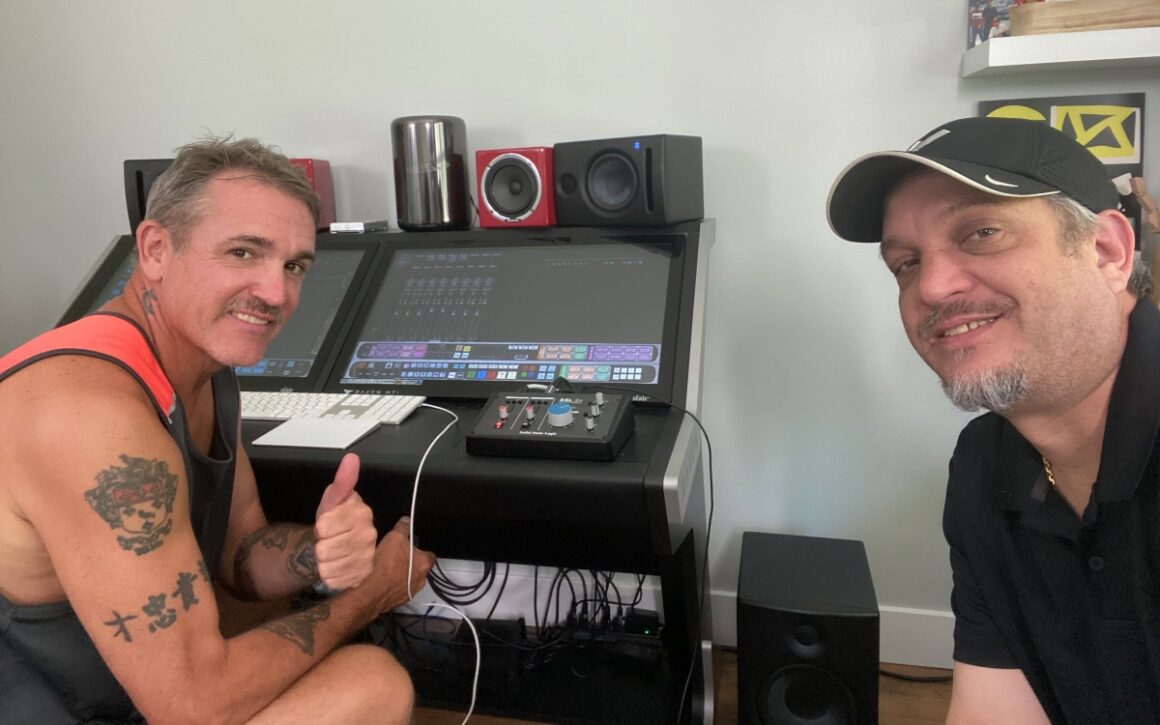
Parlé Mag: You’re now working with Digital Black, formerly of Playa and Dru Hill, as 3 the Hardway. What does this chapter represent, and why does this collaboration carry more weight now than it might have years ago?
Alan Healy: Todd reconnecting with Digital Black has been one of the best things to happen to us in a long time. We originally met Black years ago in Los Angeles, during the period when we were working with Aaliyah. Some connections stay with you, even as life takes everyone in different directions, and Todd and Black continued communicating over the years.
They also shared a deeply personal connection. Both of them had struggled with alcohol dependency and were fighting to overcome it. Supporting each other through that battle strengthened their bond and gave this collaboration a much deeper meaning.
Today, we’re all older and writing from a different place. We’ve lived through success, disappointment, addiction, recovery and everything else life has put in front of us. Black is incredibly talented, and his partner Smokey is just as gifted. When we began writing songs and sending them to Black, he connected with what we were creating. At the same time, he was sending us material that inspired us. The chemistry felt natural, so we decided to join forces as 3 the Hardway.
The name represents the difficult road each of us traveled to reach this moment. We have a lot of life experience, perspective and truth to share. Now we’re ready to speak through the music, combine our talents and build something great together.
Todd White: Reconnecting with Black means a lot more to me than just making records together.
Black and I had stayed in communication over the years, and at different points, we were both fighting some of the same personal battles.
We’ve both had to deal with alcohol dependency and fight our way through it.
There’s something different about having somebody in your life who doesn’t need an explanation because they’ve been standing in their own version of the same fire.
That strengthened our friendship.
Then music brought everything full circle.
Alan and I were writing again. We’d send things to Black. Black and Smokey would send things back. And it started feeling natural.
Nobody was forcing it.
Nobody was sitting in a boardroom saying, “We need to create a group.”
The chemistry was just there.
And eventually, it became 3 the Hardway.
That name means something to me because none of us took the easy road to get here.
We’ve experienced success and disappointment, faced addiction and recovery, lost people, grown older, raised families and lived through it all.
So now when we write, we have something different to say.
We’re not three kids trying to convince somebody to give us a record deal.
We’re three grown men with stories.
And I think that’s where the new energy comes from.
Parlé Mag: After Too Special, Sudden Impact, Capitol, Whytgize, Biv 10/Motown, Outsiderz 4 Life, StoneStreet and everything since, could the original group ever reunite—and what do you want your contribution to ’90s R&B to ultimately mean?
Alan Healy: Some things may be best left in the era where they happened. I don’t know whether the original group will ever reunite. We aren’t in regular contact, although we do check in periodically. There were reasons we separated, and sometimes it’s better to respect the past instead of trying to recreate it.
There’s no hate toward anyone. I love those guys, just as I have love for the different people who have been part of this journey. We were kids when we started, and people naturally grow up, change and follow different paths. There are songs we recorded when we were young that may simply belong to that time.
I would absolutely take pictures with everyone, hang out, share memories and celebrate what we accomplished together. As far as recording new music, I can’t say never—but that’s something we would all have to discuss and see whether the chemistry and timing still felt right.
When people look back on our legacy, I hope they remember that we were genuinely part of that ’90s R&B movement. We were there, we contributed and we helped create moments that people still remember today. Even when circumstances prevented much of our music from being released, we never stopped creating or believing. Our journey is about talent, friendship, perseverance and continuing to move forward no matter how difficult the road became.
Todd White: I don’t ever like saying never.
We’re not all in constant contact today, and there were reasons everybody eventually went their separate ways.
That’s life.
We were kids when this started.
You’re talking about relationships that go back to when we were teenagers. People grow up, change and build families as life takes its course.
There’s no hate in my heart toward any of those guys.
Aaron, Noel, Dave, Alan—we share something nobody else can completely understand because we lived that experience together.
Would I get in a room with everybody, laugh, tell stories, take pictures and celebrate what we did?
Absolutely.
Could we ever sing together again?
You never know.
But I also don’t believe in forcing something just because nostalgia says you should.
If it ever happened, I’d want it to happen for the right reason.
As far as our legacy, I don’t need history rewritten to make us bigger than we were.
We were there.
That’s enough for me to say proudly.
We were part of Biv 10.
We were part of the East Coast Family.
We’re standing in “Motownphilly.”
We’re standing in “1-4-All-4-1.”
Michael Bivins believed in us, and we had the opportunity to record with incredible people. Along the way, we experienced major labels, albums that never came out, deals that disappeared, opportunities that almost happened and relationships that lasted decades.
Maybe our story isn’t about becoming the biggest group of the ’90s.
Maybe our story is about still being here after the ’90s.
Because through every name change, every label, every disappointment and every time somebody could have decided music was over for us, Alan and I kept finding our way back to it.
We met when we were about 15 or 16 years old.
And all these years later, we’re still creating together.
To me, that’s the legacy.
Watch: Sudden Impact, WhytGize & Outsiderz 4 Life Compilation