Vincent Paterson doesn’t just choreograph movement—he engineers cultural memory. From shaping the visual language of pop’s most explosive era to redefining how stories move across stage, screen, and stadium, his work lives in the DNA of global entertainment.
He is the creative force behind moments that didn’t just trend—they reset the standard: Michael Jackson’s Bad Tour, “Smooth Criminal,” Madonna’s Blond Ambition Tour and “Vogue,” and a body of film and theater work that stretches from The Birdcage to Dancer in the Dark.
That legacy is now being reintroduced to global audiences through Michael [2026], Antoine Fuqua’s blockbuster musical biographical drama chronicling Michael Jackson’s rise from Jackson 5 prodigy to global solo icon. As the film recreates key performance eras with large-scale cinematic precision, it has reignited conversation around the creative architects behind those moments—placing Paterson’s choreography, staging, and visual storytelling back into the cultural foreground at a new scale.
Across decades, Paterson has moved fluidly between pop spectacle, cinema, Broadway, and opera—always with the same signature instinct: make it feel human, cinematic, and unforgettable.
Parlé Mag: Before the world knew your name, what was the moment you realized choreography could be more than movement—something cinematic, emotional, and lasting?
Vincent Paterson: Your first question makes me smile. In the introduction to my book, I write, “You might not recognize my name, but billions of people have seen my work.” It is often a challenge for choreographers to get credit—sometimes I was fortunate, sometimes not.
I first realized choreography could have a powerful voice while working with Michael Peters and then with Michael Jackson. MJ wanted to create short films. With “Beat It,” Michael Peters was possibly the first pop choreographer to create a combination of movement—a dance that many viewers wanted to learn. That opened my eyes.
Parlé Mag: When you first entered the creative world of Michael Jackson, what immediately stood out about how he approached performance compared to everyone else?
Vincent Paterson: What I realized about star power early on was that the celebrities I met all had the ability to focus and work hard. Michael had both of those traits.
What was mind-boggling about Mike, that I saw immediately, was how his body moved and how he was creating his own specific body language and style—an amalgam of dance through the ages and from the street, yet completely unique.
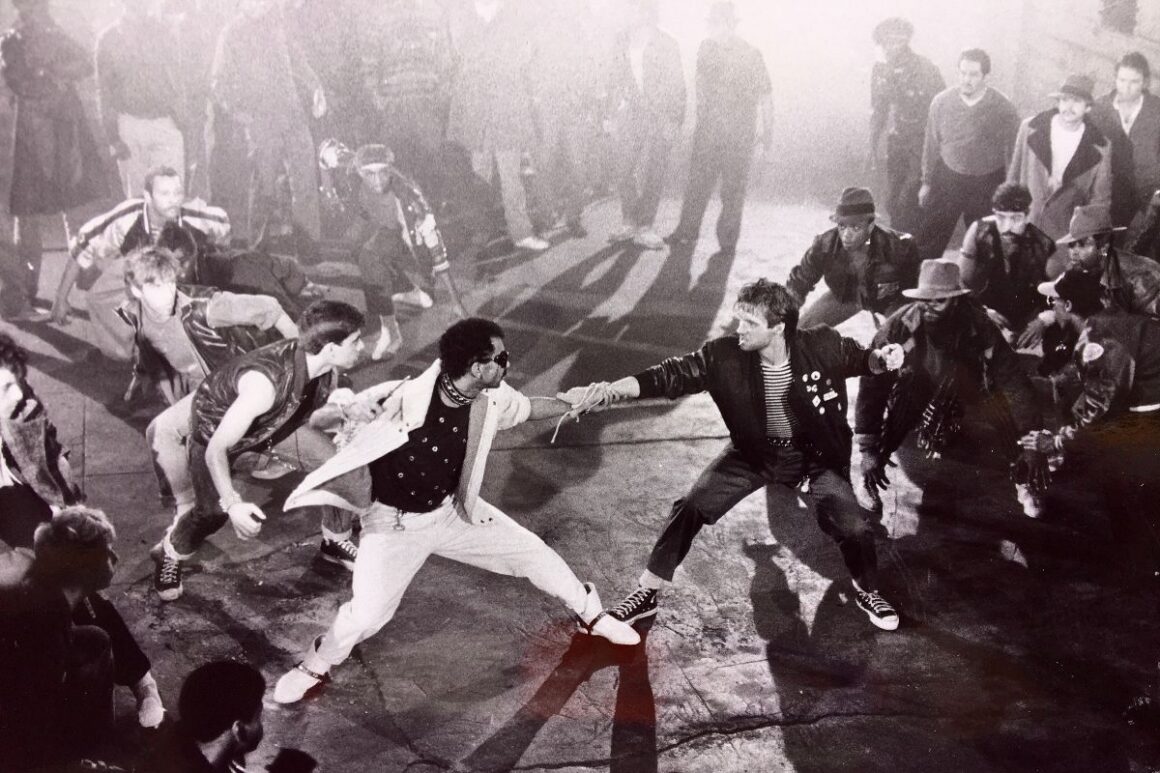
Parlé Mag: Being part of “Thriller” and “Beat It” at the ground level—did you feel that shift happening in real time, or did the magnitude only hit you later?
Vincent Paterson: This was early MTV. This video/short film genre was totally new. “Billie Jean” introduced a hot dance video. Madonna was doing the same thing. But there was no social media! So new videos were the reason for a party.
After “Beat It” aired and began to get a lot of attention, the world took notice of this new art form. Personally, I started to get requests from female celebrities to partner with them in their videos or get hired to choreograph commercials and videos—just because I was in the short film.
So when “Thriller” was being created, we felt the buzz. One never knows, but the “vibe” around the project was very electric. And when it aired, and soon after, we were grateful for having been part of something very special.
Michael Peters had created what is now probably the most danced piece of choreography since the beginning of time. MJ had the genius to use his song as the soundtrack to his short film. We knew that we had thrown a stone into the pond of entertainment and created a ripple across the world.
Parlé Mag: The Bad World Tour raised the bar globally—what was the vision behind it, and how intentional were you about redefining what a live pop show could be?
Vincent Paterson: The Bad Tour began without me in Japan. After that, Frank DiLeo called me and said, “We need you in Pensacola. Now.”
I had been a theater director but had never done anything of this size or in this genre. The vision behind the tour for me was to show the world Michael Jackson. He was stepping out from the Jackson 5 to establish himself as a solo artist.
He put a terrific team together, so I was blessed. It was one of the first tours that had dancers, as well as recreating moments from Mike’s successful short films. It wasn’t about elaborate costume and set changes. We didn’t need to. It featured incredible music, stupendous dancing, and Mike—without his brothers. Everything and everyone was there to make the picture all about him.
The Bad Tour was about introducing this amazing young incredible solo talent to the world.
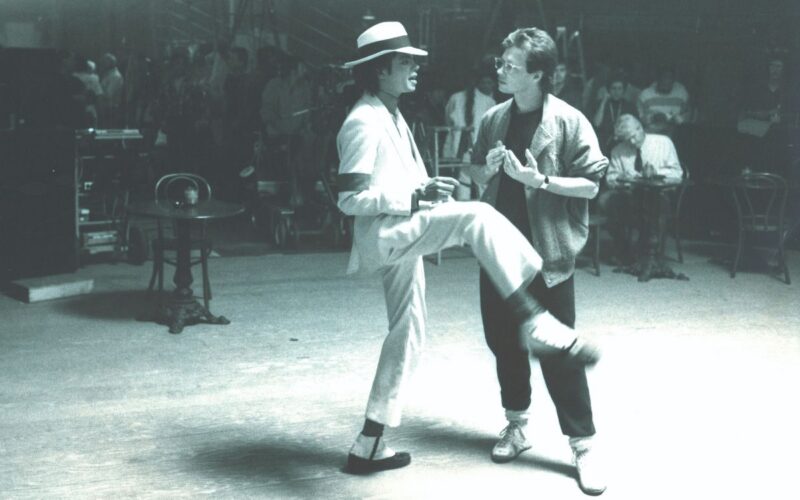
Parlé Mag: “Smooth Criminal” still gets studied frame by frame—what made that piece click creatively, and why do you think it never ages?
Vincent Paterson: I think it never ages because it is a pretty perfect short film. Sometimes the pieces just fall together like magic. This was “Smooth Criminal,” the first project Mike asked me to create for him—to conceive the idea, choreograph, and direct it. “Just make it something the world has never seen before, Vince.” What more could an artist ask for?
I cast it and began rehearsals, but things shifted when it became part of Moonwalker. (I didn’t get to direct, but director Colin Childers kept the concept and creation exactly as I had conceived.)
Mike was busy with his album, so I was left alone in creative heaven. He really felt what I was creating and kept asking for more dancers and creating more music for me to play.
I had the rehearsal area in the same soundstage as the club set for weeks. Jeffrey Daniel also contributed some great street choreo moments, and he and all of the dancers were brilliant.
I got to direct the dancers as actors, as characters. A first in the video world. Improvisations gave birth to sections being added—like the strange dreamlike section. I had the freedom to be as creative as I could be and I ran with it, like creating the coin toss and the lean.
It was a complete love fest gig. Everyone included. The experience was as good as it gets. None of us would have changed a thing.
And I believe this is why it never ages.
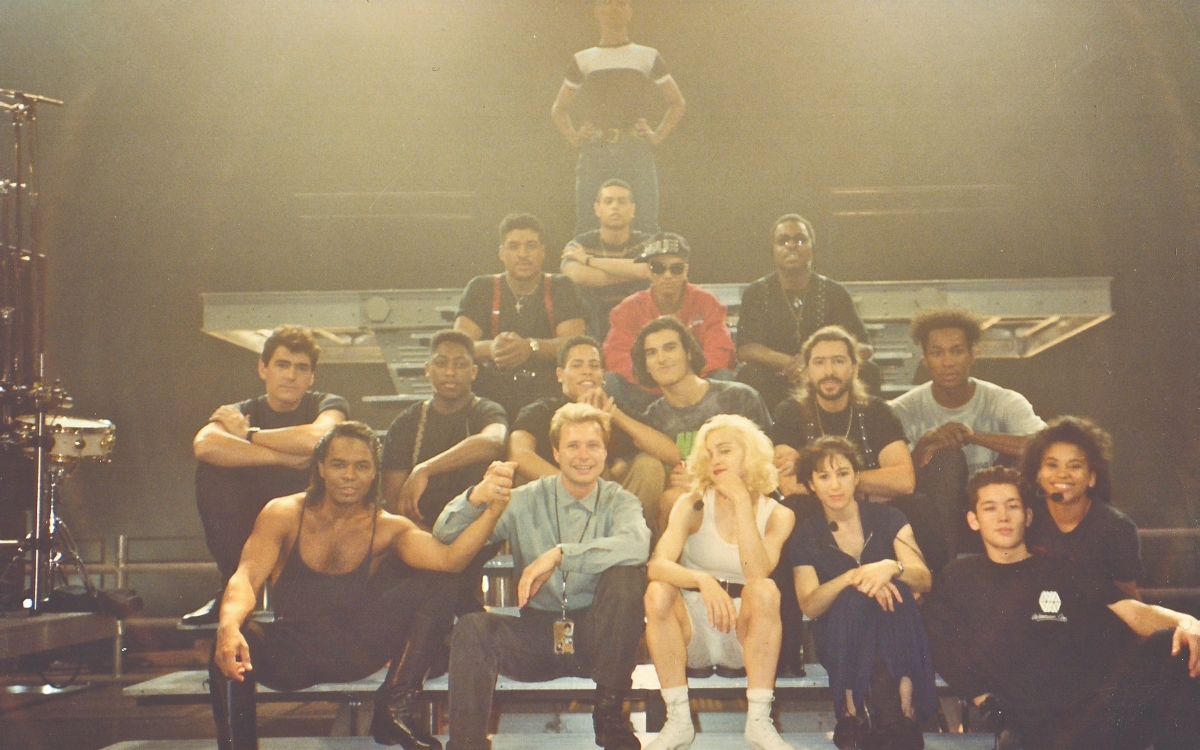 Parlé Mag: You’ve worked with another icon in Madonna—how did directing and choreographing the Blond Ambition Tour challenge you in completely different ways?
Vincent Paterson: The Blond Ambition Tour was Madonna’s second tour. She and her brother Christopher had already laid the groundwork for the tour when I came on board.
The challenge was time. We had very little of it and a lot to accomplish. I had 21 days to create 18 songs from conception to finished dance—unbelievable. I don’t think any of us had ever worked under such glorious pressure. We lived on the edge.
I would create each piece by listening to a loop in headphones as I slept at night. In the morning, it was vividly there.
Madonna had already done her conceptions, so I was responsible for putting my spin on each piece and bringing it to life. She was an incredibly hard worker, as were we all. Madonna loved those artists who surrounded her on the stage, so I took advantage of highlighting her but showcasing every performer around her—each one of them a diva in his/her own right.
Madonna is a visionary, and the collaboration sparkled. Each day inspired outrageous ideas—phenomenal visuals, sets, and costumes. We created a theatrical presentation that changed the blueprint of pop tours.
Parlé Mag: That “Vogue” Marie Antoinette MTV performance became instantly iconic—did you know you were creating a cultural reset in that moment?
Vincent Paterson: Madonna was asked to perform on the VMAs and she called me.
Madonna enjoyed creating fascinating personas for her videos, so I let my imagination go wild. I had found some fans that I was going to use on a Diana Ross project but hadn’t, so I took them into the studio to experiment with them.
Struck by the similarity between voguing poses and the body language of attendants in Marie Antoinette’s court, I proposed the idea.
She was skeptical, as always—wink, wink—but came down to Alley Kat Studios to see what I had created and loved it.
I went pretty sensual for TV, but it WAS Madonna. She, Niki, and Donna were nervous about the live fan flip, but after they did it perfectly, I could see them breathe lighter air.
I had no idea it would become viral before we knew what viral meant—but I’m so happy that it did. It’s fun.
Parlé Mag: Transitioning into film with projects like The Birdcage and Evita, how did you adapt your storytelling from stage to screen without losing your signature?
Vincent Paterson: I never thought I had a “signature.” If so, I suppose it would be bringing “story” to pop choreography.
I didn’t start dancing until 24. I was an actor and stage director, so narrative was a natural language for me as I began to choreograph. In film, my movement always came from character—what would this character do in this situation? How would they express themselves physically?
In The Birdcage, I was with Mike Nichols from the first table read. He wanted my input wherever I felt choreography could happen.
The beauty of working on this film is that there is choreography throughout, but you never feel my hand as a choreographer—Hank Azaria’s conga in the kitchen, the parents slow dancing, the Birdcage dancers, and Robin’s seeming improv of “The Eclectic Celebration of the Dance.”
Robin said to me, “Vincent, help! I’m playing the straight gay guy and I need a funny moment. Can you create one for me?” I took him behind the set for 15 minutes and came up with that wild, intense moment for him.
Funny enough, you mention The Birdcage, and people immediately go, “Fosse, Fosse, Fosse… Martha Graham, Martha Graham…”
Parlé Mag: Your work on Dancer in the Dark brought a completely different emotional tone—what drew you to that kind of raw, unconventional storytelling?
Vincent Paterson: My refrigerator is a magic box. I put photos of artists with whom I want to work on it and believe that seeing them every day sends a vibe into the creative atmosphere.
Björk and Lars von Trier were on it.
Originally, I turned Lars down because all the dances were tap and I don’t tap. I was crushed because I wanted to work with these two original, rule-breaking, avant-garde artists.
Lars was open to my thoughts about changing the dances to a variety of styles, and we spent time in a cottage on the North Sea redesigning the dance numbers. We wanted them to feel totally organic, raw, as if they came out of Selma’s imagination.
I didn’t want her to come across as a professional dancer, because she never would. So why go there? Björk owns her own style of body language, and that’s what inspired me.
This film was exceptional for me. I got to choreograph, act in it, and direct the dance sequences. We also used Lars’ edgy idea of over 100 mini DV cameras.
It was a phenomenal experience.
Parlé Mag: From Broadway to opera, including ‘Kiss of the Spider Woman’, what kept pushing you to expand beyond pop?
Vincent Paterson: As an artist, I thrive on challenging myself. It happened early on, but I suppose it was MJ and Madonna’s words—“Give me something the world has never seen”—that set me on this path.
I loved Broadway, so Hal Prince’s invite with Kander & Ebb and Terrence McNally was welcomed. To work with Chita Rivera—I couldn’t say no.
Opera fell into my lap and I adored soprano Anna Netrebko. We broke some rules in the opera world. I’ve worked in many languages—French, German, Japanese, Chinese.
My version of ‘Cabaret’ is still running in Berlin after 24 years—the longest running show in the city’s history. And there’s a new musical happening in Germany in the future. I’m blessed.
Parlé Mag: With your memoir Icons and Instincts, what truths were you finally ready to share
Vincent Paterson: My co-writer Amy Tofte saw a documentary about me, The Man Behind the Throne, and suggested I write a book.
We built it from journal entries and interviews. Choreographers are writers too—on stage, “and then they danced” is the sentence we write.
I didn’t want a tabloid; I wanted to show process—how work is built, how it is to work with major artists, and to inspire young creatives.
I also didn’t hold back, even sharing my near-suicide experience, because I wanted the reader to know me.
Parlé Mag: Looking back, what do you feel your legacy represents?
Vincent Paterson: I’m proud of being part of defining moments—from Michael Jackson’s Super Bowl halftime show to Madonna’s Blond Ambition Tour.
But my greatest pride is impact. I’ve received messages from artists around the world saying my work inspired them. Some say it helped them survive difficult moments.
Dancers, creators, and young LGBTQ+ people have told me they found self-worth through those videos.
That is what matters most.
Parlé Mag: After decades across music, film, and stage, what do you feel Vincent Paterson contributed to performance that changed the game permanently?
Vincent Paterson: It is fun to have my stamp, along with director Don Mischer, on Michael Jackson’s Super Bowl performance that changed all halftime shows. And to have shaped the Blond Ambition Tour, which changed pop touring forever.
But my true joy is knowing my work has inspired others.
I’ve received messages from choreographers, artists, and fans around the world saying my work influenced them. Some say it even changed their lives completely.
Some young artists found courage. LGBTQ+ fans discovered identity. Others found hope in moments where they had none.
That is the real legacy.
Because in the end, if your art makes someone feel seen—or helps them survive—it is everything.
Thanks so much for this cool interview. I loved these questions. They made me think.
Stay Connected with Vincent Paterson
Official website: vincentpaterson.com
Instagram: @vlpla